Mykhailo Mudryk Cleared to Return to Competitive Football
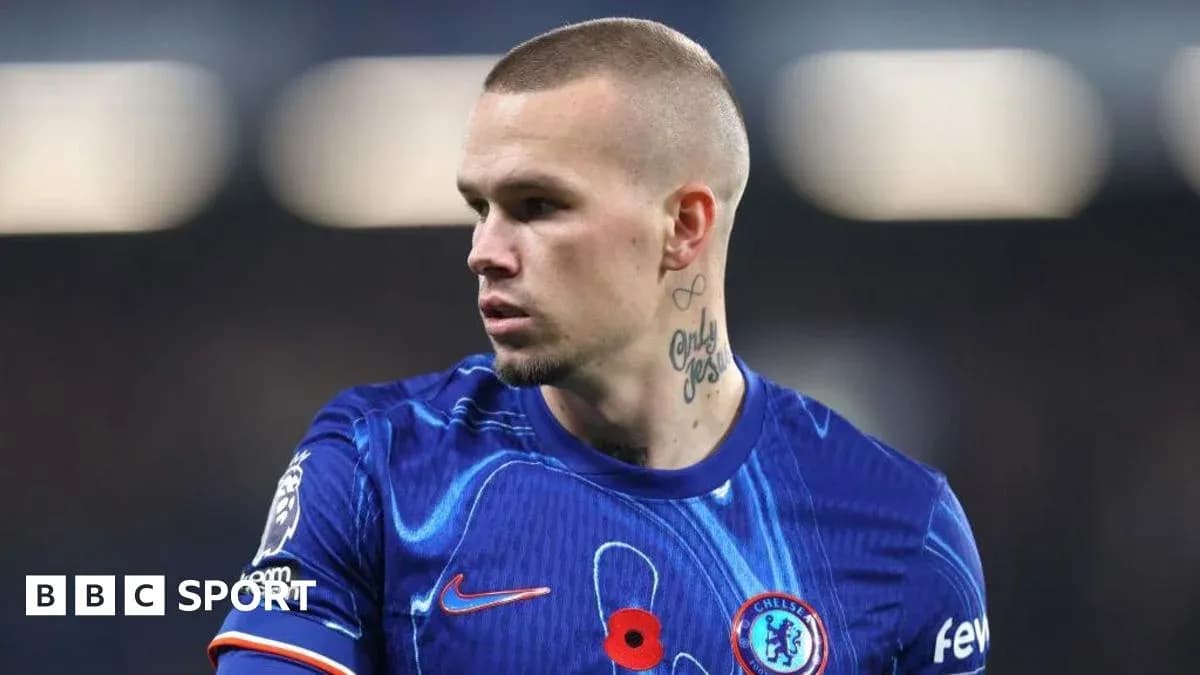
Mykhailo Mudryk’s 20‑month exile is over. The Chelsea winger has been cleared to return to competitive football immediately, drawing a hard line under one of the most bruising sagas of his young career.
The 25-year-old had not played since November 2024 after an out-of-competition test while on international duty with Ukraine in October that year produced an “adverse finding” for meldonium, a banned cardiovascular medication known to boost stamina and respiratory capacity. The Football Association initially came down as hard as it could: a four-year suspension, the maximum penalty available.
Mudryk fought it. He appealed to the Court of Arbitration for Sport, and for months his future hung in the balance.
Now the case has been resolved. The FA confirmed on Friday that, with the agreement of WADA, anti-doping proceedings have been brought to a close. Mudryk accepted that he broke anti-doping rules, and agreed to a sanction equal to the time he has already spent out of the game. The result: he can play again “with immediate effect”.
The governing body also revealed, for the first time, the full context of the test. The sample showed a “low concentration” of meldonium. Since then, WADA has updated its technical document on the substance. Those changes do not apply retrospectively, but they do shift the picture. Under today’s guidelines, the FA noted, the level of meldonium in Mudryk’s sample would not have been reported at all. No adverse finding. No charge. No ban.
For Mudryk, that nuance will sting and soothe in equal measure. Twenty months of his career have gone. Yet the door is open again.
He called it “the most difficult period” of his career and said he was “grateful” simply to be able to return. He has consistently insisted he never knowingly or intentionally took a banned substance, a stance he has not deviated from even while accepting the rule breach.
Chelsea, who kept their public counsel while the case remained confidential, moved quickly to welcome him back. The club said it is “pleased that the matter has now reached a conclusion which allows him to return to football with immediate effect”, stressing that they had “always supported Misha throughout this process while fully respecting the integrity of the anti-doping system and the legal process”.
They also underlined the significance of the updated testing framework, pointing out that “no anti-doping rule violation would have resulted” from Mudryk’s sample under current guidelines. For the club, that detail matters. It colours how this story will be remembered and, crucially, how the winger is received when he pulls on a Chelsea shirt again.
He will do that sooner rather than later. Mudryk is set to join the club’s pre-season tour as he begins the long climb back to full match sharpness. Those around him say he is confident he can rediscover his best form, and they have evidence to point to: the unseen grind.
Cut off from Chelsea’s training ground and staff by the terms of his suspension, Mudryk built his own environment. He paid for private coaches, hired goalkeepers for shooting sessions, and used facilities at non-league Uxbridge FC in west London. He even organised a training camp in Austria, footage from which showed him sprinting, finishing, and running attacking drills as if nothing in his career had changed.
Of course, everything had changed. No matter how intense the sessions, there is no true replacement for the daily rhythm of elite football. No dressing room. No tactical briefings. No pressure. Just repetition and doubt.
Those close to him describe the period as extremely difficult. The club maintained contact and support from a distance, but Mudryk largely had to navigate the storm on his own. His only public moment with Chelsea’s first team came at the Conference League final celebrations in May 2025, a fleeting reunion more symbolic than sporting.
Now comes the hard part: turning preparation into performance.
Chelsea are ready to offer him a route back, but what that looks like is still open. A direct return to the first-team squad is one option. A loan move is another, with Strasbourg – the club’s sister side in France – an obvious candidate if he needs regular minutes away from the Premier League spotlight. A permanent transfer cannot be ruled out either, even if it would mark a sharp twist in a story that began with one of the most high-profile transfer battles of 2023.
When Mudryk arrived from Shakhtar Donetsk for £61m, on a contract running to 2031, he became a symbol of Chelsea’s new era: long deals, heavy amortisation, big bets on potential. The financial logic was clear. The footballing script was supposed to be, too.
The ban tore that script up. Had the four-year suspension stood, Mudryk would not have been eligible to play again until around December 2028, with Chelsea still carrying his contract deep into the next decade. Now, that hypothetical has been shelved. The club and player have something far more tangible to work with: time on the pitch.
Mudryk, for his part, has spoken of “deep gratitude” to those at Chelsea who stood by him and says he is looking forward to the “next chapter” of his career. That chapter will start under a different kind of scrutiny. Every sprint, every touch, every selection or omission will be read through the lens of what he has just endured.
He cannot change the past 20 months. He can influence everything that comes next.
For Chelsea, still trying to knit together a coherent team from an expensively assembled, often disjointed squad, the question is simple and sharp: can Mykhailo Mudryk still become the player they thought they were signing, or has this ordeal permanently rewritten his ceiling at Stamford Bridge?