Neco Williams' Disallowed Goal: New Footage Sparks Controversy
New footage has dragged Neco Williams’ disallowed goal back into the spotlight – and this time, the pictures are damning.
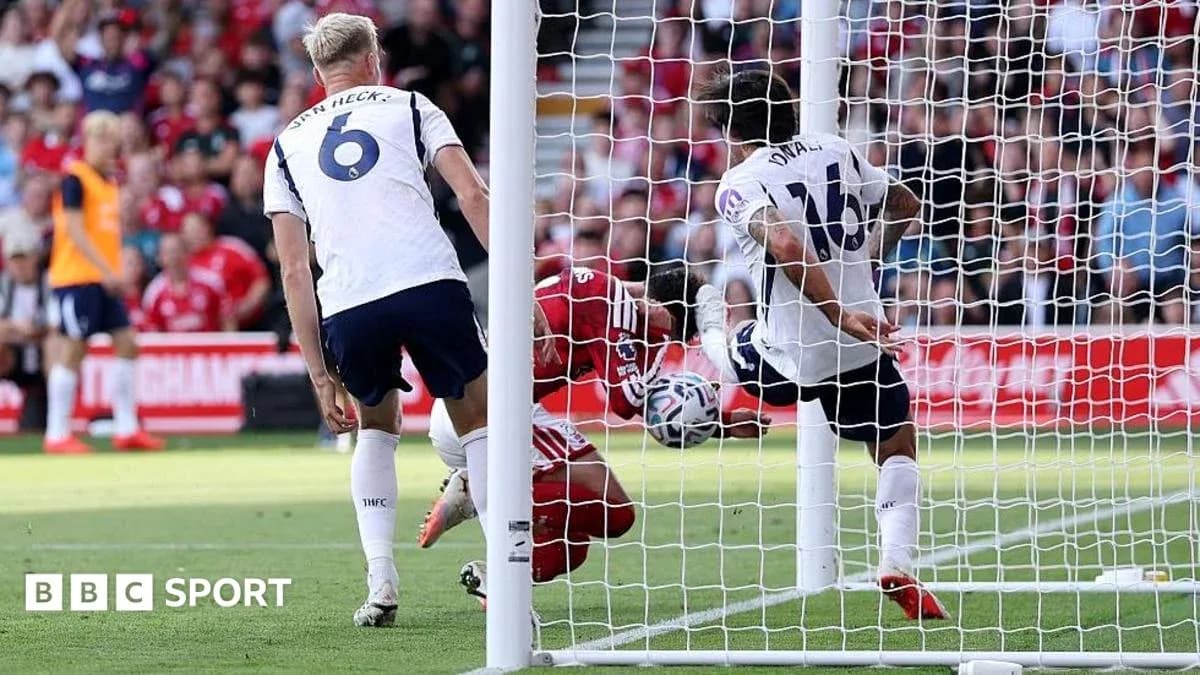
The Nottingham Forest defender thought he had settled a tight, scrappy 0-0 with Tottenham Hotspur when he forced the ball over the line in the 67th minute. On the pitch, the goal stood. In Stockley Park, Peter Bankes saw something else.
VAR stepped in, ruled accidental handball, and ripped the moment away.
Forest fumed. Williams was adamant. Oliver Glasner backed his player. They insisted there was no clear proof the ball had struck an arm.
Now there is.
New angle, old anger
Fresh video, released after the game, shows the ball brushing Williams’ left arm, then his right forearm, before crossing the line. No deflection off his head. No doubt about contact.
The twist? Bankes never saw this angle.
The VAR hub only has access to the broadcast cameras used in live coverage. This particular camera is one of several that record the action but do not feed directly into the match broadcast. So while the new footage vindicates the decision, it doesn’t soften the sense of injustice among Forest fans.
Bankes believed he already had enough. On the angles available to him, he judged that the tell-tale ripple of Williams’ shirt on his right forearm was proof of handball. He was “100% confident” in the call, even as the storm grew around him over the following days.
Inside Pro Ref – the rebranded refereeing body formerly known as PGMOL – there is no doubt. BBC Sport understands they are completely satisfied the goal was rightly ruled out. If anything, there is irritation at how the story has snowballed, not least because Williams was so categorical in his post-match denials.
“I've seen the images and the replays and at not one moment did I think I handballed it,” he told Sky Sports. He doubled down: every image, every replay, “at not one moment can you tell that has clearly hit my arms, because it never. I knew straight away I've headed it down in between my arms. It didn't hit my arm."
The new footage shows otherwise. It also shows the ball never touched his head at all. In real time, in the chaos of the six-yard box, it is entirely plausible he didn’t feel the contact. But his certainty poured fuel on the debate. The feeling within Pro Ref is simple: if Williams had not been so emphatic, the backlash would not have been as fierce.
Forest have been approached for comment.
‘Clear and obvious’? Not this time
Much of the noise has centred on one phrase that has come to define the VAR era: “clear and obvious error”. Glasner referenced it. Williams echoed it on X. Many fans latched onto it as the standard Bankes had supposedly failed to reach.
But that threshold does not apply to every VAR intervention.
“Clear and obvious” is for subjective calls – penalties, red cards, incidents that send the referee to the pitchside monitor. Handball in the attacking phase before a goal is treated differently. It is a factual check. If VAR believes there is sufficient evidence of an offence, the goal goes.
That is what happened here. Bankes felt he had seen enough to be sure. Others disagreed. Former midfielder Danny Murphy, speaking on Match of the Day, captured that tension.
“It's a really tricky one,” he said. “Maybe it could be a tiny bit on his sleeve or right forearm. But is it clear and obvious? No. That's the answer."
Murphy’s line reflects the wider unease. Even so-called “factual” decisions rely on human judgement. One official’s certainty is another’s doubt.
You only have to look back at Benjamin Sesko’s goal for Manchester United against Liverpool last season. The ball appeared to skim the Slovenia striker’s fingertips before finding the net. VAR Stuart Attwell checked, wasn’t convinced he could be sure, and allowed the goal to stand.
Referees’ chief Howard Webb later admitted the ball “probably does hit the hand” but stressed that “the VARs need to see that conclusively”. Attwell did not feel he had proof. Bankes did.
A law under pressure
This is why Webb wants the law itself rewritten.
During pre-season media briefings, he identified attacking handball as one area he would change. Under the current wording, goals like Williams’ must be forensically examined and, when contact is found, disallowed. Under a revised law, that might not be the case.
“The problem is the law forces VARs on every goal to look at what body part the ball went in off,” Webb said. He argued that if officials only penalised deliberate handball or situations where an attacker makes themselves “unjustifiably big”, checks would be quicker and less intrusive.
“It is a law I would definitely look to change. So Pro Ref and the Premier League are going to try and lobby for that to be changed."
For now, though, VARs are bound by the existing framework. Within that, Bankes’ call on Williams’ goal sits firmly in the “correct” column for the authorities.
Lighter touch, heavier noise
This season, VAR is officially being used with a lighter touch. The numbers back that up: only two subjective interventions so far, at a rate of 0.06 per game, down from 0.15 last season.
Yet the noise has not quietened. Every high-profile intervention still triggers a familiar cycle – slow-motion clips, frame-by-frame analysis, tribal outrage.
The Williams incident cuts right to the heart of the problem. Even when VAR reaches the “right” decision by the letter of the law, the process, the camera angles, and the human judgement behind it all remain under the microscope.
Bankes now has the footage that supports his instinct. Pro Ref has the evidence it wanted. The law, as written, has been upheld.
The question that lingers is harsher: how many more goals like this will football tolerate before the law finally changes?