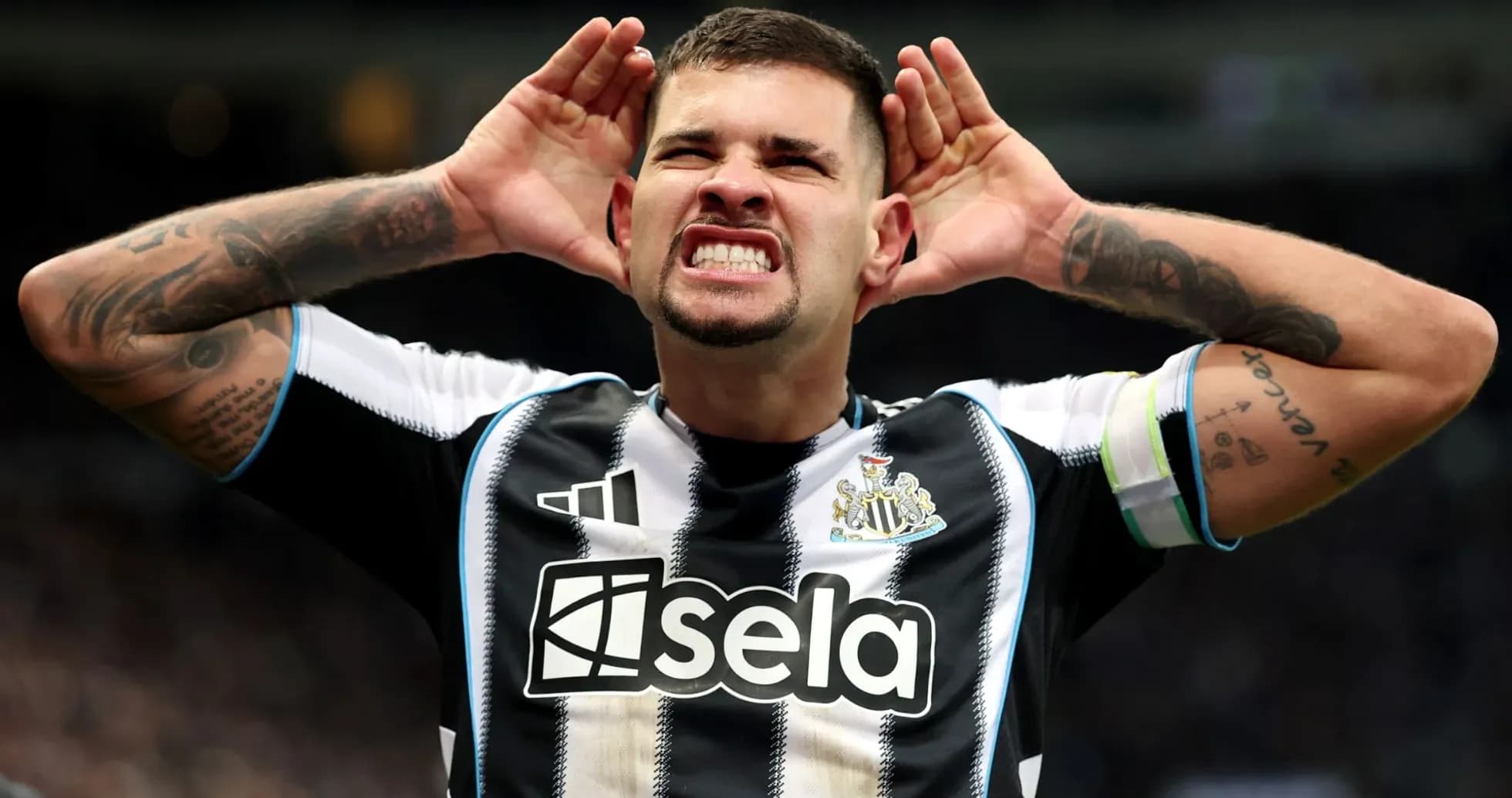
Newcastle Faces Change as Guimarães Exits
Newcastle United did not walk into this summer intending to sell Bruno Guimarães. They were dragged there.
Sporting director Ross Wilson laid it out bluntly. The club’s strategy never included cashing in on their captain, the emotional heartbeat of Eddie Howe’s midfield. But strategy only goes so far when your leader looks you in the eye and says he wants to go.
“What we had to weigh up was, very respectfully from Bruno with his behaviour towards us, very emotionally as well, he effectively told us he wanted to leave and move on,” Wilson said, speaking to the BBC.
The message was clear. Not a tantrum, not a standoff. Just a firm decision from a player who felt his time on Tyneside had run its course.
That does not trigger an automatic sale at Newcastle. It does, however, shift the ground under the negotiating table. “That doesn’t mean he can go,” Wilson added, “but it certainly plays a part in what our thinking is when we hit a certain range of number.”
So the number became everything.
Newcastle insist this was not a pre-planned cash-out. “There’s no part in saying it was part of our strategy and was in our thinking this summer – it wasn’t,” Wilson stressed. The club wanted to build around Guimarães, not replace him. Yet the realities of the market, the player’s wish to move, and the ever-present demands of financial rules left the board with little room to dig in indefinitely.
They chose to be, in Wilson’s words, “flexible and react to things that happen.”
A year of painful departures
Guimarães is not leaving a settled dressing room. He becomes the fourth key figure to walk away from Newcastle in under 12 months, a sequence that would test the resolve of any project.
- Alexander Isak went first, lured to Liverpool last summer after spearheading Newcastle’s return to the Champions League.
- Sandro Tonali and Anthony Gordon have followed in recent weeks, the Italian midfielder heading to Tottenham, the electric England winger to Barcelona.
- Now the captain, the man who knitted Newcastle’s play together, is gone as well.
Each departure has its own backstory. Taken together, they form a pattern that will worry supporters who believed the club were on the brink of establishing a new long-term core. This is a reset on the fly, not a slow evolution.
Inside the negotiations
If there was emotion in Guimarães’ decision, there was none in the numbers. Chief executive David Hopkinson described a hard-edged, detailed negotiation with Arsenal over a midfielder who turns 29 in November and is expected to deliver at the peak of his career.
Arsenal, as big clubs do, started low. “You’re dealing with very sophisticated actors on each side,” Hopkinson said. “That’s what negotiation looks like.” The London club tested Newcastle’s resolve with lower initial sums, probing for weakness in a situation where the player’s stance was already known.
Newcastle held the line until the offer climbed into a range they could accept. Hopkinson made no attempt to dress it up as anything other than a serious financial decision. “It’s a fee that satisfies us,” he said. From a commercial perspective, the club believe they have pushed the market for a player in Guimarães’ profile and age bracket. “If you want to put a merchandising spin on it, it’s the highest fee for a player in that position at that age, and all those things come into play.”
The deal, in his eyes, works for everyone. “Is it a good deal for Newcastle United? I believe it is, but Arsenal are getting a very special player and person. It’s worked from a financial perspective for both sides.”
That last line matters. Newcastle are trying to operate like an elite club in a landscape defined by financial regulations and scrutiny. They cannot simply refuse every big bid and ride out every unhappy player, no matter how deep their ownership’s pockets might be.
What’s left at St James’ Park?
Strip away the boardroom language and the message is stark. Newcastle have lost a captain, a talisman, and a symbol of their resurgence. They have gained a sizeable fee and some breathing space in their accounts.
The challenge now is not just replacing Guimarães’ passing, his press resistance, or his bite in midfield. It is replacing his presence. The player who set the tone, who embraced the city, who helped drag the club back into Europe, has chosen a new stage.
Newcastle insist this was never the plan. It isn’t. The plan has changed.
What comes next will show whether this is a painful but controlled adjustment, or the start of a slow unravelling of what looked, not long ago, like one of the Premier League’s most exciting projects.