Newcastle vs Liverpool: Tactical Insights from 2-2 Draw
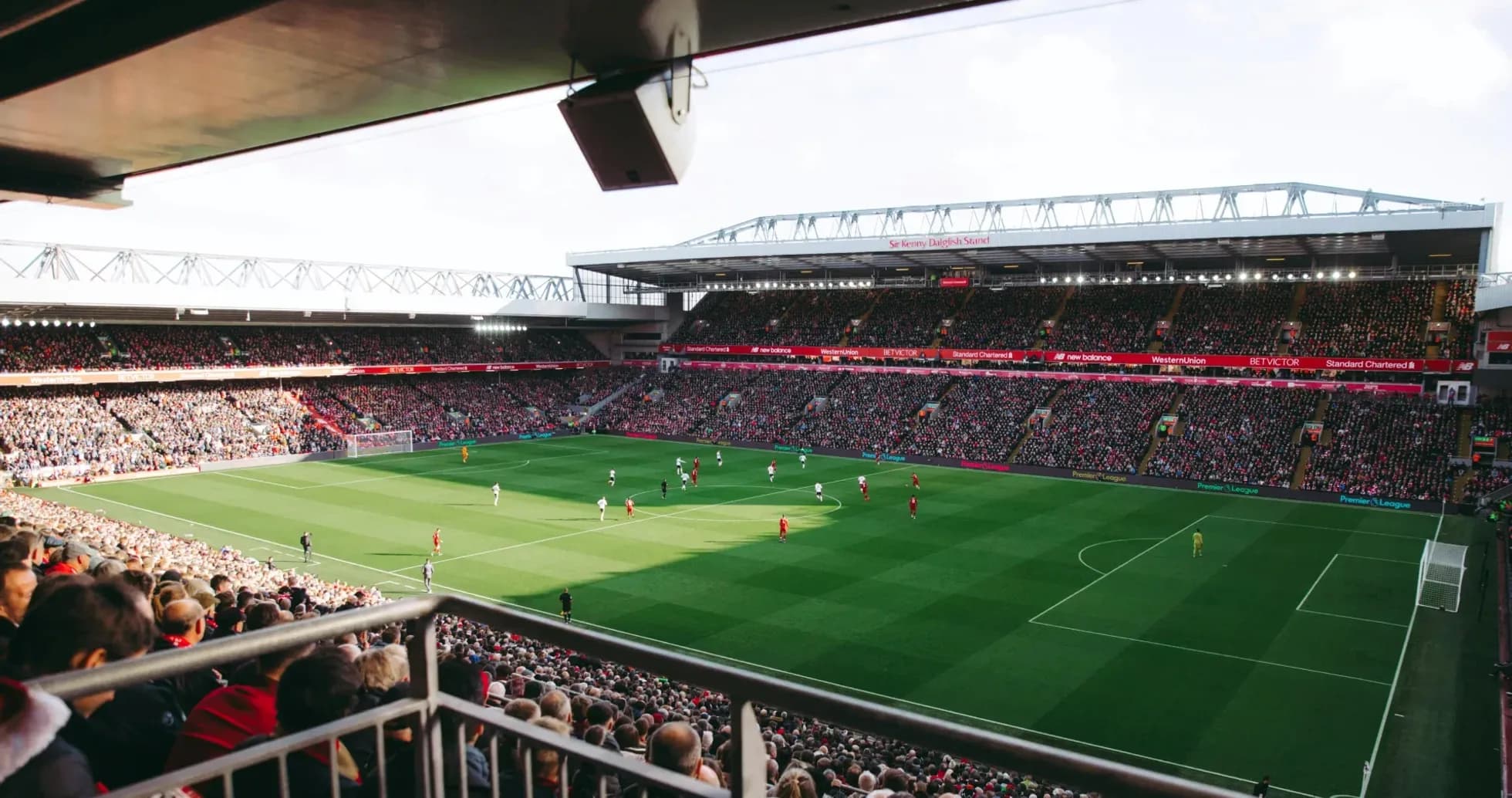
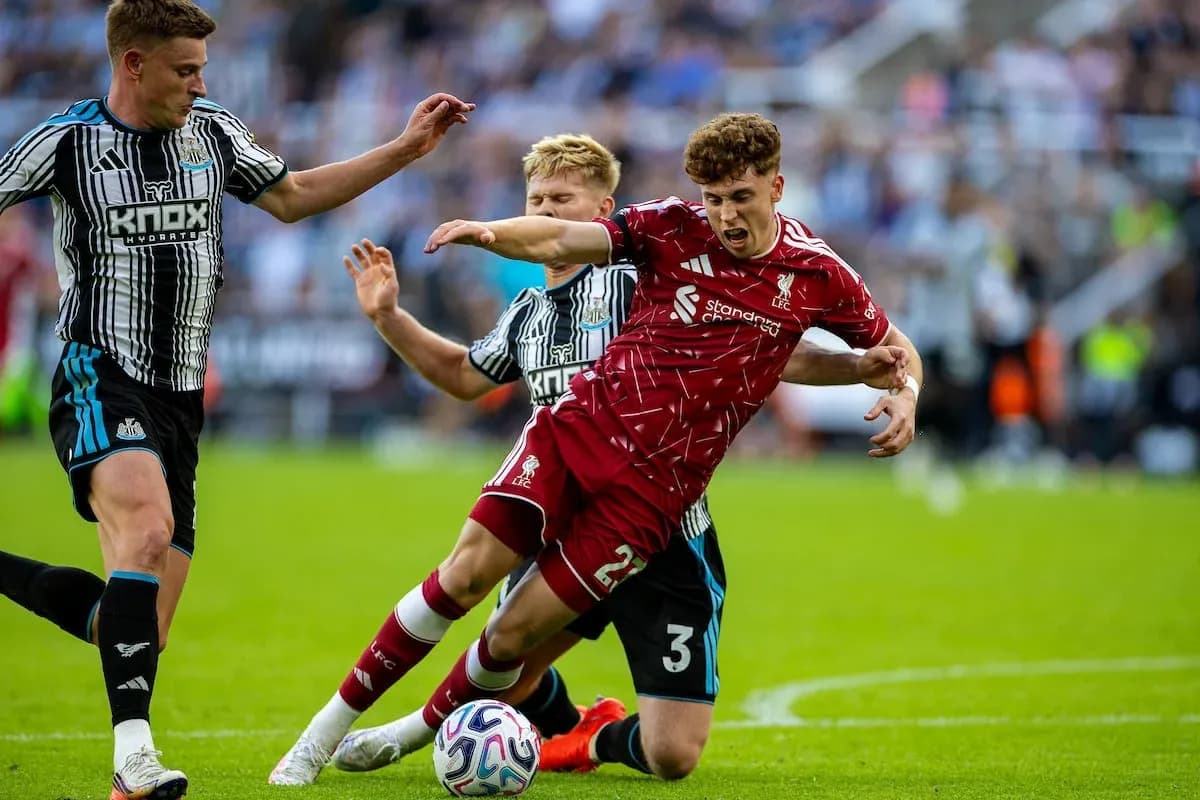
St James’ Park under late-August sun has a way of stripping away pre-season illusions. Following this result, Newcastle and Liverpool walk away level on the day and level in the early Premier League table, each with 1 point, a goal difference of 0 and the sense that their new-season identities are only just beginning to form.
I. The Big Picture – Mirrors in a 4-2-3-1
Both sides arrived committed to a 4-2-3-1 and left with the same scoreline: 2-2 overall, 2-2 at home for Newcastle, 2-2 away for Liverpool. After 1 match each, Newcastle sit 11th, Liverpool 10th, separated only by alphabetical order and expectation.
Matthias Jaissle’s first league outing with Newcastle leaned into verticality and direct running. The spine of L. Hornicek, M. Thiaw and S. Botman behind the double pivot of S. Steur and L. Miley provided a structure that allowed the three behind W. Osula — A. Elanga, Y. Wissa and H. Barnes — to attack space with aggression. Newcastle’s season so far is a single data point, but it is loud: at home they have scored 2 and conceded 2, averaging 2.0 goals for and 2.0 against at St James’ Park.
Andoni Iraola’s Liverpool mirrored the shape but not the rhythm. With Alisson in goal, a back four of J. Frimpong, J. Jacquet, V. van Dijk and M. Kerkez, and a double pivot of D. Szoboszlai and R. Gravenberch, Liverpool’s 4-2-3-1 was built to press high and break quickly through R. Ngumoha, F. Wirtz and C. Gakpo, all servicing central striker A. Isak. On their travels, Liverpool also have 2 goals scored and 2 conceded, averaging 2.0 for and 2.0 against away from home — a statistical mirror of Newcastle’s home output.
II. Tactical Voids – Who Was Missing, and What It Changed
The absentees shaped the match as much as those on the pitch. For Newcastle, the absence of Joelinton removed a key ball-carrying and pressing presence from midfield. Without him, the responsibility to connect phases fell heavily on L. Miley and S. Steur. Miley’s willingness to receive under pressure and play forward — 36 passes with 2 key passes in his league profile so far — helped Newcastle approximate Joelinton’s progressive influence, but the physical dominance and chaos the Brazilian usually brings in duels were missing.
V. Livramento’s hamstring injury forced Jaissle to lean on A. Dedic at right-back. Dedic’s selection tilted Newcastle slightly more conservative in early build-up, with S. Botman often the calmer outlet. That, in turn, meant more reliance on direct balls into W. Osula and the wide trio to win second balls.
Liverpool’s list of absentees was longer and more structural. C. Bradley’s knee injury removed a natural right-back option and any temptation to use a more conservative full-back behind an aggressive winger. Instead, J. Frimpong’s selection signalled Iraola’s intent to attack that flank relentlessly. J. Gomez’s injury reduced centre-back rotation options, putting more responsibility on J. Jacquet alongside V. van Dijk. H. Ekitike’s Achilles problem and G. Leoni’s knee injury thinned Liverpool’s attacking depth, making A. Isak’s fitness and durability central to their plan.
Discipline added another layer. Newcastle’s season card profile already shows yellow cards spread almost evenly through the match, with 20.00% of their cautions in each of the 16-30, 31-45, 61-75, 76-90 and 91-105 minute windows. That hints at a side that plays on the edge from whistle to whistle. J. Murphy, J. Ramsey, L. Miley and Y. Wissa each carry an early yellow this season, reinforcing the idea of a squad willing to foul to break rhythm.
Liverpool’s yellows are more front-loaded: 66.67% of their cautions have arrived between 16-30 minutes, and 33.33% between 76-90. This suggests an early, aggressive press that sometimes crosses the line, then a late-game re-energising push as they chase or protect a result.
III. Key Matchups – Hunter vs Shield, Engine Room vs Engine Room
The “Hunter vs Shield” battle at St James’ Park was really a duel of attacking trios against disciplined back fours.
For Newcastle, the primary hunters were A. Elanga and Y. Wissa. Elanga, already with 1 goal in the league, offers direct penetration from the flank. His 2 shots on target from 2 attempts and 5 duels won in his profile underline a winger who attacks both the box and his full-back. Up against M. Kerkez and the covering of V. van Dijk, Elanga’s pace asked persistent questions of Liverpool’s left side, especially in transition.
Wissa, meanwhile, is Newcastle’s tactical Swiss army knife. His early-season numbers — 4 shots, 1 on target, 1 assist, 19 duels contested and 11 won — tell of a player who both initiates and finishes moves. Operating as a central attacking midfielder here, he repeatedly looked to drag V. van Dijk or J. Jacquet into uncomfortable zones, creating space for Osula to run the channels.
On the other side, Liverpool’s attacking hub was F. Wirtz between the lines, supplied by R. Gravenberch from deeper zones. Gravenberch’s early-season profile — 47 passes at 91% accuracy, 1 key pass, 3 fouls drawn, 2 interceptions — illustrates his role as the metronome and line-breaker. His job was to play through or around Newcastle’s double pivot of Miley and Steur, forcing M. Thiaw and S. Botman to step out.
The “Engine Room” clash between those double pivots was central. Miley, at 19, already shows a mature blend of composure and bite: 7 duels contested with 5 won, 1 tackle, 1 interception and 1 block in his profile. Up against Gravenberch and Szoboszlai, his ability to win second balls and immediately release Elanga or Barnes was a key counterweight to Liverpool’s territorial pressure.
Defensively, S. Botman’s battle with A. Isak was a study in timing. Botman’s calm reading of long diagonals allowed Newcastle to hold a relatively high line without being shredded by Isak’s runs in behind. M. Thiaw’s aggression in stepping into midfield duels complemented that, compressing the space Wirtz wanted to operate in.
IV. Statistical Prognosis – What This 2-2 Really Says
Following this result, both sides have identical overall records: 1 match played, 0 wins, 1 draw, 0 defeats, 2 goals for, 2 against, goal difference 0. Newcastle’s 4-2-3-1 has already been used once; Liverpool’s the same. Both have failed to keep a clean sheet and both have yet to fail to score.
Liverpool’s penalty record is perfect so far: 1 penalty taken, 1 scored, 100.00% conversion, 0 missed. That clinical edge from the spot is a small but important signal in tight games, especially away from home. Newcastle, by contrast, have not yet been awarded a penalty this season.
Card distributions hint at future fault lines. Newcastle’s yellows arriving steadily across the 16-105 minute range suggest late-game fatigue and emotional spikes that could translate into dangerous free-kicks conceded. Liverpool’s early booking surge between 16-30 minutes underlines how their front-foot pressing can be baited by technically secure midfields like Newcastle’s.
In tactical terms, this 2-2 feels less like chaos and more like a controlled firefight between two mirrored systems. Newcastle’s attacking core of Elanga, Wissa, Barnes and Osula has already produced 2 goals and multiple high-impact contributions — Elanga and J. Willock are on 1 goal each, Osula and Wissa each with an assist. Liverpool’s creators, led by Gravenberch’s passing and Wirtz’s positioning, showed they can generate chances even without their full complement of attackers.
The prognosis? If Newcastle can tighten the defensive distances in front of Botman and Thiaw while maintaining the vertical threat of Elanga and Wissa, their home average of 2.0 goals scored will make St James’ Park a hostile venue. Liverpool, with their away average of 2.0 goals for and a perfect penalty record, will continue to be dangerous travellers — but Iraola will know that conceding 2.0 goals away on average is unsustainable for a title challenge.
For now, the table says these teams are equals. The performance hints that both have higher ceilings — and that the next time these mirrored 4-2-3-1s meet, the margins will be found in the engine rooms and in how each side manages those combustible, card-heavy phases between 16-30 and in the dying minutes.