Newcastle's Striker Dilemma: Mateta Shines in Palace Victory
The black-and-white number nine held the spotlight at full-time, soaking up the noise, the flashbulbs, the outstretched hands.
Only it wasn’t a Newcastle United striker. It was Crystal Palace’s Jean-Philippe Mateta.
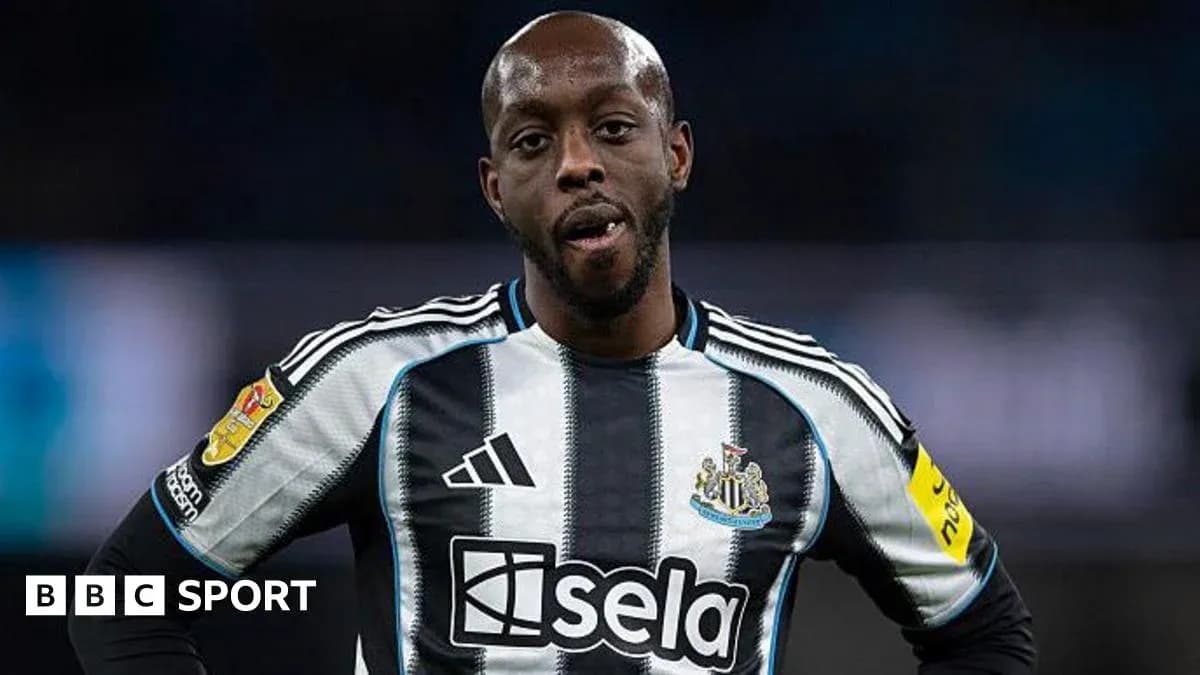
At Selhurst Park, the iconic shirt on Yoane Wissa’s back ended the night on the wrong shoulders. Mateta swapped jerseys with his old Chateauroux team-mate after ripping the game away from Newcastle with a late, ruthless double in Palace’s 2-1 win. One forward left the pitch as the match-winner. The other walked off without having so much as touched the ball.
A tale of two cameos, and a snapshot of Newcastle’s muddled search for a new focal point in attack.
A number nine without a touch
Eddie Howe turned to Wissa in desperation time, sending on the £55m man after Mateta’s second goal deep into stoppage time. The instruction was clear: chase the impossible. The reality was brutal. The ball never found him.
Nick Woltemade, the other big-money forward brought in to help fill the Alexander Isak void, had only marginally more influence. Given a rare run-out up front in the 84th minute, he barely had time to plant his feet, let alone reshape a contest that was slipping away.
Between them, Wissa and Woltemade cost Newcastle £124m last summer. On nights like this, that figure hangs heavy.
Howe, though, has been at pains to stress that price tags do not pick his team.
“I don’t pick the team based on transfer fees,” he said, framing his decision to start William Osula instead. Selection, he insisted, is about what he sees every day at the training ground.
Osula justified the gamble with a goal and a performance full of running. Howe’s explanation was pointed.
“He’s got the physical attributes, the determination to do really well. He’s improving week in, week out.”
Those words cut to the heart of Newcastle’s dilemma up front, seven months on from Isak’s painful departure.
Life after Isak
Newcastle always knew replacing Isak like-for-like would be a fantasy. Once the Swede pushed to join Liverpool in a British record £125m deal, the club accepted internally that the task bordered on “impossible”.
Callum Wilson’s exit only sharpened the problem. Howe wanted two forwards to share the load, to rebuild a front line that had lost its cutting edge and its reference point.
Woltemade, long admired and once seemingly destined for Bayern Munich, arrived for £69m after Newcastle had failed with moves for Joao Pedro, Hugo Ekitike and Benjamin Sesko. It felt opportunistic, but also oddly fated when he burst out of the blocks with five goals in his first six starts.
The numbers still flatter him. Among Premier League players with at least 30 shots this season, Woltemade boasts one of the best conversion rates at 23%. When he plays as a striker, he looks like one.
Yet in recent weeks, with captain Bruno Guimaraes sidelined, the German has been dragged deeper, used more often in midfield than on the shoulder of the last defender. Technical quality has made him a useful stopgap. It has also blunted the very weapon Newcastle paid so heavily for.
The coaching staff have grumbled privately that they have not had enough time to refine Woltemade’s game in the final third. With a punishing schedule finally easing, they will now get that chance. They need to.
Because Howe’s system, at its best, has always leaned on a different profile: a rapid striker who can sprint in behind, stretch defences and trigger the press. Woltemade has had to adapt to a new league, a new tempo, a new level of physicality after leaving Stuttgart. Newcastle, in turn, must decide whether they bend more towards his strengths or keep forcing him into roles that dilute them.
Wissa’s stuttering start
Wissa was supposed to ease that tension. Premier League-proven, direct, and aggressive in his movement, he looked a cleaner fit for Howe’s template.
The reality has been far messier.
His summer was disjointed from the start. Having pushed to leave Brentford, he never had a proper pre-season. Days after sealing his move to Newcastle, a knee injury on international duty with DR Congo stalled any momentum.
He still began brightly enough: two goals in his first two starts hinted at a smooth transition. Then the goals dried up. Since that early burst, he has found the net only once.
Howe’s response spoke volumes. When he needed a central striker in recent weeks, he turned first to winger Anthony Gordon as a makeshift option through the middle. Then, against Palace, he handed Osula the stage ahead of Wissa.
For a club whose recruitment under Howe has generally been praised, the £55m outlay on Wissa is starting to look like the desperate swing it always threatened to be. One big bet in a summer window that never truly settled.
A window that never found its rhythm
Newcastle’s net spend last summer pushed beyond £100m, but the return has been underwhelming. It was a turbulent period: no sporting director, no chief executive, first-choice targets slipping through their fingers, deals being done as the season was already under way.
Howe played a major role in driving that recruitment. Yet at Selhurst Park, only one of the five outfield signings from that spree, Malick Thiaw, started the match.
The bench told its own story. Jacob Ramsey, Anthony Elanga, Woltemade and Wissa all sat in reserve, all theoretically capable of changing the game. None were turned to with any urgency.
Even when Palace rattled the crossbar through Jefferson Lerma’s second-half header, the warning shot did not provoke a bold reshuffle from Howe. The tweaks came late, and they came cautiously.
On the opposite touchline, Oliver Glasner read the contest differently. He saw fatigue, space, and opportunity. His substitutions tilted the game. Mateta stepped off the bench and decided it.
By the time Wissa finally crossed the white line, wearing that famous number nine, the damage had already been done. He left with Mateta’s shirt and no touches of the ball, a symbol of a Newcastle attack still trying to work out exactly who it wants to be.