Neymar Ruled Out and Pulisic Doubtful Due to Calf Injuries
The 2026 FIFA World Cup is only just finding its rhythm, but two of its marquee attacking talents are already limping through the storylines. Neymar Jr. will miss Brazil’s next Group C match against Haiti, while Christian Pulisic faces a race against time to be fit for the United States’ Group D clash with Australia.
Both are carrying calf injuries. Both are central to their countries’ ambitions. And both are stuck on the wrong side of the touchline at a tournament that was supposed to showcase them.
Neymar’s Long Road Back
Neymar’s situation is the more alarming in terms of sheer mileage. The 34-year-old hasn’t played a competitive minute for Brazil at this World Cup. In fact, he hasn’t featured for the Seleção at all since October 17, 2023, when he tore the anterior cruciate ligament and meniscus in his left knee during a South American qualifier against Uruguay.
The latest setback is in the opposite leg: a right calf injury sustained on May 17 while playing for Santos. He has been out for a month.
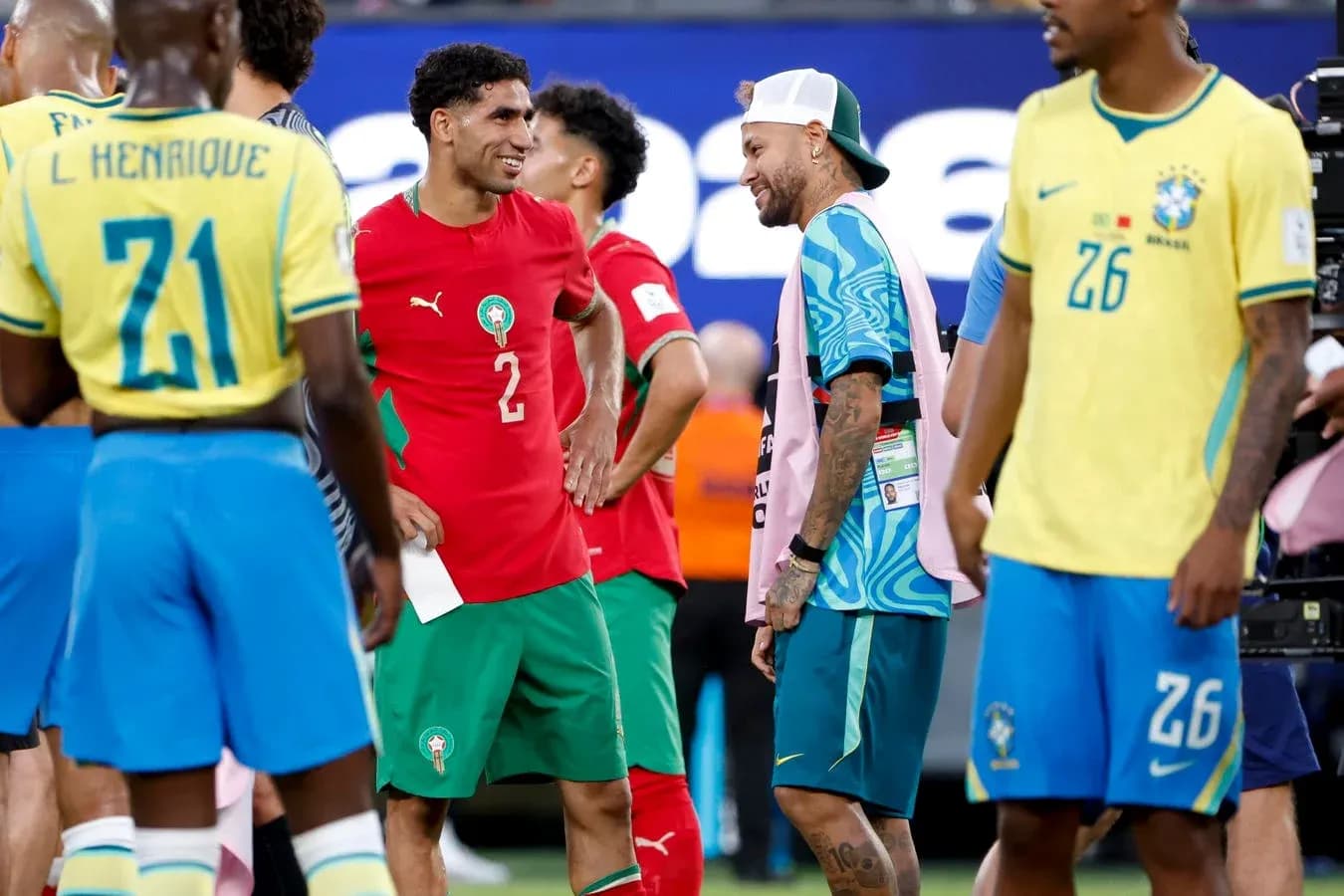
There have been small signs of progress. Neymar trained alone on the sideline on Tuesday, then joined his teammates briefly on Wednesday. But Brazil’s medical staff and coaching team are not willing to gamble. He has already been ruled out of the upcoming group match against Haiti, and there is growing acceptance inside the camp that he may sit out the entire group stage.
That plan only works if Brazil hold up their end of the bargain.
The five-time world champions opened with a 1-1 draw against Morocco, a result that leaves little margin for error. They still have Haiti on Friday and Scotland on June 24. Drop points again, and the luxury of saving Neymar for the knockout rounds might never materialize.
Brazil are trying to manage a veteran star through consecutive major injuries while also surviving a tricky group. It is a delicate balance, and the clock is not slowing down for him.
Pulisic’s Tournament On Pause
On the other side of the bracket, the United States have a very different headache, but one that could prove just as disruptive.
Christian Pulisic, 27 and very much in his prime, picked up a calf issue in training last week. He then aggravated it in the USMNT’s World Cup opener, a 4–1 dismantling of Paraguay that should have been a statement win on all fronts.
Instead, it came with a caveat. Pulisic was forced off by halftime, his night cut short just as the U.S. attack was purring.
Now his status for Friday’s Group D meeting with Australia is uncertain. The team has a cushion after that emphatic first victory, but this is a tournament where momentum can evaporate in a single bad half. Without their primary attacking catalyst, the U.S. suddenly look a little more vulnerable.
What The Injuries Actually Mean
Strip away the names and the storylines, and both cases likely fall under the same broad diagnosis: calf strains, or “pulled” calf muscles.
A calf strain occurs when the muscle or the tendons attaching it to the bone are overstretched or torn. In a sport built on explosive sprints, sharp changes of direction, and constant acceleration, it’s a frequent visitor to the treatment room.
Medical staff typically grade these strains in three degrees:
- First-degree (mild) – Less than five percent of the muscle is affected. Players can often return within one to three weeks, especially with elite treatment and the urgency of a World Cup driving every decision.
- Second-degree (moderate) – A more substantial portion of the muscle is damaged, but it is not a complete tear. This is what Neymar is reported to have. Recovery usually stretches to roughly three to six weeks, about two to three times longer than a mild strain. That timeline collides awkwardly with a compact group schedule.
- Third-degree (severe) – A complete tear of the muscle or the muscle-tendon unit. This is the nightmare scenario, one that typically means months out and often raises the question of surgery.
Neither Neymar nor Pulisic is believed to be dealing with a third-degree injury. Neymar’s is reportedly second-degree. Pulisic’s exact grading has not been made clear, leaving his return window harder to pin down.
Treatment, for now, is conservative and familiar: rest, ice, compression, and elevation. World Cup or not, biology still sets the rules.
Timelines, Risk, And World Cup Stakes
For Neymar, the arithmetic is brutal. A second-degree strain with a three-to-six-week recovery window, layered on top of his long-term knee layoff, makes any rushed return a serious risk. Brazil know this. They also know that a half-fit Neymar in the knockout rounds could still tilt a match on a single touch.
That’s why the talk around the camp leans toward caution in the group stage. Survive now, unleash him later. If they can.
Pulisic’s case is more in the gray area. If his strain is mild, a one-to-three-week window keeps him in realistic contention for the rest of the group phase and beyond. But the fact that he aggravated the injury in the opener and had to leave by halftime is a warning sign. Push too soon, and a manageable problem can turn into a tournament-ending one.
So both coaching staffs are staring at the same dilemma: risk a star early and potentially lose him for good, or hold him back and trust the rest of the squad to carry the load.
The World Cup rarely waits for anyone. For Brazil and the United States, the next few days will reveal whether their medical gambles keep their campaigns alive—or leave their biggest names watching the defining moments from the bench.