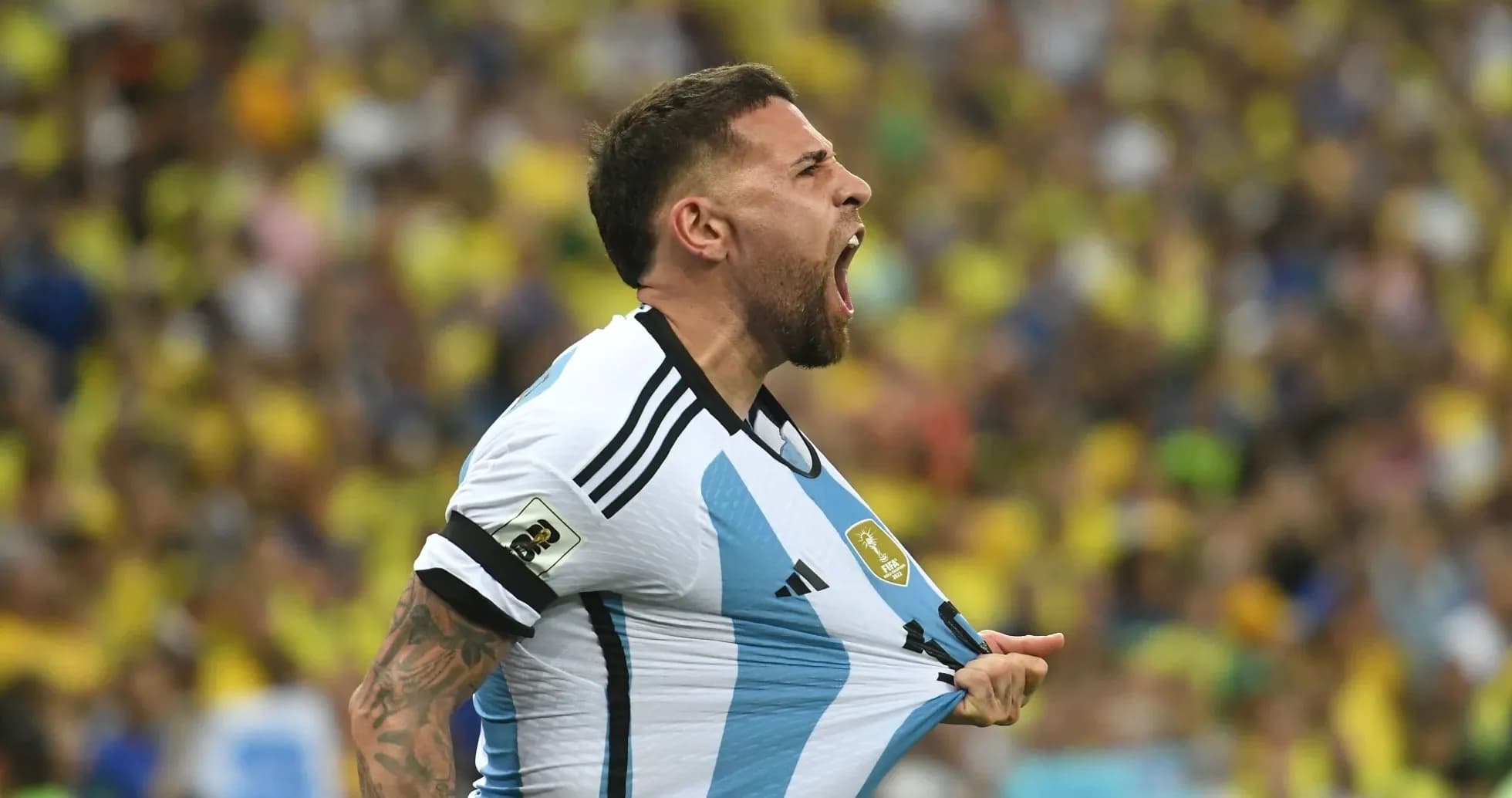
Nicolás Otamendi Retires: A Warrior's Farewell to Argentina
Nicolás Otamendi waited until the dust of the 2026 World Cup had truly settled. Then, on a quiet Wednesday, he chose his own stage: a phone screen, an Instagram post, and a few lines that carried the weight of a lifetime.
“Today, I’m writing the most difficult words I’ve ever had to,” he began.
With that, one of the defining defenders of modern Argentine football announced that he will retire from the national team following the 2026 World Cup, closing an international career built on grit, scars and an unshakeable devotion to the shirt.
A childhood dream, a hard goodbye
For Otamendi, this was never just about caps and trophies. It was about the jersey.
He called wearing the Argentina shirt “a childhood dream’’ and “the greatest privilege” of his football life. The message was raw, stripped of clichés. He spoke of defending the Albiceleste “with all my heart, with pride, and with a sense of responsibility, knowing what it means to millions of Argentines.”
The pain of the 2026 World Cup final defeat still lingers. He didn’t hide from it. He regretted the loss, admitted the hurt, but insisted he walks away “with the peace of mind that comes from giving it all.”
There was gratitude, too. To fans who lived every tackle with him. To his family, who rode out the storms and the celebrations. And to the next generation, whom he urged to “never stop believing.”
He signed off with a line that will resonate from barrios to bars across the country: “Thank you, Argentina. Thank you for letting me fulfill my dream of becoming a world champion and wearing the most beautiful jersey in the world.”
An Instagram post that felt like a dressing room
The reaction was immediate. And emotional.
Otamendi’s post turned his comment section into a virtual dressing room, filled with embraces, nods of respect and the kind of messages usually shared behind closed doors.
Alexis Mac Allister saluted him as “an exemplar of fight, resilience and love for the shirt,” a neat summary of the defender’s entire international identity. Germán Pezzella called him “a guide for us all,” underlining how deeply Otamendi’s presence shaped Argentina’s defensive core over the years.
Names from different generations chimed in: Paulo Dybala, Marcos Senesi, Mariano Andujar, Gianluca Prestianni. All of them, in their own way, said the same thing: thank you.
Rodrigo De Paul went even further. He dedicated an Instagram story to the vice-captain, pulling back the curtain on their bond.
“From the day I got to the national team, you opened the door to your room, and since then we’ve held the same rituals,” De Paul wrote. “My thanks to you, my brother, are eternal. You were an example to follow and one of the leaders of the beautiful story this team built. Thanks for everything, I’ll miss you.”
It read less like a tribute and more like a farewell from a younger brother to an older one.
From pillar to guardian
Otamendi’s decision hurts, but it doesn’t shock. At 38, his international clock was always ticking louder than most.
In Qatar 2022, Lionel Scaloni trusted him as one of his pillars, a starting centre-back in a team that climbed all the way to the title. Four years later, the picture had shifted. Lisandro Martínez stepped in alongside Cristian “Cuti” Romero, while Otamendi moved into a supporting role, a veteran presence on the bench and in the training ground.
He was no longer the automatic starter. He became the guardian. The voice in the tunnel, the standard in training, the reminder of what it takes to survive in that shirt.
For a player who had fought his way from Vélez Sarsfield in 2008 to the very top of the European game with clubs like Manchester City and Benfica, there was a certain symmetry to this final phase: still competing, still snarling, but now also guiding.
The defender who refused to back down
Otamendi never pretended to be something he wasn’t. He was rugged. Uncompromising. Abrasive. At times, infuriating. Always combative.
He built his reputation on tenacity and timing, especially in the air. At 1.83m, he was hardly towering by international standards, yet he consistently dominated aerial duels that logic said he should lose.
One image captures him better than any statistic: the snapshot from Qatar 2022, round of 16, Argentina vs Australia. Otamendi, chest out, rising above 1.98m Harry Souttar. A smaller man in height, a giant in intent. That photo became a symbol of his refusal to yield, of the edge he brought to every contest.
He wasn’t a luxury defender. He was a statement. A message to opponents that Argentina would not be bullied.
Among the greats
Over nearly two decades, Otamendi carved out a place in the Albiceleste’s defensive lineage. From his early days breaking through at Vélez to his years anchoring backlines across Europe, he became a constant presence in a national team that changed coaches, systems and stars.
The names he now stands alongside say everything: Daniel Passarella, Oscar Ruggeri, Roberto Ayala. Different eras, different styles, but the same fierce commitment to the crest.
Otamendi’s legacy is not built on elegance. It’s built on determination, fierceness and a competitiveness that never dimmed, even as his role shifted and his minutes shrank. That is what the next wave of Argentine defenders will try to mirror: not just his tackles, but his mentality.
He walks away having lived the dream he once shouted about in the streets as a kid — to become a world champion with Argentina and to defend “the most beautiful jersey in the world.”
The shirt will move on. New leaders will emerge. But in the story of this golden era, the scars on Otamendi’s shins and the steel in his gaze will always be part of the foundation.