Nigeria Names Star-Studded Squad for WAFCON Title Defence
Nigeria will go to Morocco with the crown on their heads and a target on their backs. Justine Madugu has made that clear – and so has his squad list.
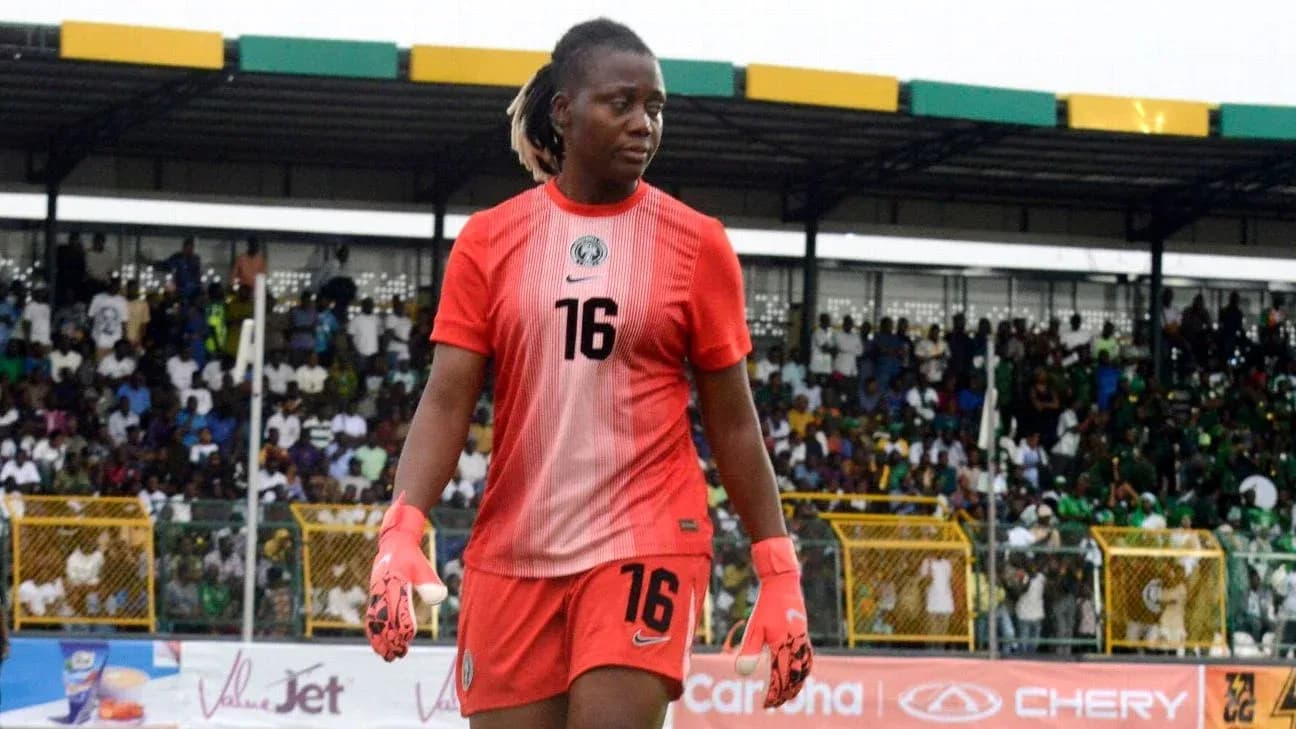
The Super Falcons coach has kept faith with the core that delivered a record 10th Women’s Africa Cup of Nations title last year, retaining captain Rasheedat Ajibade, standout goalkeeper Chiamaka Nnadozie and talismanic forward Asisat Oshoala in a 25-player group built for a double mission: keep the African title and book another ticket to the world stage.
World Cup streak on the line
Nigeria remain the continent’s standard-bearers. They are the only African side, and one of just seven teams worldwide, to have played at every FIFA Women’s World Cup since 1991. That unbroken run is no mere statistic for Madugu; it is the first line in his to-do list.
With this year’s WAFCON doubling as the qualifying route to the 2027 World Cup in Brazil, the Super Falcons know the equation. Reach the semifinals in Morocco and the ticket is stamped. Anything less, and the path becomes complicated.
Madugu has been blunt about priorities. First, secure World Cup qualification. Then, think about lifting the trophy again. The order matters when the margin for error is this small.
Plumptre blow for title defence
The biggest shadow over the squad is cast by the absence of Ashleigh Plumptre. The defender, a key part of Nigeria’s recent resurgence, has not recovered from the injury she suffered in March and will not feature in Morocco.
She addressed the decision herself on social media, explaining that her body “is asking for more time” and that she is listening to it. The message was tinged with disappointment but also resolve: she urged Nigerians to back the team, “go easy on them,” and promised she will return when ready to compete again.
On the pitch, her composure and range of passing will be missed. Off it, her leadership leaves a gap in a back line that has leaned heavily on experience in big moments. Madugu will have to find new combinations quickly.
Old guard, new engine
Even without Plumptre, this is a squad dripping with know-how.
Ajibade returns as captain and heartbeat, Nnadozie as the last line of defence and arguably Africa’s premier goalkeeper. Around them, a spine of veterans who have seen everything the African game can throw at them: Osinachi Ohale, Michelle Alozie, Christy Ucheibe, Halimatu Ayinde, Oshoala. Battle-tested, tournament-hardened, and still central to Nigeria’s ambitions.
But this is no farewell tour for the old guard. The next generation is already pushing its way to the front.
Midfielders Jennifer Echegini and Deborah Abiodun bring energy and craft between the lines, while forwards Gift Monday, Esther Okoronkwo and Omorinsola Babajide add pace and unpredictability in the final third. These are not just squad fillers; they are players expected to carry more of the load as the Super Falcons evolve.
The balance is deliberate: a seasoned core surrounded by younger legs ready to run, press and stretch opponents for 90 minutes and beyond.
One home-based hope, global footprint
Nigeria’s reach is now global, and the squad list underlines it. Twenty-four of the 25 players are based abroad, spread across Europe, North America, Asia and the Middle East.
The lone home-based representative is goalkeeper Fatima Oloko of Abia Angels, rewarded with a place among the three shot-stoppers. She joins Nnadozie, now at Brighton & Hove Albion in England, and Comfort Erhabor of Portsmouth Ladies.
Across the back line, Ohale (Pachuca Tuzas), Alozie (Chicago Stars), Shukurat Oladipo (AS Roma), Rofiat Imuran (London City Lionesses), Glory Ogbonna (FC Kiryat Gat), Oluwatosin Demehin (Galatasaray Sportive), Sikiratu Isah (Bnot Netanya) and Ucheibe (SL Benfica) give Madugu options and versatility in every defensive role.
In midfield, Ajibade and Echegini both arrive from Paris Saint-Germain, with Ayinde (BK Hacken), Abiodun (Washington Spirit) and Toni Payne (Everton Ladies) rounding out a group capable of dictating tempo or turning games into transition battles when needed.
Group C and the weight of history
Nigeria’s title defence starts in Group C, where they will face Egypt, Zambia and tournament debutants Malawi, with all three group games set for Rabat.
On paper, Nigeria’s pedigree dwarfs that of their opponents. In reality, the gap has narrowed. Zambia, in particular, have grown into a dangerous, athletic side, while Egypt and Malawi will treat a shot at the champions as a free swing.
The tournament itself has changed too. The expanded 16-team format raises the level of competition and the physical toll. It also raises the stakes: the four semifinalists go straight to the 2027 World Cup, while the fifth-placed side must survive an intercontinental playoff.
Nigeria arrive as Africa’s most successful women’s national team, owners of 10 WAFCON titles and a legacy that stretches back three decades. Yet no team has ever defended the trophy in this new, enlarged format.
That is the challenge. Defend a crown everyone wants, in a field deeper than ever, while protecting a World Cup streak that has defined the team’s identity.
Madugu’s squad suggests they are not shying away from any of it. The question now is simple: can this blend of grizzled winners and hungry newcomers carry Nigeria to an 11th African title and another World Cup stage in Brazil – or will the chasing pack finally catch the queens of Africa?