Nigeria’s Super Falcons Unveil Squad for WAFCON 2026
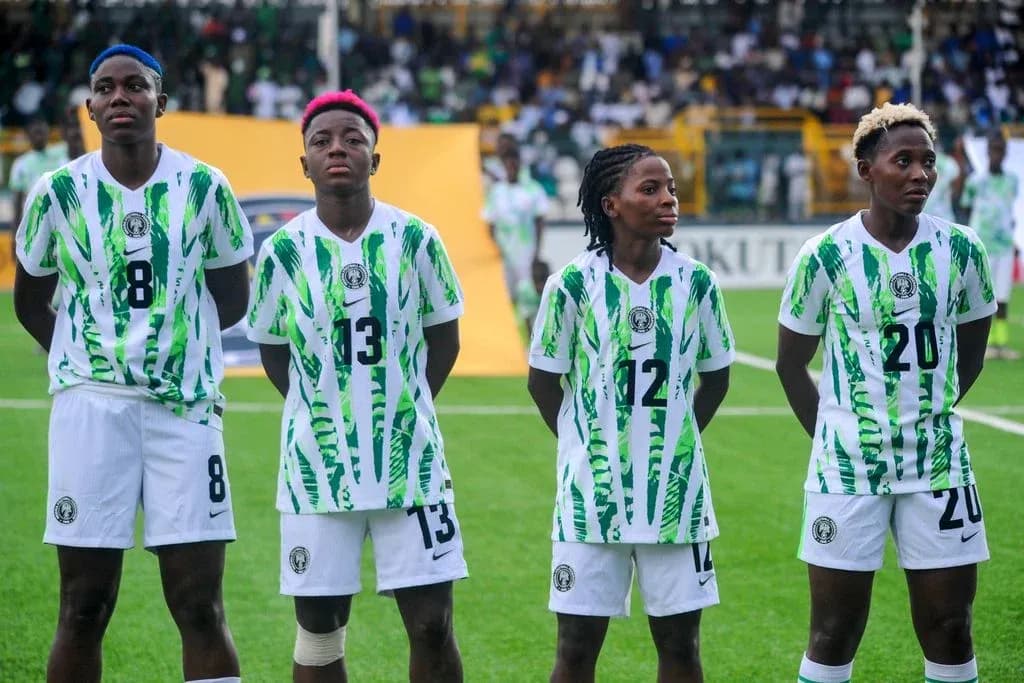
Nigeria’s Super Falcons have drawn back the curtain on their WAFCON 2026 plans, naming a 25-woman squad that will chase an 11th African crown in Morocco and another chapter in a dynasty that refuses to loosen its grip on the continent.
Ajibade wears the armband, Oshoala leads the charge
Head coach Justine Madugu, speaking through the Nigeria Football Federation, has gone for a familiar core sharpened by hungry new faces for the tournament, which runs from July 26 to August 16.
Rasheedat Ajibade, now firmly the heartbeat of this team, captains the side. Around her, the headline name is unavoidable: Asisat Oshoala, six-time African Women’s Player of the Year and still the most feared finisher in African women’s football.
Behind them, Chiamaka Nnadozie anchors the spine. The Brighton & Hove Albion goalkeeper has grown into one of the most reliable shot-stoppers in the women’s game, and she is expected to keep the No.1 jersey after a string of standout displays for club and country.
There is, however, one conspicuous absence. Star defender Ashleigh Plumptre misses out as she continues her recovery from surgery, a blow to Nigeria’s back line and to a player who had become a defensive reference point.
A squad built for another run at history
Nigeria arrive in Morocco as the giants everyone else measures themselves against. Ten titles already. The last one snatched in hostile territory, a 3-2 victory over hosts Morocco in the previous edition’s final. The mission now is simple: defend the crown and push the record even further out of reach.
Madugu’s list is structured with clarity: three goalkeepers, eight defenders, five midfielders and nine forwards. It is a squad built to dominate the ball and punish mistakes.
In goal, Nnadozie is joined by Portsmouth Ladies’ Comfort Erhabor and Abia Angels’ Fatima Oloko, two domestic standouts given the chance to work in the pressure cooker of a major tournament.
The defence blends hardened campaigners and rising talents. Osinachi Ohale brings years of international know-how, while Michelle Alozie, Oluwatosin Demehin, Rofiat Imuran, Shukurat Oladipo, Glory Ogbonna, Sikiratu Isah and Christy Ucheibe round out a unit that will be asked to protect leads as much as build from the back.
Midfield is Ajibade’s stage. She will drive the team from the centre, supported by the industry and intelligence of Halimatu Ayinde, the promise of Deborah Abiodun, the versatility of Toni Payne and the growing influence of Jennifer Echegini. It is a group capable of both grinding out tight contests and opening games up with quick, vertical passing.
Then comes the firepower.
Oshoala heads a fearsome forward line that gives Madugu options for every kind of game. Folashade Ijamilusi, Esther Okoronkwo, Chinwendu Ihezuo, Francisca Ordega, Gift Monday, Uchenna Kanu, Omorinsola Babajide and Joy Omewa complete a front unit that can stretch defences, attack crosses, or simply overwhelm opponents with waves of runners.
Many of these players arrive from Europe’s top leagues; others are battle-hardened in North America, Asia and the Nigerian Women’s Football League. The mix of global polish and local grit has long been a Super Falcons trademark. It remains intact.
Group C: old scars, new threats
The path begins in Group C, where Nigeria will face Zambia, Egypt and Malawi. On paper, the Super Falcons are favourites. On the pitch, they know better than to coast.
The campaign opens against Malawi on Tuesday, July 28, at Al Madina Stadium in Rabat. It will be the first-ever senior competitive meeting between the two nations, a classic trap game for a heavyweight facing a debutant with nothing to lose and everything to prove.
Then comes the grudge match.
On Saturday, August 1, at the same venue, Nigeria meet Zambia. The history is tight: two wins from three for the Super Falcons, but the last memory stings. In 2022, the Copper Queens edged Nigeria 1-0 in the third-place playoff, a result that rattled the hierarchy and injected fresh belief into Zambia’s camp. That defeat has not been forgotten, and this group clash instantly becomes one of the tournament’s marquee fixtures.
Nigeria close the group stage against Egypt on Wednesday, August 5, at the Rabat Region Stadium. The numbers from their only previous WAFCON meeting are brutal: a 6-0 Nigerian win at the inaugural African Women’s Championship in 1998. Those days are gone. Egypt have poured effort into their women’s programme, and while the gulf in pedigree remains, the gap in preparation no longer does.
Continental glory and a ticket to Brazil
The stakes in Morocco stretch beyond the trophy lift.
WAFCON 2026 doubles as Africa’s qualifying route to the 2027 FIFA Women’s World Cup in Brazil. Reach the semi-finals, and a ticket to the global stage is guaranteed. For Nigeria, a nation that measures itself against the world as much as the continent, anything less would feel like a failure.
Madugu now has his squad. The names are set, the roles largely defined. The continent knows what the Super Falcons can do.
The real question is whether anyone can stop them from doing it again.