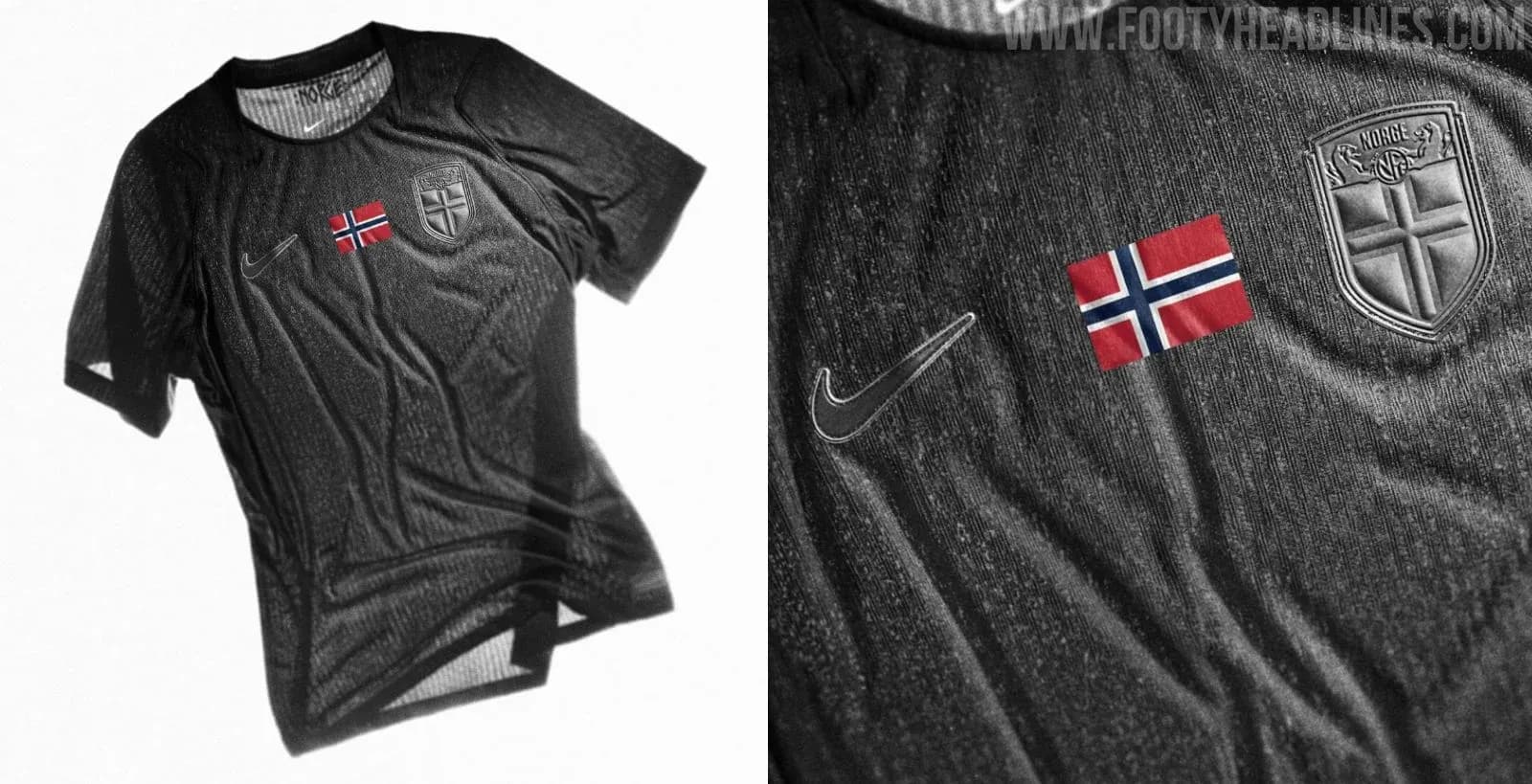
Norway’s Blackout Kit: A Unique Case Against FIFA Regulations
The moment Norway’s 2026 blackout away kit dropped, the internet’s kit obsessives locked onto the same fear: it looks stunning now, but will FIFA march in and slap a giant full‑colour flag on the chest and ruin it?
The worry doesn’t come from nowhere. Denmark have already lived that nightmare.
The Denmark Warning
At the 2022 World Cup, Denmark and Hummel went all‑in on subtlety. Tonal crests, muted logos, monochrome styling – a deliberate attempt to make the branding almost disappear.
Only it wasn’t just design. Hummel openly framed those “invisible” logos as a political protest against the host nation, Qatar. That public stance changed everything.
FIFA’s rulebook is crystal clear on one thing: no political statements on kits. Once Hummel and Denmark tied the design to a protest, the shirts stopped being just shirts and became a message. That’s where Annexe B, Article 5.7 kicked in, giving FIFA the right to withdraw approval if a kit’s context or associated message turns political.
So FIFA did what FIFA does. To neutralize the protest, they forced a visible, full‑colour Danish flag onto the chest. The minimalist vision was gone in an instant, replaced by a jarring block of red and white that looked bolted on at the last minute—because it was.
That’s the scar Norway fans are staring at when they look at their own blackout dream.
Why Norway’s Blackout Is Different
Strip away the anxiety and Norway’s situation is far cleaner.
The Nike Norway 2026 blackout away kit is not a protest. There’s no manifesto, no public statement, no political angle. It’s an aesthetic choice, pure and simple, agreed between Nike and the Norwegian Football Federation.
That matters. Without a political context, the design falls under the standard, far less dramatic, FIFA equipment rules.
What the FIFA Regulations Actually Say
The 2025 FIFA Equipment Regulations are long, dense, and rarely read outside of brand offices and federation backrooms. But the key sections for Norway’s kit are straightforward.
First: flags.
Article 13.5.1 states that a team “may” display Team Identifiers on the chest. Not “must”. Not “shall”. “May.” Article 13.5.1.5 lists the national flag as one of those optional identifiers. The wording leaves no doubt: a flag is allowed, but never mandatory. A team can take the pitch with no flag on the shirt at all and still be fully compliant.
Second: blackout crests and logos.
Across 115 pages of regulations, there is no requirement that a national crest or manufacturer logo has to stand out in high contrast against the shirt. No demand for bright colours. No rule banning tonal or monochrome badges. If Norway want their crest and Swoosh to melt into the fabric, FIFA have no line to point at that says they can’t.
The only place where visibility becomes non‑negotiable is with names and numbers.
Article 7.2.2 lays it down: player names and squad numbers must “contrast sufficiently with the surrounding colour(s)” so referees, officials and broadcasters can read them clearly. That’s where Norway have already played it smart. The blackout shirt is paired with silver numbers, offering enough contrast to satisfy both the referee’s eye and the television cameras without breaking the dark, stealthy mood of the design.
So the pieces line up neatly. No politics. No mandatory flag. No contrast rule for crests. Contrasting numbers already in place.
The Verdict: Blackout Intact
Put it all together and the answer is blunt.
Norway will not be forced by FIFA to plaster a full‑colour national flag onto their 2026 blackout away kit.
Barring some dramatic, self‑inflicted twist—like the federation suddenly framing the design as a political statement—this shirt will go to the tournament exactly as intended: dark, sleek, and unapologetically modern.
In an era where national teams are often boxed in by tradition and regulation, Norway’s blackout kit looks set to walk onto the biggest stage on its own terms. The only question now is simple: when the lights hit that silver numbering and the rest of the shirt disappears into the shadows, will this be remembered as just a kit—or the start of a new era for international shirt design?