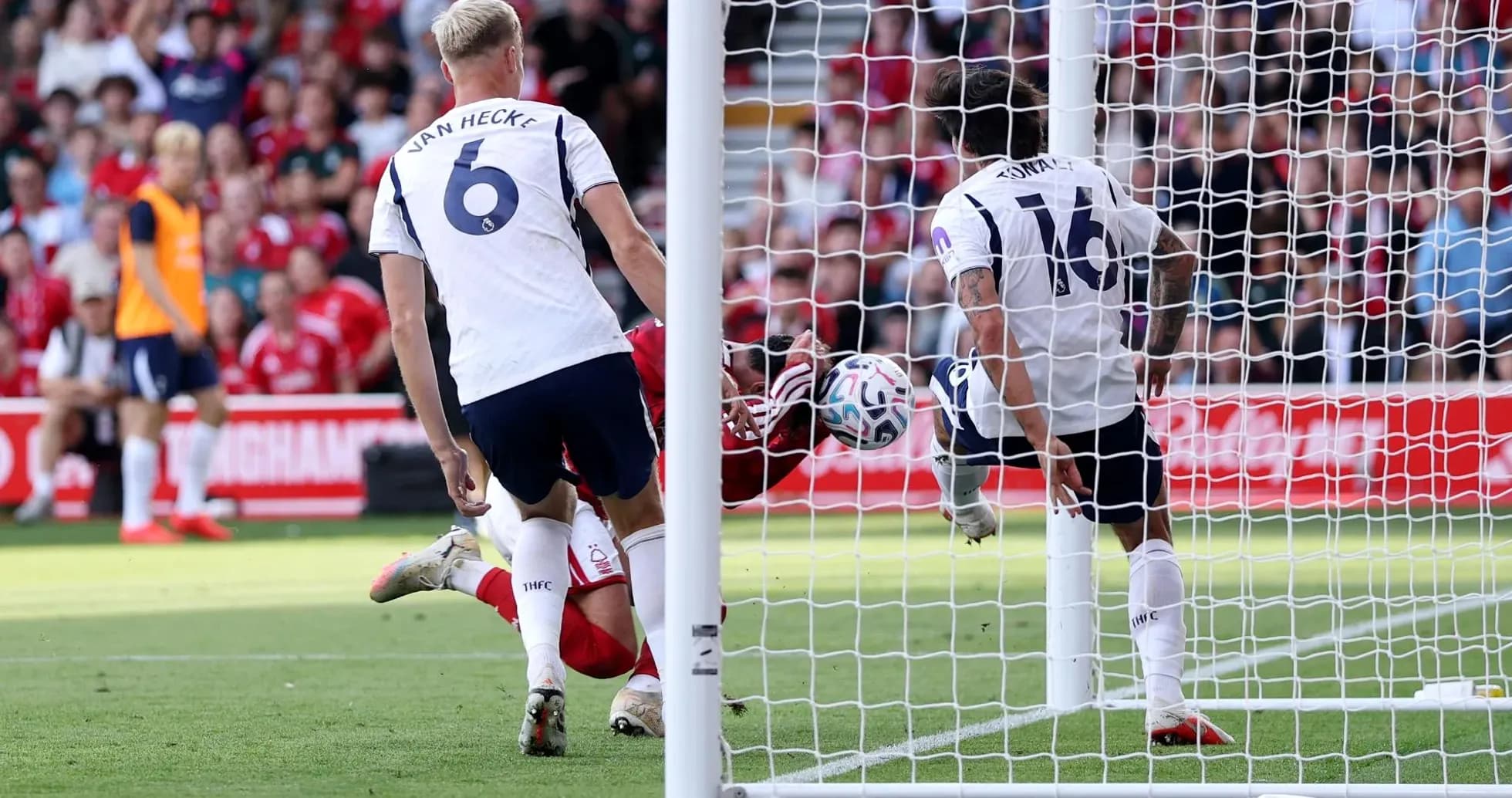
Nottingham Forest and Tottenham: A Tactical Stalemate in the Premier League
The City Ground under grey September skies felt like the right stage for two uneasy stories to collide. Nottingham Forest, 16th in the Premier League with 2 points from 3 matches, and Tottenham, 18th with just 1 point and a goal difference of -5, shared a goalless stalemate that said as much about their evolving identities as any high‑scoring thriller.
I. The Big Picture – Structures, scars, and a 0–0 that made sense
This was Forest’s third straight outing in a 3-4-2-1, a shape that has become their structural anchor: three centre-backs, aggressive wing-backs, and a narrow band of creators behind a lone striker. The numbers explain the caution. Heading into this game, Forest had scored 2 goals in total this campaign, none at home. Their total average was 0.7 goals scored per match, with 0.0 at home and 2.0 on their travels. Defensively, they had conceded 3 goals in total, with a total average of 1.0 goals against per match, split as 0.5 at home and 2.0 away. The goal difference of -1 (2 scored, 3 conceded) reflects a side that is organised but still blunt at the City Ground.
Opposite them, Tottenham arrived with a new 4-2-3-1 under Roberto De Zerbi but a deeply un-Tottenham attacking record: 0 goals scored in total from 3 league games, with a total average of 0.0. They had conceded 5 in total, an average of 1.7 per match, broken down as 2.0 at home and 1.5 on their travels. Their goal difference stood at -5 (0 scored, 5 conceded). For a club accustomed to flair, this was a team in transition, stripped of several key creators and leaning heavily on structure and pressing patterns rather than individual genius.
The formations on the day mirrored those seasonal trends. Forest’s back three of Murillo, N. Milenković and Jair were screened by a hard-working midfield line: O. Aina and N. Williams wide, X. Schlager and J. McAtee inside. Ahead of them, D. Ndoye and M. Gibbs-White floated as dual 10s behind L. Delap. Tottenham’s back four of D. Udogie, M. van de Ven, J. van Hecke and Pedro Porro sat in front of A. Kinský, with S. Tonali and R. Bentancur as the double pivot and a fluid three of Sávio, C. Gallagher and M. Tel supporting Omar Marmoush.
II. Tactical Voids – Absences and discipline shaping the tone
The absences list read like a tactical red pen. For Forest, N. Savona was missing with a knee injury, trimming depth in midfield and making X. Schlager’s role as organiser even more non‑negotiable. For Tottenham, the creative spine was shredded: D. Kulusevski (knee injury), J. Maddison (knock), W. Odobert (knee injury) and X. Simons (knee injury) all unavailable. That cluster of absentees forced De Zerbi to lean on Sávio and Gallagher as primary connectors between midfield and attack, with M. Tel tasked to provide incision from the left.
Discipline-wise, both teams arrived with a clear pattern of controlled aggression rather than chaos. Forest had collected their yellow cards in a distinctly second‑half‑tilted way: 50.00% of their cautions came between 46–60 minutes, with further bookings spread at 16–30 (16.67%), 31–45 (16.67%) and 76–90 (16.67%). Tottenham’s yellows were evenly distributed across the match: 25.00% in each of the 0–15, 31–45, 46–60 and 76–90 windows. This even spread suggested a side that presses in waves but never fully switches off its aggression.
On an individual level, O. Aina’s disciplinary profile mattered. He came into this fixture as one of the league’s leading card collectors, with 2 yellow cards in 3 appearances, and his role as Forest’s right‑sided midfielder/wing‑back demanded constant duels. For Tottenham, D. Udogie and Mateus Fernandes each carried a yellow card from earlier rounds, with Fernandes also committing 5 fouls in his 142 minutes so far. The risk of a momentum‑killing booking in wide areas was always present, but neither side tipped over into red‑card territory; the red‑card table data listed these players but with 0 reds, underlining that they flirt with the line without crossing it.
III. Key Matchups – Hunter vs Shield, Engine Room vs Press
The most intriguing duel was less about a prolific scorer and more about a creative fulcrum versus a defence desperate for a clean sheet. M. Gibbs-White arrived as Forest’s statistical standout in attack: 1 goal and 1 assist in total from 3 appearances, 7 shots with 2 on target, 8 dribbles attempted with 4 successful, and 81 passes at 82% accuracy. He is, effectively, Forest’s “hunter” between the lines.
Tottenham’s “shield” against him was a combination of structure and personnel. The centre‑back pairing of J. van Hecke and M. van de Ven, backed by Tonali and Bentancur screening, had conceded 5 goals in total but with at least one away clean sheet in the bank this season. With Tottenham conceding an average of 1.5 goals on their travels, the task was to keep Gibbs-White away from the half-spaces where he thrives, forcing him to receive deeper or wider, where Gallagher and Sávio could help double up.
In the engine room, X. Schlager and J. McAtee faced S. Tonali and R. Bentancur in a battle that defined the game’s rhythm. Schlager’s job was to knit Forest’s play and protect transitions, while McAtee’s advanced positioning sought to overload pockets around Tottenham’s double pivot. Tonali, with his passing range, and Bentancur, with his press resistance, tried to drag Forest’s midfield out of their compact shell, opening lanes for M. Tel and Sávio to isolate Forest’s wide centre-backs.
Wide, the duel between O. Aina and M. Tel on one flank, and N. Williams against Sávio on the other, carried both attacking and disciplinary weight. Aina’s 7 tackles and 35 duels in the league so far underlined his willingness to step high and engage; against a dribbler like Tel, each step was a calculated risk. On the opposite side, N. Williams’ energy had to match Sávio’s creativity, with Murillo often drawn out to cover.
IV. Statistical Prognosis – A goalless draw that fits the numbers
Strip away the emotion and the 0–0 looks almost inevitable when laid over the season’s statistical map. Forest, heading into this game, had failed to score in 2 of their 3 league matches and in both home fixtures. Their only penalty in the campaign was converted, with 1 scored from 1 total and 0 missed, removing the volatility of spot‑kick variance from their profile. Their total clean‑sheet count stood at 1, and they had allowed just 1 goal at home.
Tottenham, meanwhile, had failed to score in all 3 league games so far, with 3 total failures to score and no penalties awarded. Their defensive record away – 3 goals conceded in 2 matches, one of them a clean sheet – suggested they were capable of closing games down even while their attack misfired.
Overlay those trends and a low‑xG contest emerges: Forest’s conservative home output and Tottenham’s toothless attack colliding with two back lines more comfortable absorbing than chasing. The evenly spread yellow‑card profiles hinted at controlled, system‑led pressing rather than desperate last‑ditch chaos. In that context, a tactical stalemate with both sides protecting fragile early‑season narratives feels almost pre‑written.
For Forest, the point consolidates a platform: 2 goals scored, 3 conceded, goal difference -1, and a shape that looks increasingly bedded in. For Tottenham, it is a small step away from crisis: still no goals, but a second clean sheet in three away fixtures and evidence that, even without D. Kulusevski, J. Maddison, W. Odobert and X. Simons, the structure can hold. The artistry will have to come later; for now, both sides are building from a base of caution, numbers, and nights like this at the City Ground.