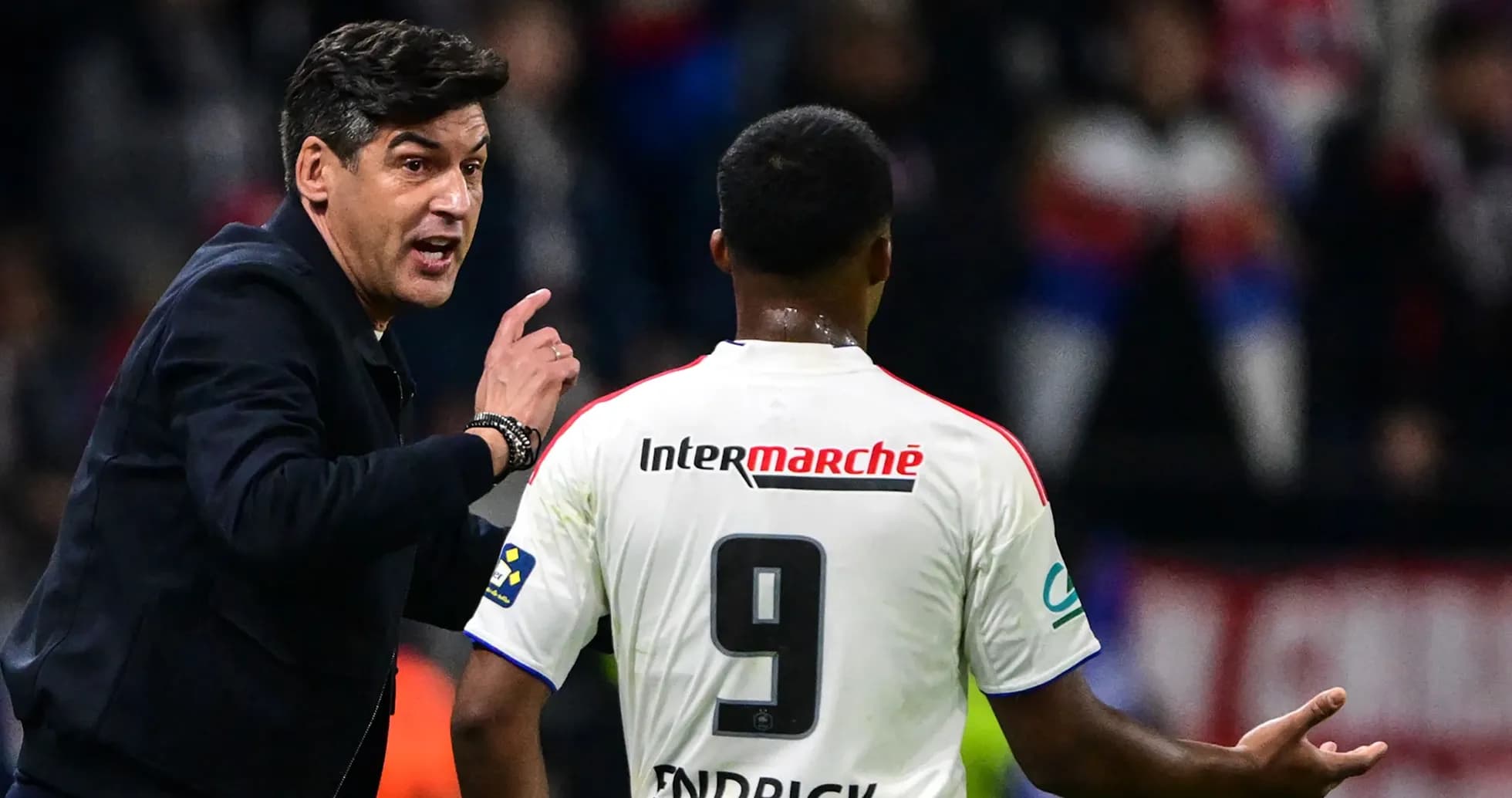
Paulo Fonseca's Calculated Gamble on Endrick Pays Off
Paulo Fonseca has admitted his public criticism of Endrick was a calculated gamble – and one that has now paid off.
In the wake of Lyon’s win over Lorient, the Portuguese coach lifted the lid on his pointed remarks about the teenager’s form, revealing they were designed to sting, not to wound.
A Deliberate Provocation
Fonseca had raised eyebrows days earlier when he declared he was “not satisfied” with Endrick’s performances, challenging the forward after a subdued outing against Angers and the player’s complaints of fatigue following international duty in Orlando.
This was no emotional outburst. It was a tactic.
“As a coach, we need to find strategies to elicit reactions from the players, and that's what I did,” Fonseca said after the Lorient victory. “I spoke to provoke a reaction from him, and I saw that reaction.”
The message was clear: talent alone would not be enough to carry Lyon out of trouble.
Lyon’s Slide Forces a Hard Line
The demand for more from Endrick came against an unforgiving backdrop. Lyon had gone nine matches without a win, a damaging run that dragged them out of the guaranteed Champions League places and stripped away any margin for indulgence.
In that context, Fonseca made it plain that age would not be a shield for his young star.
He had already set the bar in stark terms: “I am not satisfied with how Endrick is playing. I'm not here to break players but I expect more from a player like Endrick, and I think he has the obligation to do more. He said he was a bit tired from the journey [back from Orlando], but I think he has the responsibility to do more.”
For Fonseca, a player of Endrick’s calibre carries an “obligation” to lead, to set the tone, to drag the team forward when the season tightens around them. Tired or not.
Tough Love, Clear Message
Behind the scenes, though, there was no rift. No cold war in the dressing room. Just a coach pushing, and a teenager learning what it means to be a reference point at a major club.
“Yes, we talked,” Fonseca explained. “Endrick is a young player, a very positive person; I really like his personality. At 19, he's in a period of evolution, of change, but we talked; everything is fine.”
That line matters. Fonseca wants the fire without the fallout. He wants a reaction, not a rebellion.
The early signs, he insists, are encouraging. The provocation landed. The response followed. Now the question is whether a 19-year-old, thrust into the role of standard-bearer during a fraught season, can turn one reaction into a new standard.