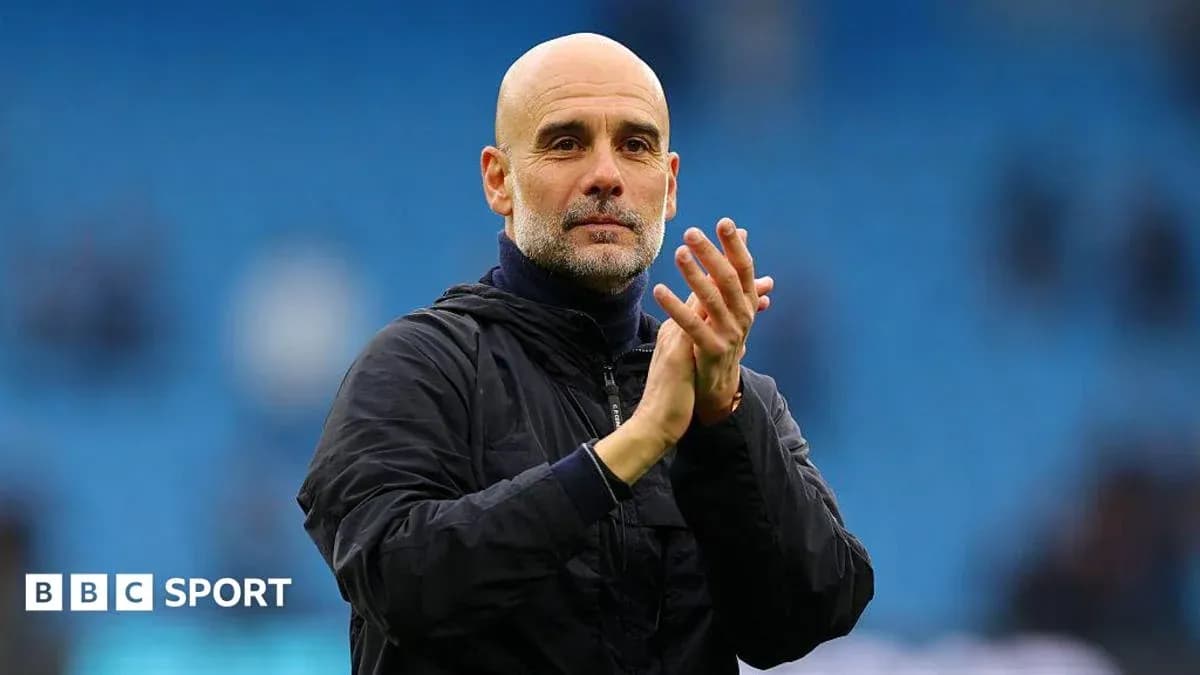
Pep Guardiola in Talks to Become Italy Head Coach
Pep Guardiola has held talks about becoming Italy head coach, Italian Football Federation president Giovanni Malagò has confirmed, lighting a fuse under one of the most intriguing managerial stories of the summer.
The former Manchester City boss walked away from the Etihad at the end of last season after a decade of relentless success in England: six Premier League titles, three FA Cups, five League Cups and the club’s first Champions League. Ten years that reshaped a club and, in many ways, a league. Now, barely weeks after declaring he was “so tired. Seriously, I am so tired,” his name sits at the centre of Italy’s search for a new leader.
Italy turn to a serial winner
The Azzurri have been drifting. Gennaro Gattuso resigned in April after failing to guide the national team to a third successive World Cup, a staggering decline for four-time world champions. The bench has been empty since, the vacuum growing louder with every passing week.
On Monday, Sky Italia reported that the Italian Football Federation (FIGC) had made contact with Guardiola. The story accelerated when Malagò, speaking to Italian digital platform Cronache di spogliatoio, confirmed that talks had taken place and that the federation is prepared to bend its own rules to lure the 55-year-old.
“[Financial] Exceptions have been made, exceptions that for example may concern the name that is so overbearing in these hours: Pep Guardiola,” Malagò said. “Exceptions for obvious reasons that I am not here to explain, but it is not certain that this thing will go through.”
That line matters. Italy are clearly serious. They know what it would take to tempt a coach who has already conquered Spain, Germany and England. They also know it might still not be enough.
BBC Sport has contacted the FIGC for further comment.
A rare foreign bet
If Guardiola does take the job, he would walk into one of the most traditional dugouts in world football. Italy’s men’s national team has almost always been managed by Italians. Only twice has the federation stepped outside its own borders: Hungarian Lajos Czeizler, part of a technical committee in the 1950s, and the legendary Argentine Helenio Herrera, who shared the role with Ferruccio Valcareggi in the following decade.
To break that habit now, they would have to be convinced the prize is worth the disruption. Guardiola’s CV makes that argument for them. Barcelona, Bayern Munich, Manchester City: three clubs, three eras of dominance, a haul of trophies that has come to define modern coaching excellence.
He has never managed in Italy, yet the country is not unfamiliar territory. Guardiola speaks fluent Italian and spent two seasons in Serie A between 2001 and 2003, across two spells with Brescia and a stint at Roma. Those years were short, but they left him with a feel for the culture and the language that few foreign candidates could match.
Mancini, Pirlo… and others
Guardiola is not alone on the shortlist. Another former Manchester City manager, Roberto Mancini, is firmly in the frame. He famously led Italy to Euro 2020 glory five years ago, restoring pride and style before the subsequent slide back into World Cup exile. Andrea Pirlo, currently in charge of Dubai United, is also under consideration.
Asked whether Guardiola, Mancini and Pirlo are the only names, Malagò was clear: “Absolutely not. We think about a certain profile and certainly these names fall into that category.”
So the field remains open, but the profile is obvious: a coach with stature, tactical clarity and the authority to reset a broken cycle.
A quick return or a needed pause?
When Guardiola walked away from City in May, he sounded like a man ready to step off the treadmill. “I am so tired,” he admitted, reflecting on a journey that began at Barcelona, continued through Bayern Munich and reached new heights in Manchester. “The memories I have of Barcelona and Bayern Munich are unbeatable but the luggage of memories I have from here from 10 years is more than any other.”
Those words suggested a sabbatical, a period of reflection after three intense decades in elite football as player and coach. Yet international football offers a different rhythm. Fewer games, more time on the training ground between windows, the chance to shape a nation’s identity rather than live inside the weekly storm of club competition.
That is the pitch Italy can make: not another draining club project, but a grand, historic challenge with a slightly different tempo.
For now, there is only confirmation of talks and the admission that “exceptions” are on the table. The rest is speculation. But if the FIGC manage to persuade Guardiola to swap the club superpower circuit for Coverciano, Italian football’s most daring gamble in generations will begin with one simple question: can the man who transformed clubs now revive a fallen giant of the international game?