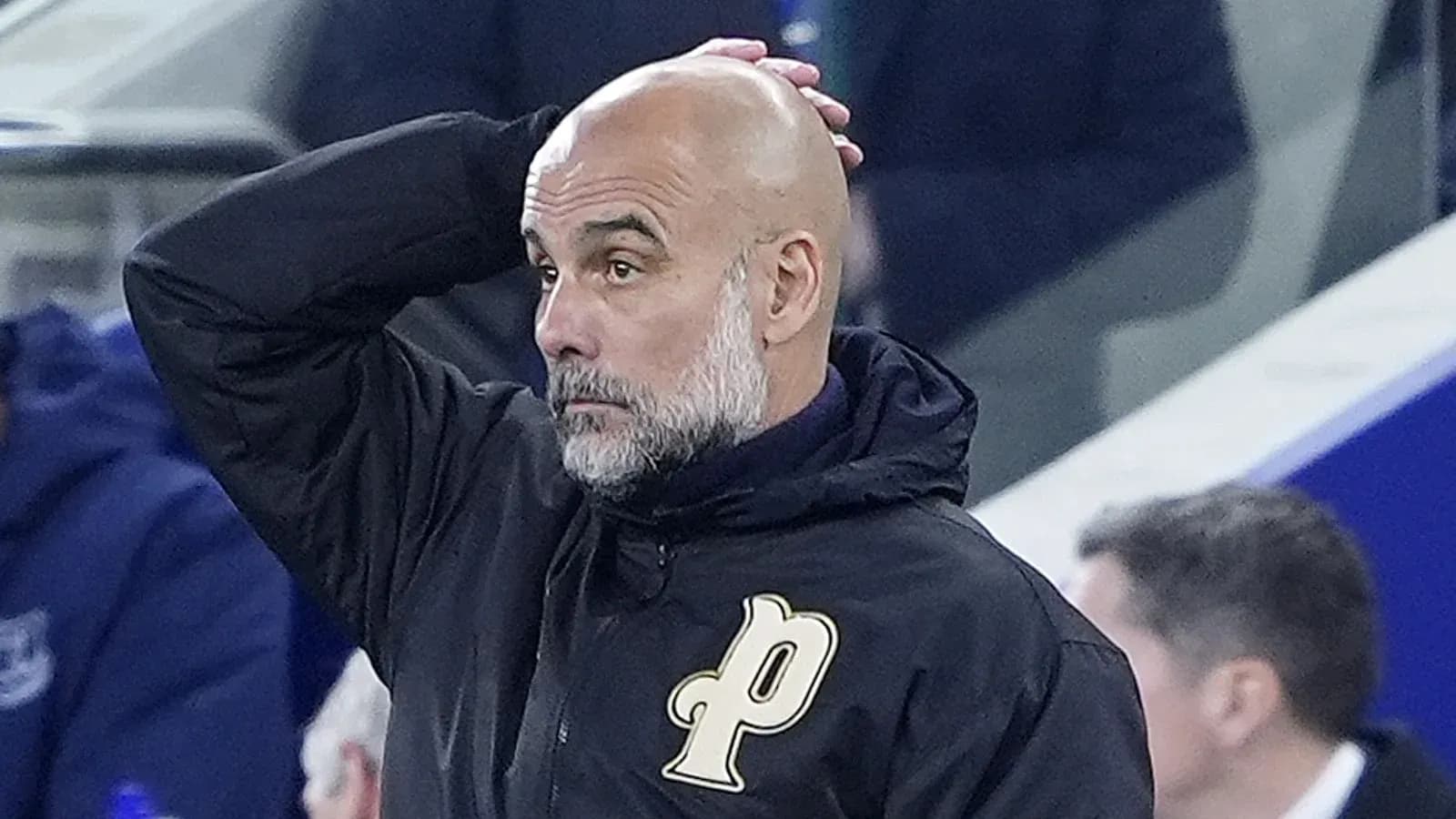
Pep Guardiola Rejects Italy's Coaching Offer Amid Personal Reasons
Pep Guardiola has rejected an offer to become Italy’s next head coach, turning down an ambitious proposal that would have handed him sweeping power over the future of Italian football.
According to Sky in Italy, Guardiola informed the Italian Football Federation (FIGC) of his decision on Thursday night, citing personal reasons that stretch beyond football. After a decade of relentless work at Manchester City and a trophy haul that reshaped English football, the Catalan has chosen to step away rather than dive straight into one of the sport’s most demanding rebuilds.
Italy’s grand pitch – and Guardiola’s refusal
This was no routine job interview. The FIGC, still reeling from another failure to reach a major tournament, went all-in.
Paolo Maldini, one of the defining figures of Italian football, and his advisor Leonardo spent three days with Guardiola in Barcelona. They did not simply slide a contract across the table. They laid out a vision.
The plan was not just for Guardiola to replace Gennaro Gattuso on the touchline. In the FIGC’s blueprint, he would become the central pillar of a sweeping “Azzurro project” designed to rebuild Italian football from the ground up, after the humiliation of missing even an expanded World Cup this summer.
The proposal stretched beyond the senior side. Every national team, every layer of the structure, would fall under a new philosophy with Guardiola at its core. The federation were even prepared to stretch their budget to unprecedented levels to secure him.
Guardiola listened. He engaged. But he walked away.
A country in crisis, a coach in pause
Italy’s desperation is real. Since lifting the European Championship in 2021 under Roberto Mancini, the Azzurri have failed to qualify for the last three major tournaments. For a four-time world champion, the decline is stark.
The FIGC has already initiated a major overhaul, bringing in Maldini and Leonardo with a clear mandate: find the man to succeed Gattuso, who stepped down after failing to reach this summer’s World Cup in North America. Guardiola was the dream. The statement hire. The symbol of a new era.
Instead, they now turn to more familiar names. Roberto Mancini and Andrea Pirlo are understood to be among the leading alternatives. Both carry Italian pedigree. Neither carries Guardiola’s aura.
The timing made the approach logical. For the first time in 10 years, Guardiola is a free agent. His spell at Manchester City yielded 20 trophies and a win ratio of 70.8 per cent, a period of dominance that changed the standards of club football in England and beyond.
Yet he has been consistent for some time about what comes next.
Guardiola’s own words: “I need to step back”
A year before he left the Etihad, Guardiola spoke openly to Sky Sports about what he wanted when his City tenure finally ended. A pause. A step away from the grind.
“No plans for [coaching] for a while. Otherwise I would be here. I need to step back. I will not [coach] for a while,” he said in his final Manchester City press conference.
He went deeper, explaining the emotional and physical cost of staying at the very top.
“I feel I will not have the energy every day, with expectations to fight for the title. I know myself, I have that energy, but I feel like I will not have it [in the future].”
In a separate interview with Sky Sports, he framed it in human terms rather than tactical ones.
“There are things that I have not done that I want to do. I still have my father alive. I want to spend more time with him. My kids... And a lot of things as a human being I can do. I'm fortunate I can decide, that's why I took this decision.”
Those lines now echo loudly over Italy’s failed pursuit. The FIGC could offer power, prestige and a blank canvas. They could not offer time.
England’s near miss and the pull of the national game
This is not the first time a major federation has tried to lure Guardiola into international football.
Back in 2024, it was widely reported that he had reached a verbal agreement with the FA to succeed Gareth Southgate as England manager. The story seemed set: Guardiola, the architect of City’s dominance, taking charge of a generation he had already shaped at club level.
Then he changed his mind. He stayed in Manchester. England turned to Thomas Tuchel, who has since taken them to their best World Cup finish on foreign soil. Tuchel’s contract runs until the end of Euro 2028, and he has publicly committed to seeing it out.
The episode underlined two things. First, that the biggest football institutions see Guardiola as the ultimate prize in management. Second, that his own timeline is no longer dictated solely by the size of the offer.
Yet he has never hidden his curiosity about international football. Speaking with chef Dani Garcia in 2024, he drew a clear line between another club job and something different.
“What I'm not going to do is leave Manchester City and go to another country to do the same thing as I am now,” he said. “I wouldn't have the energy to do so. I'm still here doing what I am today. But the thought of starting somewhere else, with all the process of the training and so on... no, no, no! Maybe a national team, but that's different.”
The attraction is obvious. Fewer training sessions. Fewer daily battles. More space for life, with the intensity compressed into international windows and tournament cycles.
The biggest name, the biggest question
Right now, Guardiola stands at a crossroads that he has reached once before. After Barcelona, he took a sabbatical, then resurfaced at Bayern Munich. This time, he is older. He has spoken repeatedly about energy, about family, about the limits of what he can give.
Yet he remains, as Sky Sports’ Callum Bishop put it, the biggest commodity in football management. That was true when he left Barcelona. It is even more true after his decade at City.
Guardiola is a football obsessive. History suggests the itch to return will come. International management might be the compromise that finally fits: long stretches of personal time punctuated by high-stakes tournaments, a new frontier for a coach who has conquered every club stage he has entered.
For now, Italy’s grand project will have to proceed without him. The FIGC must find someone else to lead their reset, someone willing to shoulder the weight of a fallen giant.
Guardiola, by contrast, has chosen the one thing elite football almost never grants: a pause. The next time he presses play, will it be for a club, a country, or the one challenge he has not yet taken on – winning a World Cup from the dugout?