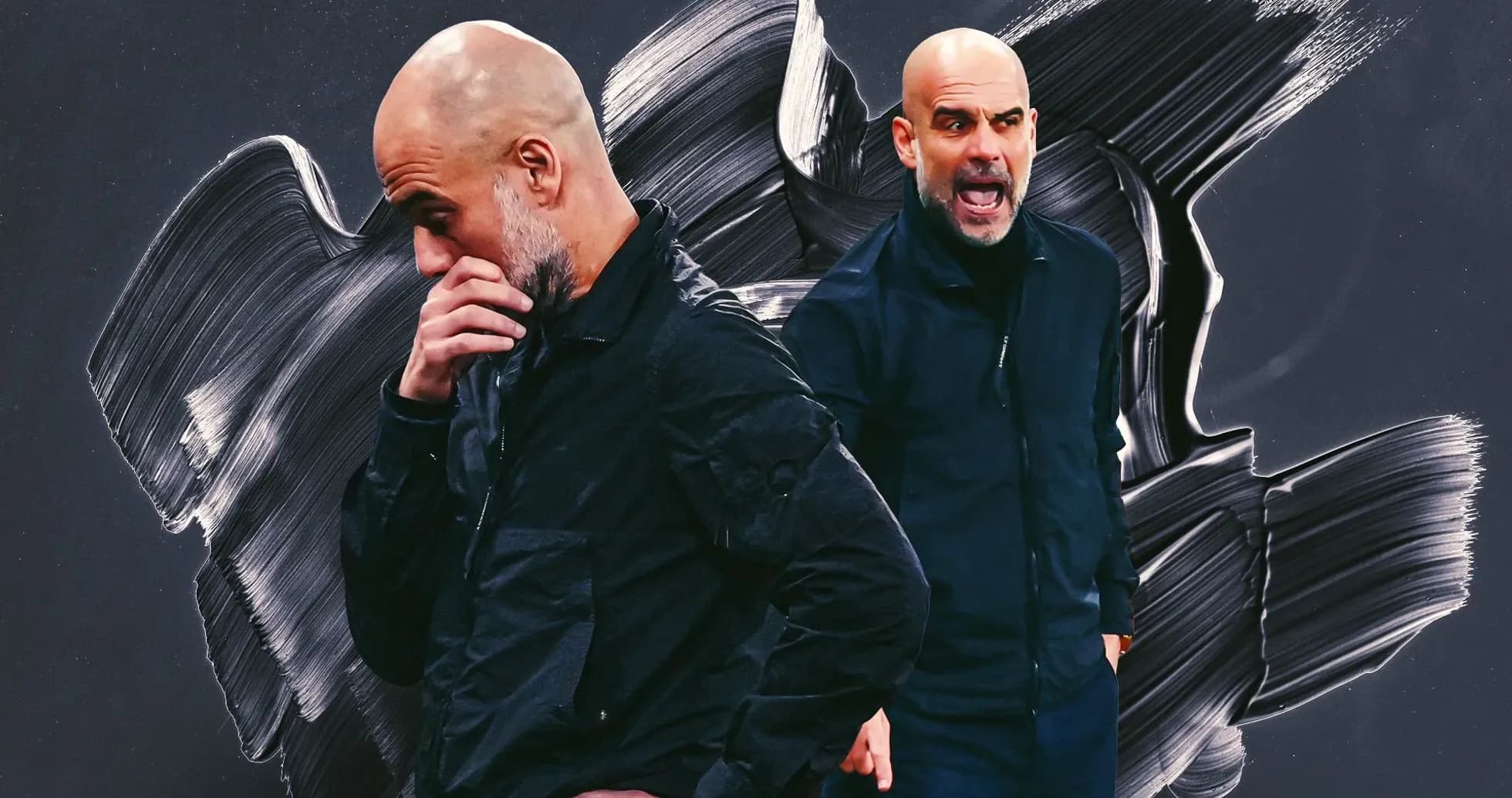
Pep Guardiola’s Tactical Dilemmas: Has His Need to Surprise Backfired?
For more than a decade, Pep Guardiola has lived with a strange contradiction. He is the most decorated coach of his generation, a man with three Champions Leagues and 12 league titles spread across Spain, Germany and England. Yet the charge that he “overthinks” the biggest nights, especially in Europe, clings to him like a stain he cannot wash out.
He loathes that reputation. Only last week he talked about being “massacred” for his decisions. But the evidence keeps piling up.
From the front four he threw at Real Madrid with Bayern Munich in 2014, to the back three led by the inexperienced Eric Garcia against Lyon in 2020, to Ilkay Gundogan as holding midfielder in the 2021 final against Chelsea – the list of high‑stakes gambles that backfired is long and painful.
For a while, it looked as if that Pep had gone.
The Year He Kept It Simple
City’s 2023 Champions League triumph felt like a turning point. Guardiola picked strong, predictable teams. He trusted his structure. The football was devastatingly controlled: Madrid and Bayern were dismantled, Inter were ground down in the final. The narrative shifted. The “overthinking” jibes began to fade.
When City went out to Madrid on penalties in the 2024 quarter-finals, it was easy to blame the lottery of the shootout. Last season’s heavy defeat to Los Merengues could be explained away too: City were in a dreadful run of form and Kylian Mbappe was irresistible. Those were footballing realities, not tactical self-sabotage.
Then came last week. And the old Pep, the restless tinkerer who can’t resist a surprise, roared back to life.
A Bold Plan at the Bernabeu
Alvaro Arbeloa, now in charge of Madrid and a veteran of many bruising encounters with Guardiola as a player, saw it coming. On the eve of the tie he remarked that Pep “always has a surprise planned.” It sounded like a compliment. It turned into a warning.
In the Spanish capital, Guardiola ripped up the template that had underpinned City’s recent resurgence. Out went the steady back four of Rayan Ait-Nouri, Marc Guehi, Ruben Dias and Matheus Nunes, who had started the previous four league games together. The midfield trio of Nico O’Reilly, Bernardo Silva and Rodri – the heartbeat of a six-game winning run in February – was broken apart.
O’Reilly, restored to left-back for the first time in two months, was brutally exposed for Madrid’s opener as Federico Valverde ran at him and through him. Each time Madrid scored, they sliced through a midfield that looked wide open and unfamiliar.
Guardiola refused to concede he had misjudged it. He talked instead about City’s dominance in the first 20 minutes, and claimed Madrid had scored with their only shots on target. The numbers told a different story: Madrid finished with seven attempts to City’s four, and Vinicius Jr even passed up the chance to all but kill the tie when he missed a second-half penalty.
Pep’s explanation – that he wanted to “make the Bernabeu feel that we are there” – carried the whiff of hubris. It echoed his own description of that 2014 Bayern set-up as “the biggest f*ck up of my career.”
As the dust settled, some old words from Fabio Capello resurfaced and began to circulate again.
“You know what I don’t like about Guardiola? His arrogance,” the former England manager told El Mundo almost exactly a year earlier. “The Champions League he won with City is the only one where he didn’t try anything funny in the decisive matches. But all the other years, in Manchester and Munich, on key days, he always wanted to be the protagonist. He would change things and invent them so he could say: ‘It’s not the players who win, it’s me’. And that arrogance cost him several Champions Leagues. I respect him, but for me, it’s clear.”
Unless City become only the fifth side in the modern era of the competition to overturn a three-goal deficit or more and reach the quarter-finals, those words will feel painfully prescient. And yet, remarkably, the Bernabeu was not even Pep’s most baffling call of the week.
Control in the Wrong Game
Three days after going gung-ho in Madrid, Guardiola walked into the London Stadium to face a West Ham side fighting for their lives near the bottom and coached by the notoriously cautious Nuno Espirito Santo. This time, instead of unleashing his creators, he reached for control.
Antoine Semenyo started again. Rayan Cherki, whose close control and ability to operate in tight spaces seemed tailor-made for unlocking a deep-lying defence, watched on from the bench.
City laboured. The patterns were sterile, the threat limited. Only when Guardiola threw Cherki on with half an hour left, followed by three more attackers, did the urgency arrive – and by then, it was too late. City dropped points for the second game running against relegation-threatened opposition and slipped nine points behind Arsenal in the title race, albeit with a game in hand.
This time, Guardiola held his hands up. Sort of.
“Bad selection, now you can criticise me incredibly for the selection, now I deserve it,” he said, the admission laced with a familiar sarcasm. The words landed, but so did the sense of a manager once again caught between his genius and his impulses.
A Season – and a Legacy – on the Line
The calendar offers him no breathing space. Over the next month City must try to rescue the Madrid tie, face Arsenal in the Carabao Cup final, travel to Liverpool for an FA Cup quarter-final, then visit Chelsea before what already looks like a title decider against Arsenal on April 18.
Two weeks ago, this season promised a shot at history. Now, it threatens to unravel into irrelevance in the space of four punishing weeks.
There is another layer to all this. Guardiola is widely expected to consider his future in June. If this is to be the end of his decade at City, it risks closing on a sour note: a great coach remembered not only for the trophies and the football, but for the nights when he could not resist trying to be the cleverest man in the stadium.
His trophy haul already secures his place among the elite. What hangs in the balance is something more fragile – his standing as the game’s supreme tactician, unblemished by the charge that his own need to surprise cost him on the biggest stages.
He deserves to walk away on a high. Over the next few weeks, we will find out whether he can finally silence that old accusation, or whether his greatest rival is not Madrid, Arsenal or Liverpool, but his own reflection on the tactics board.