Pochettino's USMNT Wins Group Despite Loss to Turkiye
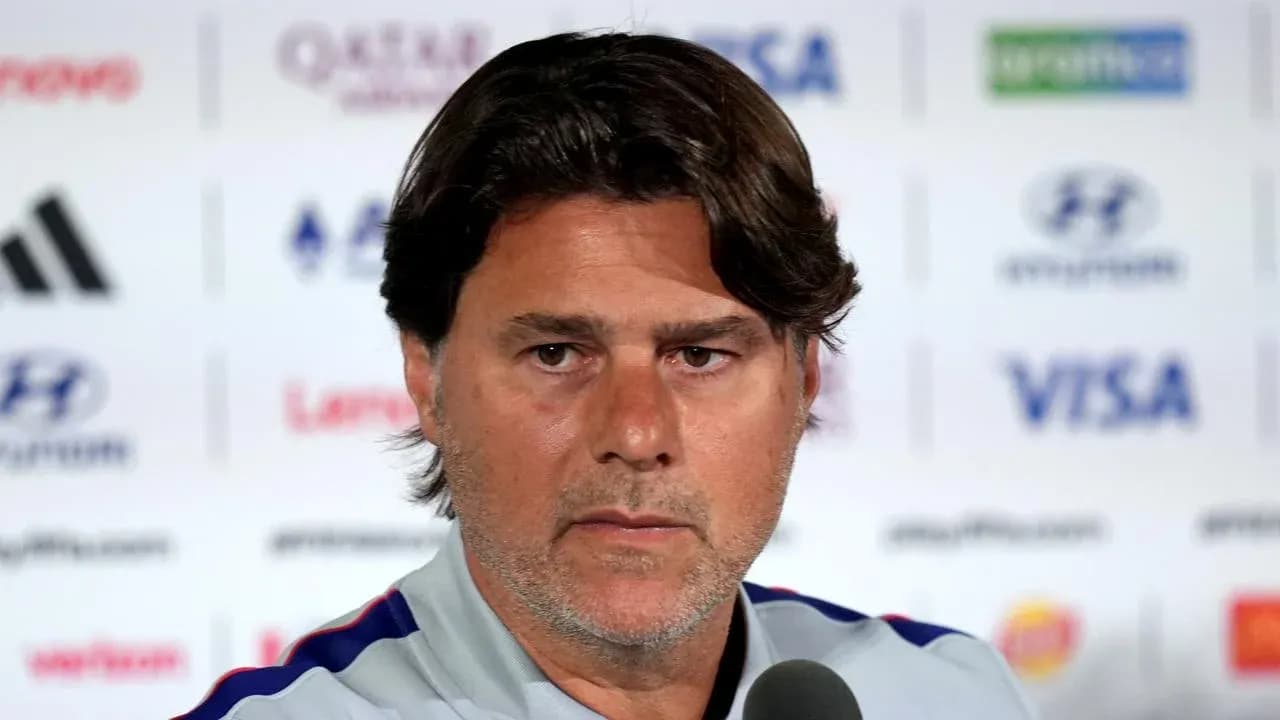
Mauricio Pochettino walked into the press room having just lost 3-2 to Turkiye, but you’d never have known his United States had topped the group.
He didn’t see cameras and microphones. He saw what he felt was a lack of respect.
“The mood is like we [are going] home tonight and Turkey is staying,” he snapped. “I need to [remind] you and everyone that we won the group. Sorry guys, we won.”
The USMNT coach bristled as question after question circled around the same theme: momentum lost, doubts raised, pressure mounting ahead of the World Cup knockout stage. The fact his team had already secured first place seemed, to him, almost an afterthought.
Pochettino had talked a bold game before the match, insisting the United States would chase a third straight win. On the teamsheet, though, his priorities were laid bare. Nine changes from the side that beat Australia. A largely second-string XI. This was a coach managing minutes and muscle, not chasing trivia.
Had the US pulled it off, they would have become the first team in program history to win all three group games at a World Cup. For many, that would have been a landmark. For Pochettino, it barely registers.
“Making history is winning the World Cup,” he said. “It’s not winning three matches only within the World Cup. I don’t really understand. It’s a little bit petty if you will — you’re thinking a little too small. You’re telling me you could make history — what does it mean to win three matches if you lose the next one?”
That is the core of his argument. Records are nice. Trophies are everything.
He pointed to Germany’s stumble a few hours earlier as a cautionary tale. The Germans rolled out many of their regulars and still fell to a desperate Ecuador side. For Pochettino, that was proof that rotation is not surrender; it is survival.
He also had another objective: Christian Pulisic.
The AC Milan forward, who missed the win over Australia with a calf issue after being forced off at half-time against Paraguay, returned to action. For the USMNT, getting their star back on the pitch may matter far more in a week than any footnote about group-stage perfection.
Pochettino’s message was clear. The group is won. The job, in his eyes, has barely started.
Arnold’s Iraq future clouded after brutal exit
While the United States argued over tone and trajectory, Iraq’s World Cup journey ended with a thud.
A 5-0 defeat to Senegal closed their campaign and left coach Graham Arnold staring at an uncertain future. The Australian did not hide behind the scoreline. He went straight to the moment he felt broke his team.
A red card to Rebin Sulaka in the 13th minute, with Senegal already 1-0 up, turned a difficult assignment into a near-impossible one.
“The early red card was mentally tough on the players. Against a team like Senegal, mistakes are always punished,” Arnold said.
He didn’t spare his own side in the post-mortem. Across three group matches, Iraq conceded 12 goals, and Arnold stressed that nine of them came directly from individual errors.
“I told the players after the match that we conceded 11 goals at this World Cup, and nine came from our own individual mistakes. We have to learn from that.
“In the second half, we ran out of energy. I also made changes to give more players the chance to experience representing Iraq at the World Cup, and I take full responsibility for that.”
Group I, containing France and Norway as well as Senegal, always loomed as a punishing test. Iraq were the last team to qualify, dragged to the finals by Arnold through an intercontinental playoff, reaching the World Cup for the first time in 40 years.
The scoreboard in Toronto was ugly. The context, he insisted, was not.
“Everyone in Iraq should be proud of the fact that we made it here and we performed very well in two out of the three games,” he told reporters.
On the eve of the Senegal clash, Arnold had revealed his contract expires at the end of the tournament. The heavy defeat now sharpens the question: does he stay on to lead Iraq into an Asian Cup group that includes a reunion with his old team, the Socceroos, in Saudi Arabia next year?
“I’ve just asked them to leave it until after World Cup, then we can have a chat then,” he said.
For Iraq, qualification broke a four-decade barrier. The next decision will determine whether Arnold is trusted to build something lasting from that breakthrough, or remembered as the man who got them there and then walked away.
Panama fire flares in training as England await
Panama are already out, but they are not going quietly.
With back-to-back 1-0 defeats to Ghana and Croatia sealing their fate in Group L, Thomas Christiansen’s side could have drifted through their final training sessions. Instead, Cecilio Waterman and Jose Luis Rodriguez went nose-to-nose on Friday, clashing on the eve of their final match against England in New Jersey.
Some coaches would panic at the sight. Christiansen welcomed it.
“What happened today in training, this is a normal situation,” said the Danish-born former Spain international. “I would’ve liked to see these situations more often, that means the team is alive. They are willing to do a good effort... to be in the first XI for the game.
“If this happens another time, it’s a good sign that they are alive,” he added.
Panama have lost all five of their World Cup matches to date, including that 6-1 hammering by England in 2018. They are still chasing a first point on the biggest stage.
“Now we have the last game against England, a good way to finish a World Cup if it goes our way,” said Christiansen, who has been in charge since 2020 but is out of contract after the competition.
“I think we have made changes from the last time they faced Panama eight years ago, but we need to show it tomorrow.
“It will be a tough one but I’m thinking that the team will be able to compete and do a good game.”
The record books show a minnow. The training ground spat suggests a group that refuses to play the part.
France win big, Deschamps mourns, and a black armband row
France brushed aside Norway 4-1, but their head coach was thousands of kilometres away.
Didier Deschamps missed the match to attend his mother’s funeral, leaving his staff to oversee a comfortable win and his players searching for a way to show their support.
They tried to do it in black.
France’s squad planned to wear black armbands in honour of Deschamps’s mother, only to be told no. The French Football Federation confirmed to The Athletic that FIFA rejected the request.
Confusion deepened around the pre-match tribute. It had initially been briefed that a minute’s silence would be held for Deschamps’s mother. The FFF later clarified that the silence was, in fact, for the victims of the Venezuelan earthquake.
On the pitch, France delivered. Off it, a simple gesture of solidarity ran into regulations and mixed messages.
In a tournament where every detail is scrutinised, the image that lingers is not just of goals and celebrations, but of a team trying to mourn in public and being told how far that grief is allowed to go.