15 Premier League Transfers That Almost Happened
The Premier League has staged some of football’s greatest careers. It could have staged even more. Across three decades, a string of era‑defining transfers came within a handshake, a plane ticket or a fax of actually happening – and would have redrawn the map of English football.
Here are 15 of the biggest deals that almost were.
Keane, Zidane and the Blackburn that never was
Blackburn Rovers, briefly kings of England in the mid‑90s, stood on the brink of something even more extraordinary.
In 1993, Roy Keane had given his word to Sir Kenny Dalglish. The Nottingham Forest midfielder shook hands, the contract was “basically agreed”, and Blackburn believed they had their new heartbeat. Then the phone rang in Ireland. Manchester United called. Keane admitted later that his “mistake” was saying he would sign for Rovers too early – because once United arrived, there was only one destination. Seven Premier League titles later, the rest is Old Trafford folklore, not Ewood Park legend.
Blackburn’s sliding-doors story didn’t end there. Two years after their 1994/95 title, Dalglish targeted a young playmaker from Bordeaux: Zinedine Zidane.
Zidane and Christophe Dugarry even visited the training ground. Tim Sherwood remembers seeing them in the building, talking to owner Jack Walker about joining. Then came the now infamous line attributed to Walker: why sign Zidane when Blackburn already had Sherwood? The veto stood. Zidane went on to win the World Cup in 1998 and the Ballon d’Or that same year. Blackburn never got close to that summit again.
Shearer, Shevchenko and what might have been in London
Alan Shearer is the Premier League’s record scorer with 260 goals. One decision in the summer of 1996 could have shifted where those goals landed.
Fresh from Euro ’96, Shearer sat down with Sir Alex Ferguson and Kevin Keegan on the same day. He later said he was “90 per cent” certain he would join Manchester United. The champions were ready, Ferguson was persuasive, and the move looked set. Then Keegan called again. The pull of boyhood club Newcastle United, the romance of going home, won out. Shearer chose St James’ Park over Old Trafford and scored 148 league goals for the club he loved.
A few years earlier, another prolific No 9 almost arrived in England on a very different scale. In 1999, a teenage Andriy Shevchenko had a trial at West Ham United.
Harry Redknapp arranged a game against Barnet reserves. Shevchenko scored twice. West Ham liked him – but not enough at the price. At around £1 million for a 17‑year‑old, Redknapp and assistant Frank Lampard Snr. judged it too steep. The Hammers passed. Shevchenko became one of Europe’s deadliest strikers, a Ballon d’Or winner in 2004, and only reached the Premier League years later with Chelsea.
Arsenal’s nearly men: Zlatan, Yaya, Ronaldo and Mbappé
Few clubs have lived with more transfer “what ifs” than Arsenal, and Arsène Wenger sits at the centre of many.
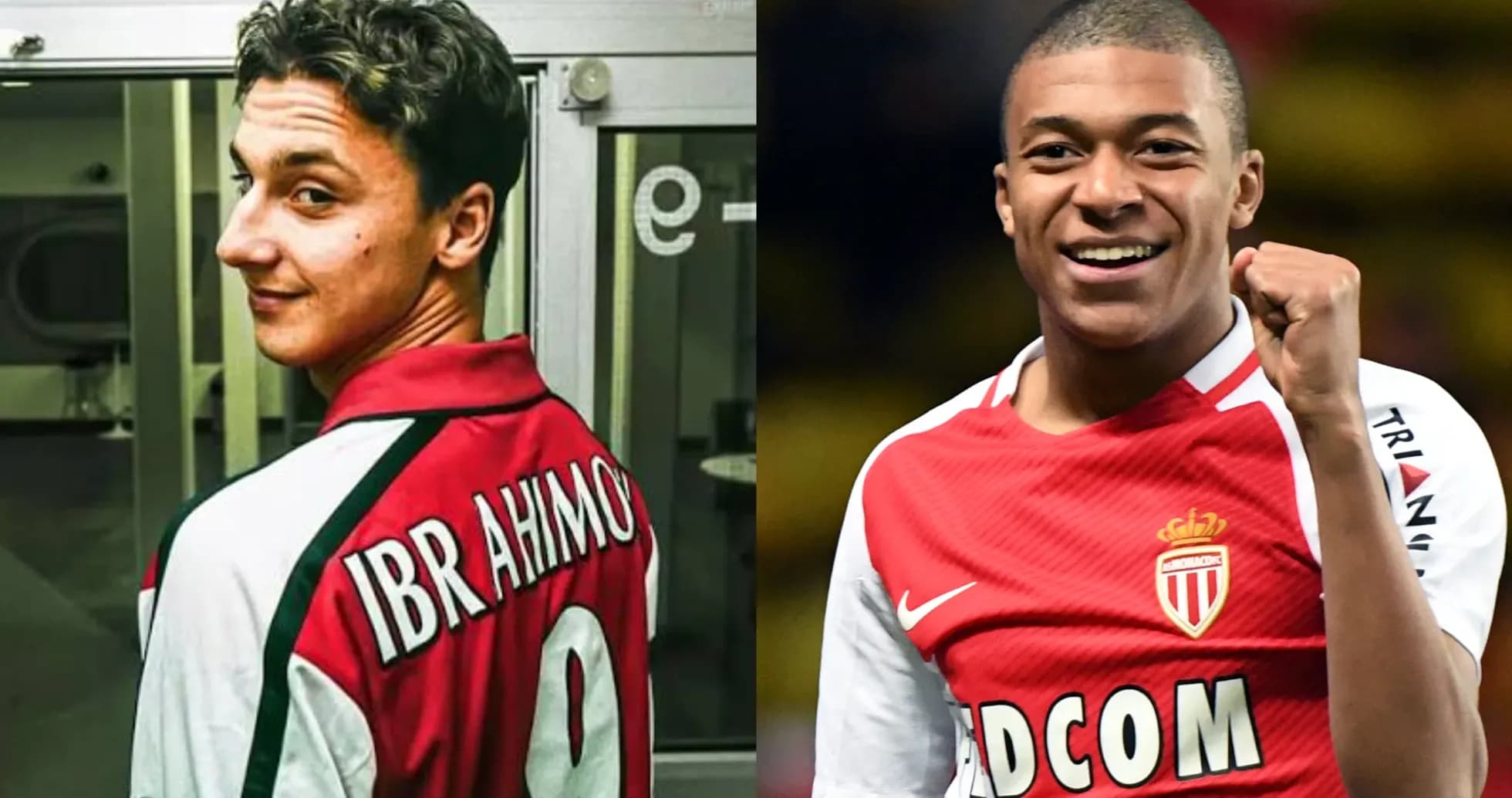
Zlatan Ibrahimovic arrived in north London as a 17‑year‑old from Malmö, posed in a No 9 Arsenal shirt with his name on the back, and looked on the brink of signing. Then came the twist. Wenger wanted a trial first. Ibrahimovic refused. “Zlatan doesn’t do auditions,” he later said. The Swede walked away and only graced the Premier League 16 years later with Manchester United.
Yaya Touré actually played in an Arsenal shirt – a pre-season friendly against Barnet in 2003 while on trial from Beveren. Wenger wanted him, the agreement was there, but the work permit dragged on. Touré grew impatient and chose Metalurh Donetsk, where he could move without passport issues. He eventually returned to England in Manchester City blue, winning three Premier League titles and dominating midfields in the way Wenger once imagined for Arsenal.
Cristiano Ronaldo is the one Wenger has openly called his biggest regret. In 2003, a 17‑year‑old Ronaldo and his mother visited Arsenal’s training ground. Wenger showed him around, gave him a shirt with his name on the back and pushed hard to bring him from Sporting Lisbon. The deal came down to money. Manchester United paid the fee Arsenal would not. Ronaldo went to Old Trafford, won three Premier League titles, and later five Ballons d’Or.
Years later, another generational talent slipped from Arsenal’s grasp. In 2016, Wenger flew to the south of France to meet Kylian Mbappé and his family at home, trying to convince the Monaco teenager to sign his first professional contract in north London. Mbappé stayed put for another year and then, in 2017, Liverpool made their own pitch. Jürgen Klopp and his staff took Mbappé and his family on a private jet, circling in the air, talking, eating, doing everything to sell the Anfield project. Liverpool “pulled out all the stops”, as Klopp later put it, but Mbappé chose Paris Saint‑Germain. He became a World Cup winner with France, a superstar in Ligue 1, and only moved on to Real Madrid after six years in Paris.
Ronaldinho, Rivaldo and the Premier League’s lost entertainers
In 2003, Manchester United were convinced they had the heir to their attacking throne lined up: Ronaldinho.
The Brazilian had decided to leave Paris Saint‑Germain, and Sir Alex Ferguson spoke confidently about being “very close” to a deal. Old Trafford seemed the likely destination. Then Barcelona moved. Sandro Rosell, on the brink of the presidency, called Ronaldinho and asked for a promise: if he became Barca president, would Ronaldinho join? The answer was yes. Within 48 hours, the United move was dead. Ronaldinho went to Camp Nou, won the Ballon d’Or in 2005, and lifted the Champions League in 2006. The Premier League never got its own peak Ronaldinho show.
One year later, Bolton Wanderers tried to pull off one of the most audacious signings in English football history. In 2004, fresh from winning the World Cup with Brazil two years earlier, Rivaldo was a free agent and in talks with Sam Allardyce’s Bolton.
Chairman Phil Gartside revealed he had a fax in his pocket confirming Rivaldo wanted to come and had accepted the financial terms. Rivaldo himself spoke of the “challenge” of getting Bolton into Europe for the first time and called it an exciting time. The dream collapsed before signatures hit paper. Rivaldo joined Olympiacos instead. The Reebok Stadium never saw one of the great left feet of his generation.
Gerrard’s Chelsea temptation and Ramsey’s late swerve
In 2005, Steven Gerrard stood at the peak of his powers, fresh from dragging Liverpool to Champions League glory in Istanbul. That summer, he almost walked away.
Jose Mourinho, building a dynasty at Chelsea, was desperate to sign him. He imagined a midfield of Claude Makelele, Gerrard and Frank Lampard – a terrifying blend of bite, brains and goals. Gerrard even handed in a transfer request. In his autobiography, he admitted thinking, “I’d love to play for Jose Mourinho.” Mourinho had turned his head. The move felt inevitable.
Then came the conversations at home. Family, loyalty, the pull of Anfield. Gerrard reversed course, signed a new four-year deal, and stayed at Liverpool for another decade. Chelsea’s midfield remained great. With Gerrard, it might have been historic.
Three years later, Manchester United thought they had secured another British midfield star. In 2008, the club announced on their website that they had agreed a fee with Cardiff City for 17‑year‑old Aaron Ramsey, calling him one of Wales’ brightest prospects.
But the story twisted fast. Within 10 days, Ramsey had signed for Arsenal instead. Wenger, working as a pundit at the Euros, had flown Ramsey out, met him for lunch and laid out his vision. The personal touch worked. Ramsey spent 11 years in north London and scored the winning goal in two FA Cup finals, lifting the trophy three times with the Gunners.
Lewandowski, Haaland, Bellingham – and Manchester United’s near misses
Blackburn Rovers reappear again in 2010, this time on the verge of landing one of the most ruthless strikers of the modern era: Robert Lewandowski.
Rovers had an agreement in place with Lech Poznan after productive talks. The plan was simple: fly Lewandowski to England, show him the club, finalise the deal. Then a volcano erupted. The ash cloud from Eyjafjallajokull grounded flights across Europe. Lewandowski never made the trip. He later admitted that if he had seen the stadium and the club, Blackburn “maybe” would have become his first choice. Instead, he joined Borussia Dortmund, then Bayern Munich, then Barcelona, and became the third‑highest scorer in Champions League history.
At Old Trafford, the list of almost‑signings in recent years reads like a Ballon d’Or longlist.
In December 2019, Ole Gunnar Solskjaer tried to bring Erling Haaland from Red Bull Salzburg to Manchester United. Solskjaer, who had coached Haaland at Molde, even flew to Austria for talks. He had already urged United to sign the striker 18 months earlier, calling him “absolutely top class” and insisting they move before everyone else did. The club hesitated the first time, then arrived late the second. Haaland chose Borussia Dortmund, and when he did come to England, it was to Manchester City. Two Premier League titles and three Golden Boots later, that hesitation looks even more costly.
Jude Bellingham was another generational talent who walked through Carrington but never pulled on the shirt. In 2020, still only 17 and leaving Birmingham City, he visited United’s training ground with his family.
The club rolled out the royalty. Solskjaer was there, along with Sir Alex Ferguson, Bryan Robson and Eric Cantona. They all spoke to Bellingham, sold the project, and left the room convinced. Robson later said they genuinely thought he was coming. Bellingham chose Borussia Dortmund instead, just as Haaland had. From there, he vaulted to Real Madrid, becoming one of the defining midfielders of his generation.
Faxes that never turned into contracts. Planes that never took off. Trials refused, permits delayed, calls made at just the right – or wrong – moment.
The Premier League has been shaped by the stars who came. These 15 almost-signings remind us it has also been shaped, quietly but decisively, by the ones who didn’t.