PSG vs Arsenal: Champions League Final Showdown in Budapest
Paris has its challenger. Arsenal has its date. Budapest has its final.
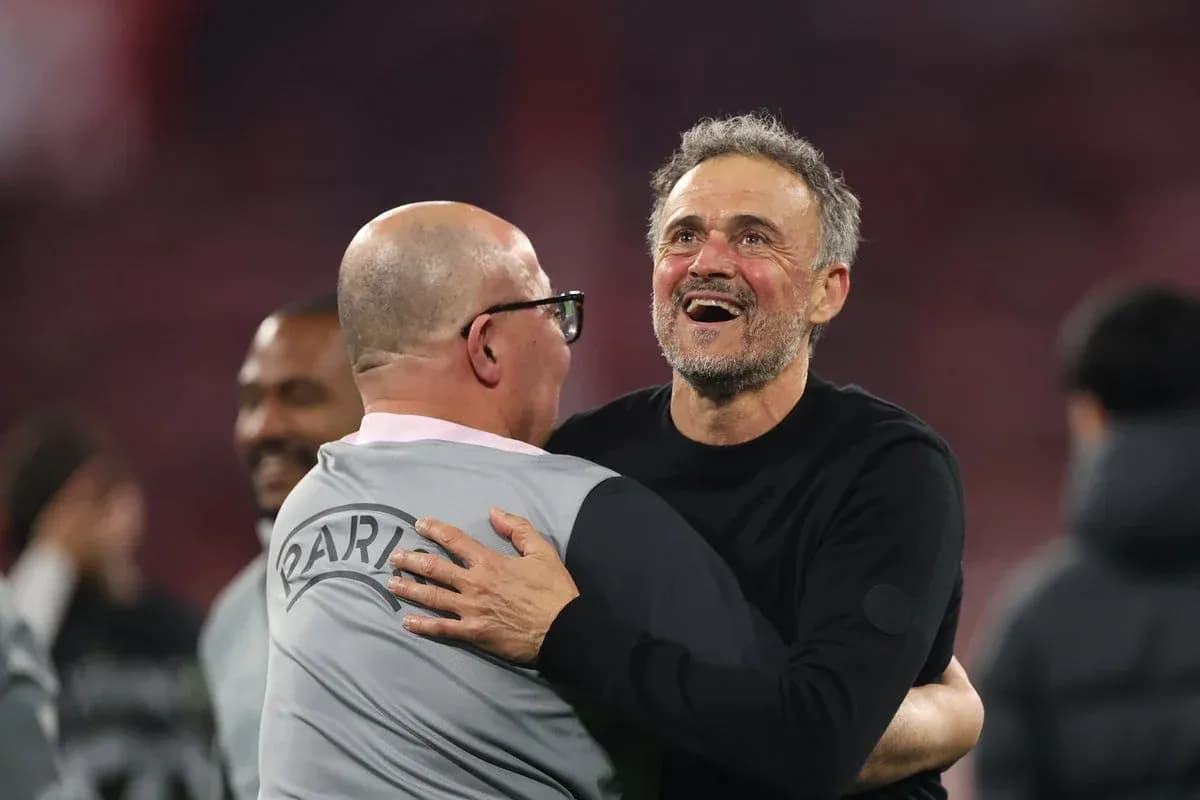
After three years of building, bruising and finally believing, Luis Enrique walked out of the Allianz Arena with exactly what he has been promising since autumn: a Paris Saint-Germain side that, in his mind, fears no one and nothing in this Champions League.
“Do I believe we can win the final? Yes,” he said, the tone less boast than confirmation. “Do you remember what I said after group stage? I said I don't see any team being better than we are. The critics were saying that PSG are maybe not that great, but I was right.”
On the evidence of this semi-final, he has a case.
PSG survive Bayern storm to return to the big stage
The second leg in Munich was never going to match the chaos of the first. The nine-goal epic in Paris had left Bayern chasing shadows and the tie itself teetering on the edge of farce. This time, PSG arrived with a two-goal cushion and a plan.
Ousmane Dembele ripped that plan into life after barely three minutes, sweeping the holders into an even stronger position and silencing the Allianz. His goal gave PSG a two-goal advantage in the tie and forced Bayern into the role they least enjoy: desperate chasers against a side that can counter with venom and control the tempo when it matters.
Bayern pushed, harried, raged. They thought they had their route back when a shot ricocheted off Vitinha and onto the arm of Joao Neves in the box. Arms went up. Harry Kane led the protests. The stadium howled for a penalty.
Nothing.
The referee stuck with his on-field call, and VAR stayed out of it. The law is clear: if the ball strikes a player’s arm after coming directly from a teammate and it doesn’t lead to an immediate goal or chance, it is not handball. The decision infuriated Bayern, who saw an arm raised and contact made, but the rulebook offered them no comfort.
Kane did eventually find the net, turning in an equaliser in the fourth minute of stoppage time. By then, the damage was done. The holders absorbed the late punch and walked away with a 1-1 draw on the night and a 6-5 win on aggregate. The scoreboard read parity; the tie never truly did.
Luis Enrique called it “a gift” to the supporters, a return to the biggest stage that underlined how far his team has come.
“We showed over the last three years that we are ready to play against any opponents,” he said. “This is a team you can count on because we are always fighting.”
Khvicha Kvaratskhelia, one of the symbols of PSG’s renewed edge, did not bother to dress it up.
“Very happy we're in the final. We know it will be difficult against Arsenal. Bayern is one of the best teams right now. It was very difficult. The hardest one in the season. We showed we can play against these teams. I will give everything for this badge."
Arsenal’s rise, and a nation watching
On the other side of the draw, Arsenal’s journey has felt different. Less inevitable, more hard-earned. Where PSG stride with the weight of expectation, Mikel Arteta’s side have climbed with a kind of controlled defiance.
Their 1-0 win over Atletico Madrid at the Emirates was not spectacular. It did not need to be. Bukayo Saka’s tap-in just before half-time settled a tense tie and delivered a 2-1 aggregate victory, built on organisation, resilience and yet another clean sheet – their ninth of this Champions League campaign.
Arteta trusted his instincts on the night, sticking with the same XI that had beaten Fulham at the weekend.
He called it a “gut” decision. It worked.
The final whistle sparked something close to catharsis. Players punched the air. The stadium roared with the recognition of what this meant: Arsenal’s first Champions League final in 20 years, with the Premier League title still in their sights. A double that once felt like fantasy now sits within reach.
The country noticed. Virgin Media O2 recorded its highest-ever broadband traffic as millions tuned in to watch Arsenal edge past Atletico. Peak downstream traffic jumped 17 per cent on a typical Tuesday evening, smashing the previous record set during Liverpool’s meeting with Real Madrid last November. Arsenal’s run is not just a sporting story; it is a national broadcast event.
Declan Rice, never one to underplay an occasion, went straight to the heart of it. He called on 200,000 Arsenal fans to flood Budapest and turn the Puskas Arena into a north London outpost. For a club that has spent two decades haunted by missed chances in Europe, the message was simple: this is the time to show up.
A final loaded with meaning
Strip it back and the final in Budapest is a straightforward sell: the two best teams in Europe this season, colliding on neutral ground, with a trophy and a slice of history on the line.
Look closer and the contrast sharpens.
PSG, the state-backed powerhouse, arrive as defending champions after last season’s 5-0 dismantling of Inter Milan in the final. They are chasing something only Real Madrid have managed in the modern Champions League era: retaining the crown. If they do it, they will become just the second side since 1992 to defend the title, and the first state-owned club to do so.
Luis Enrique is unapologetic about where he believes his team stands.
“Bayern are at our level and Arsenal have been one of the best teams this season,” he said. “They have had an incredible year and are still chasing the Premier League. They are in the final, but I believe in my team and it is important to underline that.”
Across from them stand Arsenal, a team built not on financial distortion but on a meticulous sporting project, smart recruitment and a manager whose ideas have finally found their full expression. Their season has been laced with anxiety and strain, yet they keep grinding out nights like the one against Atletico – high pressure, small margins, decisive quality at the right moment.
This is not just stellar attack against collective structure. It is imagination against order. A club trying to complete its redemption arc against a project that has dominated the conversation about power, money and morality in the modern game.
The semi-finals did not quite hit the heights many predicted. The first leg between PSG and Bayern was a classic; the return was cagey, controlled, professional. Arsenal’s victory over Atletico was narrow, tactical, almost austere. But what they have delivered is a final that feels like the natural summit of this season.
Budapest awaits
On 30 May, the Puskas Arena will stage a contest loaded with subplots.
PSG, chasing validation through repetition, desperate to prove that last season was not a one-off surge but the start of an era. Arsenal, chasing history and revenge, after feeling they were the better side in last year’s semi-final defeat to the same opponents.
Luis Enrique has thrown down the gauntlet. “I don't see any team being better than we are,” he said months ago. He has not shifted from that view.
Arsenal will arrive with a different kind of conviction, forged not in declarations but in clean sheets, late winners and a fanbase ready to turn Budapest red and white.
One side wants to confirm its dominance. The other wants to change its destiny.
Only one of them will walk away with Europe in their hands.