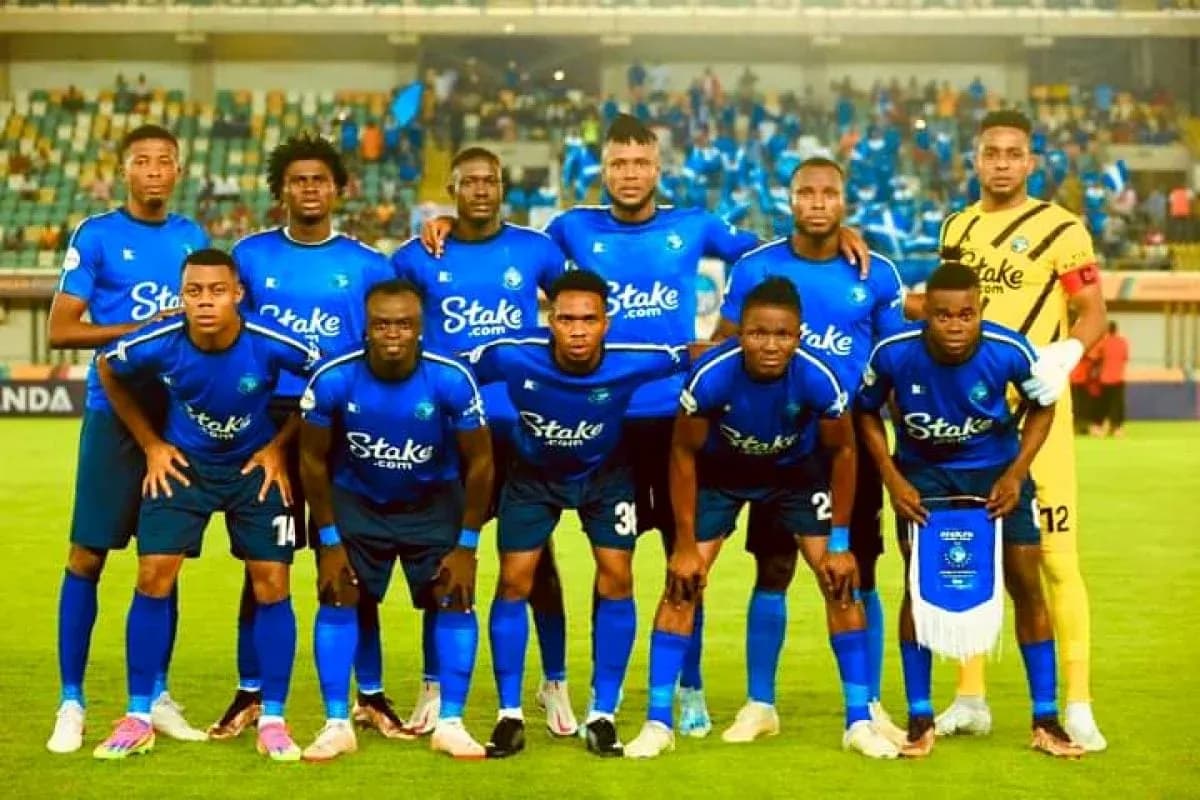
Ranchers Bees vs Rivers United: Tactical Showdown in NPFL
The regular season in the NPFL can be unforgiving, and this meeting between Ranchers Bees and Rivers United arrives at a point where both clubs are already revealing their seasonal DNA. One sits in the slipstream of the leaders; the other is still working out who it wants to be.
Heading into this game, Ranchers Bees are 11th with 7 points from 6 matches, their goal difference perfectly balanced at 0 after scoring 8 and conceding 8 overall. Rivers United travel as one of the division’s early pace-setters: 2nd in the table with 11 points from 5 games, and a commanding overall goal difference of 9 from 10 goals scored and just 1 conceded.
I. The Big Picture – Clash of Fortresses and Frailties
The contrast is stark. At home, Ranchers Bees have quietly built a fortress: 3 matches, 2 wins, 1 draw, 6 goals for and only 1 against. That is an average of 2.0 goals scored at home and 0.3 conceded, numbers that speak of front-foot ambition supported by a disciplined defensive base in familiar surroundings.
On their travels, Rivers United are a very different animal to the side that destroys teams at home. Away, they have played 2, drawn both, scoring 1 and conceding 1. Their away average stands at 0.5 goals scored and 0.5 conceded. The overall aura of dominance – 3.0 goals per game at home, 3 home wins from 3, 9 goals for and 0 against – softens once they leave their own ground.
This fixture therefore shapes up less as top versus mid-table and more as an arm-wrestle between a strong home side and an elite team that has yet to fully translate its supremacy onto the road.
II. Tactical Voids and Discipline – Where Edges Emerge
There is no explicit injury or suspension list, but the statistical profile of both sides hints at tactical voids that coaches must manage.
Ranchers Bees have already walked the disciplinary tightrope. Their yellow cards cluster in the middle and late phases of games: 20.00% between 16-30 minutes, another 20.00% between 31-45, then a spike to 40.00% from 61-75 and 20.00% from 76-90. More telling is their red-card pattern: a single dismissal, and it came late, with 100.00% of their reds shown between 76-90 minutes. That late-game volatility can tear holes in any structure just when matches are decided.
Rivers United, by contrast, have kept a cleaner sheet in terms of discipline. Their yellow cards appear only in the second half, split evenly: 50.00% between 46-60 minutes and 50.00% from 76-90, and no reds recorded. That suggests a side that can apply pressure and aggression without tipping into chaos, a vital trait in tight away contests.
III. Key Matchups – Hunter vs Shield, Engine Room vs Enforcer
Without named individuals, the battle lines are drawn unit against unit.
Hunter vs Shield: Ranchers Bees’ attack at home versus Rivers United’s overall defensive wall.
At home, Ranchers Bees have scored 6 times in 3 matches, with a total scoring average of 1.3 per game across the season. Their minute distribution shows a clear late-game surge: 50.00% of their goals arrive between 76-90 minutes, with earlier strikes in the 0-15 and 46-60 windows (25.00% each). This is a team that grows into games, pushing hard in the final quarter.
Rivers United’s defence, however, has been almost impenetrable. Overall, they concede just 0.2 goals per game, with only 1 goal allowed in 5 matches. On their travels, that average rises slightly to 0.5, but crucially, there is no recorded minute window in which they are particularly vulnerable; their conceded-goal distribution is effectively flat, with no cluster in any period. The Shield does not crack in a predictable place.
The critical intersection is therefore Ranchers Bees’ late offensive surge versus Rivers United’s calm, consistent resistance. Bees also concede heavily late – 50.00% of their goals against arrive between 76-90 minutes – so the final quarter is likely to be a storm: one side chasing a winner, the other hunting a counter while trusting its defensive structure.
Engine Room vs Enforcer: Midfield control and transition.
Ranchers Bees’ overall goals against average of 1.3 per game, spiking to 2.3 on their travels, suggests a side that can be overrun when forced to defend for long stretches. But at home, conceding only 1 in 3 matches, they have shown they can compress space, win duels, and protect their back line.
Rivers United’s attack is multi-phased and relentless. Their goals are spread across the match: 11.11% between 0-15, 22.22% in both the 16-30 and 46-60 windows, another 22.22% from 61-75, and 11.11% late from 76-90. This distribution reveals a side that can hurt opponents in almost every phase, with particular strength around the half-hour and just after half-time, classic moments for well-drilled patterns and rehearsed set plays.
The “engine room” contest will revolve around whether Ranchers Bees can disrupt Rivers United’s rhythm around those key windows. If the home midfield can slow transitions and break up combinations just before and after the interval, they can drag the game towards that chaotic late phase where they themselves are strongest.
IV. Statistical Prognosis – Edges, xG Proxies and Likely Narrative
With no explicit xG values, the shot and goal patterns act as proxies. Rivers United’s overall return of 10 goals from 5 games, combined with 4 clean sheets and only 1 match in which they failed to score, paints the picture of a side whose underlying chance creation and defensive solidity are elite for this level. Their biggest home win, 5-0, underlines a ceiling where their performance can explode.
Ranchers Bees, meanwhile, have already demonstrated both extremes: a biggest home win of 4-0, but also a 3-1 away defeat. Their season form line of LWLWLD and overall under/over profile – only 1 match over 2.5 goals in 6 – suggests that when they control the tempo, games stay tight.
The statistical verdict tilts towards Rivers United avoiding defeat, powered by their defensive record and unbeaten start. However, the home-away split and Ranchers Bees’ perfect record of no home losses this campaign hint strongly at a finely balanced contest. Expect a tight, tactical game where Rivers United’s structured pressure meets Ranchers Bees’ late-game surge, with the decisive moments most likely clustered in the final quarter, when one side’s discipline and the other’s volatility will ultimately decide the story.