Rangers' Fan Loyalty at Risk Amid Struggles
The warning came not from a balance sheet or a boardroom report, but from the floor of a Rangers shareholder meeting.
A supporter stood up, took the microphone and delivered a line that cut straight through the corporate gloss aimed at the club’s new US owners.
“Be very careful – as much as we’re loyal, if this rot continues, the atmosphere in the crowd will lead to people not turning up and buying what you’re selling us.”
He handed the mic back. Around 800 fellow shareholders answered with loud applause. It was not a stunt. It was a statement of intent.
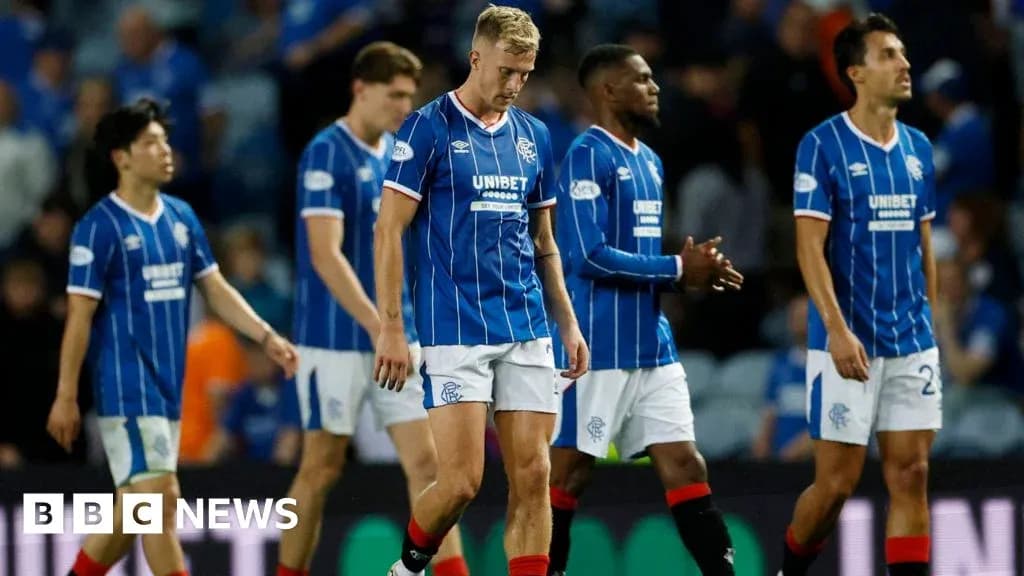
Four days later, that same fan base watched Rangers limp out of the Europa League with a 1-1 draw against Jagiellonia Bialystok at Ibrox. A result that felt less like a blip and more like confirmation of a slide.
Four games under Derek McInnes. Two draws. Two defeats. No momentum. No spark.
For the former Hearts manager, the problems are immediate and obvious: a team short on confidence, rhythm and results. For the new regime upstairs, the issues cut deeper. They threaten the very model on which this ownership has been sold.
Because if those fans decide they are no longer “buying what they’re being sold”, the numbers stop adding up very quickly.
A business model under strain
Rangers’ struggles on the pitch are already bleeding into the club’s financial reality. The board knows it. They have to. In a league with limited broadcast money and tight commercial ceilings, fan loyalty is not a nice-to-have. It is the business.
Right now, the “product” is failing. That makes the task brutally simple and brutally hard: restore confidence, or watch the revenue base erode.
History at Ibrox shows how quickly that can go wrong. Previous regimes learned, expensively, that goodwill is not infinite. It has to be earned, week after week, with wins.
Winning brings belief. Belief brings money.
In Scottish football, the big money for clubs like Rangers comes from two places: Europe and player trading. Strip away matchday takings and, over the past five years, Rangers have pulled in roughly £18m from European participation. In their last set of accounts, that was about 19% of total turnover.
Those figures come with caveats – win bonuses, travel, staging costs – but the direction of travel is clear. To hit that kind of number this season, Rangers would now need to win the Europa Conference League.
Kieran Maguire of the Price of Football framed the gap starkly: “For every pound you make in the Europa Conference League, you can make £2 in the Europa League and £7 in the Champions League.
“And of course in the Conference League you’re only playing three home games as opposed to four in the Europa League, so there will be a loss of matchday income as well.
“On the positive side, if you do qualify for the Europa Conference League stage, you should have a better chance of progressing further.”
That “positive side” still comes with a sting. Rangers must first get past Czech side Jablonec over two legs just to secure group-stage football. Only then can they even start to think about going deep enough to claw back some of the lost cash.
Even if they do, the numbers look ugly. The Ibrox club could still be staring at a shortfall of around £8m from European competition compared with recent seasons.
For a mid-table Premier League side, that is an irritation. For a well-capitalised club in a stronger league, it can be absorbed. For Rangers, operating in the tight margins of Scottish football, it is a problem that demands an answer.
Missed chances in the market
One obvious route to plug the gap is player trading. It is also a route Rangers have repeatedly struggled to walk with any conviction.
Reports suggest the club recently turned down an offer of around £22m for striker Youssef Chermiti. Shortly after, Chermiti suffered a serious injury that could rule him out for the rest of the season.
A fee of that size would have gone a long way to easing the financial pressure created by the Europa League exit. Instead, it now sits in the “what if” column, a harsh reminder of how quickly a market opportunity can vanish.
Behind Chermiti, Nico Raskin is widely viewed as the next major saleable asset. The Belgian midfielder is currently valued at around £14.5m by Transfermarkt. Even if a bid in that region arrived and was accepted, Rangers would then face the cost and risk of replacing a key player in a squad that already looks unbalanced.
The club has not been shy about raising money elsewhere. A recent share issue brought in £16m of fresh capital, with the board insisting it would be used to strengthen the team. At the same time, they have outlined plans to refurbish Ibrox and upgrade the training ground – projects that carry their own significant price tags.
Over the past 12 months, more than 20 players have come through the door. Recruitment, though, is under heavy scrutiny. The volume of business has not translated into a coherent, winning side. That disconnect worries supporters who were told investment would deliver a stronger Rangers, not just a busier transfer window.
The new consortium, much of which still operates in the shadows, injected an initial £20m when it took control a year ago. On current evidence, that will not be the last time they are asked to reach for their wallets before this year is out.
How deep they are willing to dig, and on what terms, is about to become a defining question.
Loyalty on the line
Before any fresh money arrives, Rangers must repair something more fragile than a balance sheet: trust.
Inside the club, the message is that recent poor results have not altered their financial outlook or their commitment to “winning, and winning sustainably”. The line is clear. The plan remains the plan.
But that shareholder’s warning hangs in the air.
Yes, the owners have admitted mistakes in the recent past. They have apologised. The problem is that apologies only work if fans can see lessons being learned, not repeated.
Chris Jack of the Rangers Review put it bluntly to BBC Scotland News: “You cannot knock the loyalty and support the Rangers fans have given the club over many, many years, but every individual fan or fan base has a breaking point.
“They’re going to have a point where they say ‘actually, I don’t fancy it this afternoon and it’s time for the club, the players and the manager to give me something.’”
For years, the dominant emotion at Ibrox when things went wrong was anger. Anger at results, at boards, at managers. Anger still meant people turned up, shouted, protested, demanded more.
Now, in some corners, that anger is softening into something more dangerous: apathy.
In football, apathy is not just a mood. It has a price. Empty seats. Fewer shirts sold. Season tickets not renewed. Commercial partners asking questions.
That is a cost Rangers’ new owners, and Derek McInnes, can ill afford as a season that was meant to mark a fresh start already feels like a test of how much this fan base is willing to tolerate before it finally says: enough.