Rangers' Playoff Defeat Sparks Board Fury Amidst Recruitment Failures
The 3-2 aggregate defeat sends the Light Blues into a playoff for Conference League football – and straight back into the fire Derek McInnes warned about.
He said Rangers were playing with it after the club failed to plug glaring gaps in defence. On this evidence, the flames are licking higher than ever around a board already under siege.
Board under fire as anger boils again
Andrew Cavenagh and his American regime walked into Monday’s shareholder meeting already feeling the heat. One by one, supporters took turns to tear into a recruitment record that has delivered more disappointment than direction.
They hoped this tie would calm the room. Overturn the 2-1 loss in Poland, reach the Europa League play-off, and at least buy some breathing space.
Instead, the mood has darkened again, uncomfortably reminiscent of last year’s toxic backlash when the Russell Martin move collapsed. The anger is no longer simmering. It’s bubbling over.
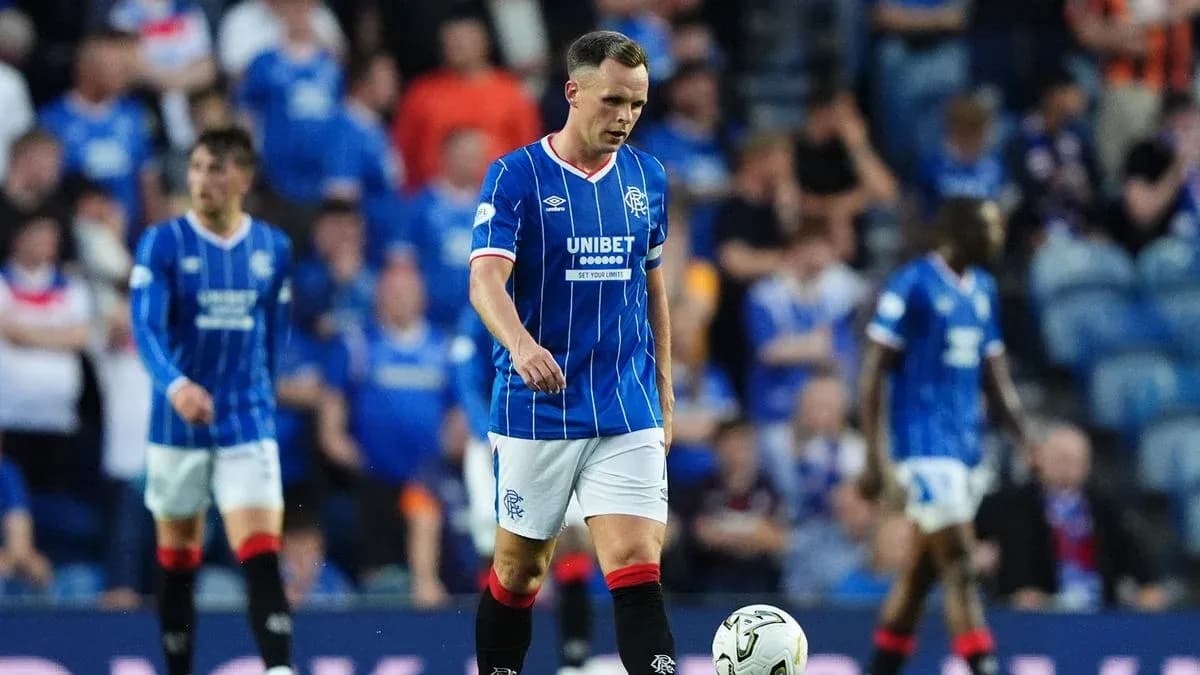
McInnes thought he had found a spark. On 19 minutes, Lawrence Shankland – the boyhood Rangers fan, now captain – rolled home his first goal for the club from the penalty spot. A moment he has imagined for a lifetime.
It should have lit the place up. It didn’t.
The second half sagged. The tempo dropped, the ideas vanished, and Rangers retreated into the kind of timid, uncertain football that has become a grim theme. The punishment was inevitable. Nik Prelec struck the vital equaliser, restoring Jagiellonia’s aggregate lead and sending the Poles into the Europa League play-off.
Rangers fall through the trapdoor into the Conference League for the first time. Only victory over Czech side Jablonec will drag them into the league phase. Nothing is guaranteed.
Ibrox fury – and where it should land
Four games into the McInnes era. No wins.
At full-time, Ibrox turned. Boos rained down on players and manager alike. McInnes copped his share, but the real fury belongs higher up the chain.
The American board has spent millions of dollars across two windows and still left a squad short of control, short of craft, and short of authority in key areas. Nine new signings this summer, yet the same old problems: no reliable creativity, no grip on games.
Until Cavenagh and his colleagues overhaul how they identify and sign players, the pattern will not break. The faces will change. The football won’t.
Klopp comparison jars as injuries bite
The mood wasn’t helped by a curious remark earlier in the week. Ibrox CEO Jim Gillespie left supporters baffled when he likened McInnes to Jurgen Klopp.
There has been little sign of Klopp’s “heavy metal” chaos and ferocity in Govan so far. The intention was clear enough: Gillespie wanted to highlight McInnes’ leadership and man-management, not his tactical blueprint.
This week has tested even that. Everything that could go wrong has gone wrong for the new boss. The double injury blow to Youssef Chermiti and Tuur Rommens stripped a squad already short on ideas and natural leaders, despite the arrival of three former captains.
McInnes did not need the Klopp comparison hanging over him as results stalled and key men dropped out. It has only sharpened the contrast between rhetoric and reality.
Shankland’s moment – and the warning inside it
For Shankland, there was at least a personal milestone. He turned 31 on Monday. Three days later came the gift.
Former Celtic defender Yuki Kobayashi inexplicably dangled an arm while trying to cut out a cross from compatriot Yokota. The handball was as needless as it was obvious. Shankland stepped up and swept home the penalty he has dreamed of since childhood.
The wait for that first Rangers goal lasted only a fortnight. It must have felt like the full 31 years.
His start has been tough. The service has been worse. Unless McInnes finds players who can consistently create and feed his captain, the slog will continue. Shankland is a finisher. He cannot finish chances that never arrive.
Strikers under scrutiny, places up for grabs
With Chermiti out for the season after rupturing knee ligaments, Rangers badly need Ryan Naderi to justify the £5m paid to Hansa Rostock in January.
Three goals since then is a thin return. Supporters are already questioning the late scramble that brought him in on deadline day. McInnes clearly has doubts too. The recruitment team are weighing up a move for Portland Timbers frontman Kevin Kelsy as they scan for options to cover their crocked £9m striker.
Naderi did little here to change the narrative. For a 6ft 4in forward, he too often looks like a punch-drunk boxer, stumbling through duels instead of dominating them.
He is not alone in feeling the breath of competition on his neck. But while Naderi searches for form, Yokota is making himself hard to dislodge. McInnes still wants another right winger, yet the former Hannover man is already one of the few in this side who can beat his marker and deliver with intent.
Without his willingness to run at defenders and whip balls into the box, Rangers would look almost completely devoid of invention. It is early, but the club needs more of this summer’s recruits to hit Yokota’s level – and quickly.
Constant change, no clear shape
If there is one hallmark of the McInnes reign so far, it is churn.
Five changes for the first leg in Poland after the draw with Dundee United at Tannadice. Six more for Sunday’s defeat to Hibs. Another five alterations to the starting XI here, along with a switch to a 3-5-2 system.
By half-time, Thelo Aasgaard was hooked for Ross Mc, making it seven interval substitutions in four games. The defence is thin, so the logic behind a back three was understandable. The execution was not.
Djeidi Gassama was asked to operate as a wing-back. The Mauritanian has never been known for his defensive diligence and Jagiellonia winger Rodrigo Conceicao quickly exploited the space behind him. Rangers looked uneasy, stretched, and uncertain in the shape.
McInnes abandoned it at the break, sending on McCrorie and reverting to a flat back four. The structural issues eased. The attacking verve evaporated.
The tempo dropped, the sharpness went with it, and Jagiellonia grew into the contest. The goal that sent the Poles through did not feel like a twist. It felt like the logical conclusion to a team that cannot yet decide what it wants to be.
Now Rangers face the Conference League, a restless fanbase, and a board under siege. The question is no longer whether change is needed. It’s how quickly this club can find a plan that actually works.