Raphinha's Remarkable Comeback: From Ballon d’Or Snub to Barcelona's Star
Twelve months ago, Raphinha’s season fell apart. Hamstring twinges turned into full-blown absences, 125 days lost, a World Cup wrecked and his Ballon d’Or dream shredded. Sixty goal contributions in 2024-25 weren’t enough to get him over the line, and last term that number was slashed to 29.
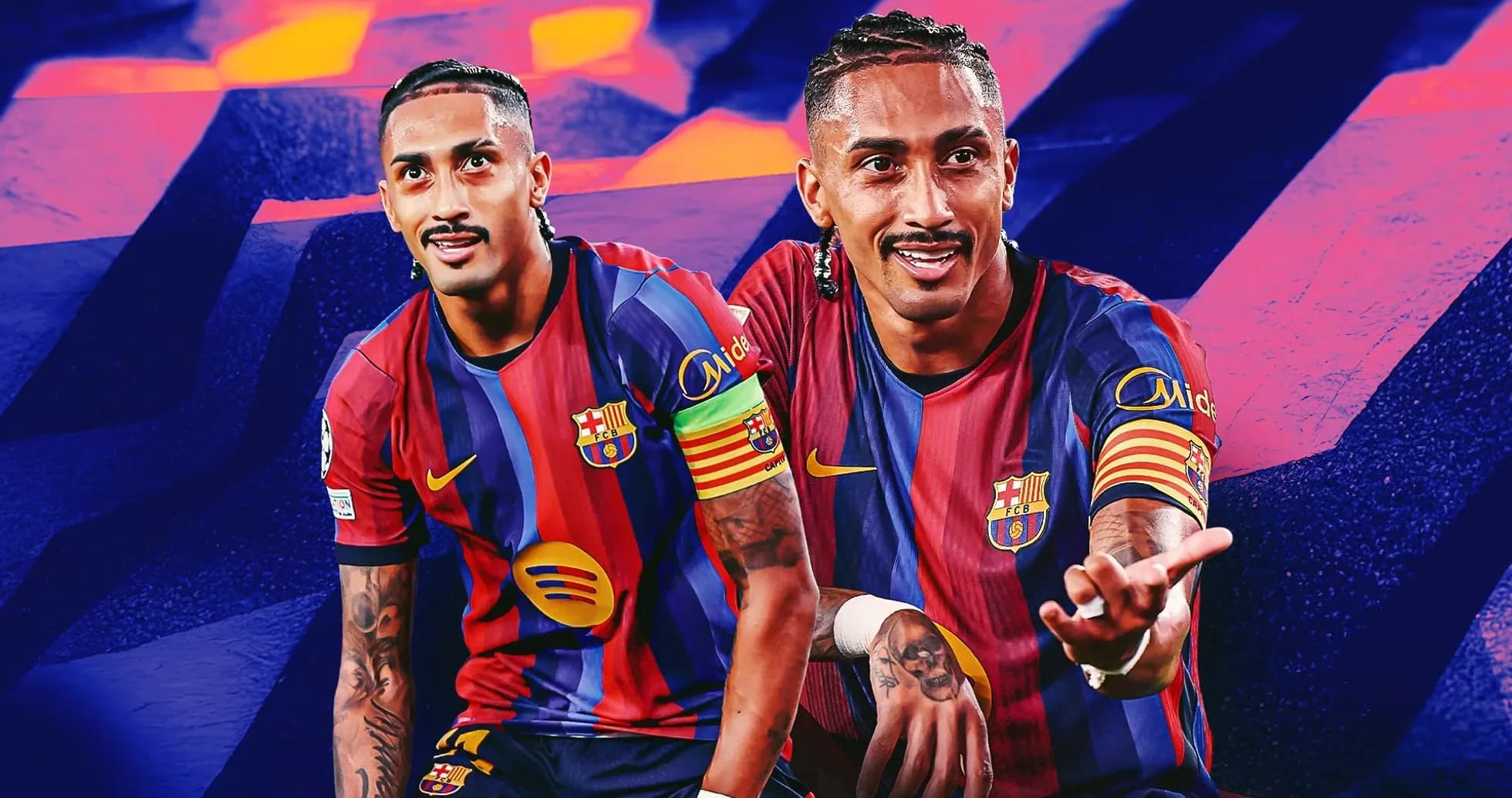
Now he’s back – and he’s playing like the best footballer on the planet.
Hansi Flick has ripped up the old script. The Brazilian who once hugged the left touchline is now the spearhead of a fluid, whirring Barcelona attack. And as the goals fly in, his coach’s anger at the latest Ballon d’Or shortlist is only growing.
“He (Raphinha) is far too good not to be on that list, but we can’t change it,” Flick snapped, speaking with the calm conviction of a man who knows what’s coming if this form continues.
A central role, a central problem for defences
Flick’s words landed straight after Raphinha tore Feyenoord apart in Barca’s Champions League opener. It wasn’t just a brace. It was a statement.
The first goal was pure theatre. A slightly loose pass from Lamine Yamal looked to have killed the move, until Raphinha glided past one defender, surged into the box and shaped to shoot. Instead, he sold an outrageous dummy, left two more Feyenoord players on the turf and then rolled the ball into the corner as if it were a training drill.
The second was classic centre-forward craft. He initially checked towards the ball when Dani Olmo picked it up in the centre-circle, dragging his marker with him. Then he spun and exploded into the opposite channel, met Olmo’s perfectly weighted pass in stride and drilled a low finish across a helpless goalkeeper.
Barca won 5-1. Raphinha walked off with Player of the Match. It felt less like a one-off European night and more like confirmation of a domestic pattern: he is running games from the middle of the pitch.
Right now, he carries himself with the swagger of a world-beater. And the numbers are starting to scream the same story.
Historic numbers, historic company
Raphinha already has 11 goals this season. No Barcelona player in the last 60 years has ever started a campaign this quickly.
Not Lionel Messi. Not Ronaldo. Nobody.
Messi hit 10 in his first seven outings of 2012-13, and twice reached nine by this stage in other seasons. Ronaldo matched nine in 1996-97. Raphinha has gone past them all.
“Rapha has played fantastic,” Flick said. “He’s on another level – he’s unbelievable.”
The data backs him up. But it’s the way those goals arrive that explains why Barca have suddenly shifted up a gear.
Robert Lewandowski was a master with his back to goal. Ferran Torres sliced teams open with clever runs. Raphinha gives Flick something else entirely: a free-roaming, hyper-aggressive focal point who never stops moving.
At 29, he drifts between the lines, uses his explosive acceleration and tight control to pull centre-backs into areas they hate, and links play at speed. That chaos creates room for Yamal and Anthony Gordon out wide, while Raphinha himself is constantly darting into the gaps he’s just carved open.
Defenders know what’s coming. They still can’t stop it.
Hat-trick, high press and a system built around him
If Feyenoord was the warning shot, Racing Santander felt like the full blast.
In La Liga, Raphinha hit a hat-trick in a 7-2 demolition that underlined just how comfortable he has become as Barca’s reference point. Two of his goals came from the penalty spot, but the second strike was the one that summed him up.
Olmo again pulled the strings. Raphinha slipped between Racing’s centre-backs, waited, almost disappeared from their eyeline. When the pass finally arrived, he took one touch and then steered a half-volley into the corner with cold precision.
He makes everything on the ball look effortless. Off the ball, he is anything but.
Barca’s press starts with their captain. He sprints, harries, closes angles, and forces panicked clearances simply because he refuses to stop. It is exactly the intensity Flick demands from his forwards, welded to a clinical edge in front of goal.
It also explains why the coach will not be losing sleep over the Alvarez transfer that never happened. The frontline is humming. The budget can be pointed elsewhere in the next windows.
Walking in the footsteps of R9
Barcelona have always had a soft spot for Brazilian brilliance. Romario, Rivaldo, Ronaldinho, Neymar – each left a mark. None quite burned as fiercely, in such a short space of time, as Ronaldo.
R9 arrived from PSV in 1996 for a then-world record $19.5m, just 20 years old and already a force of nature. In a single, devastating season he scored 47 goals in 49 games, lifted the Copa del Rey, UEFA Cup Winners’ Cup and Supercopa de España, and ripped La Liga to shreds with a blend of power, pace and unerring finishing.
He took the Pichichi with 34 league goals, claimed the European Golden Shoe and topped the 1997 Ballon d’Or vote. The highlights reel from that year still feels unreal: the solo slalom at SD Compostela, the hat-trick that turned a 4-3 Copa del Rey quarter-final against Atletico Madrid into legend.
“He is the most spectacular player I’ve ever seen,” said Sir Bobby Robson. Laurent Blanc added: “I’ve never seen anyone with that velocity and power. He was like a freight train coming at you with a ball at his feet.”
Ronaldo was more of a fixed spearhead than Raphinha, who roams and rotates. Yet the eye for goal, the straight-line brutality, the willingness to knife through a defence in seconds – those echoes are getting louder.
If Raphinha maintains this pace and precision, matching Ronaldo’s output over a season no longer sounds like fantasy. The bigger question is whether he can drive Barca to an even more significant haul of trophies than R9 managed in that single, incandescent year.
A captain forged by adversity
For all the fireworks, Raphinha refuses to declare himself a finished product.
“I will never say I am performing well; I always strive to improve everything I can,” he said after the Racing rout. “I am happy with the goals, and with the win, and that is the most important thing, but we have to keep improving.”
He insists he feels “comfortable” through the middle and credits Flick with reshaping his game. “He is the coach who changed the way I think and how I see myself,” Raphinha said. “I am extremely grateful.”
That relationship has already altered the course of his career. Without Flick, Raphinha might not even be at Camp Nou.
His first two seasons under Xavi never quite clicked. He drifted in and out of the XI, never fully convincing as the long-term answer on the wing. A departure in 2024 looked likely.
Flick saw something different. He saw a leader.
When Marc-André ter Stegen left on loan to Ajax in the summer, Flick had no doubts about the new armband. Raphinha became Barcelona’s permanent captain – the first Brazilian to wear it in Catalunya – and is surpassing every expectation attached to that historic decision.
His passion is obvious. His work rate is relentless. His willingness to drag games his way, to demand the ball when it matters, has given a young squad a captain they can follow.
A deeper cast, but one undisputed star
The rebuild of Barca’s attack did not stop with Raphinha. Lewandowski and Torres have gone, Marcus Rashford has returned to Manchester United, yet Flick’s side look more dangerous going forward than at any time in recent years.
Gordon, Karim Adeyemi and Gabriel Jesus have all slotted in seamlessly. Flick can also turn to 18-year-old Hamza Abdelkarim, promoted from Barca B and already trusted to offer a different threat up front.
“Raphinha, Gabby and Hamza are three different profiles, but there are other ways we could play,” Flick explained. “Anthony and Karim can also play in this position (as striker). Or Dani Olmo. Dani has showed us in last two years he can play there – the same with Fermin [Lopez]. We have a lot of options.”
Those options are a safety net. Raphinha’s body has betrayed him before, and Barca are determined not to let history repeat itself.
Flick has been ruthless with his substitutions, withdrawing his captain early against Feyenoord and in league wins over Athletic Club and Racing. The message is clear: this version of Raphinha is too valuable to burn out.
The same care is being taken with Yamal. The teenager has become even more dangerous operating closer to Raphinha, their combination play almost telepathic. The moment a centre-back shifts his weight towards Yamal, the youngster slides the ball into the space he knows Raphinha is already attacking on the blind side.
Yamal seems content to let the captain shine as the headline act. In a dressing room full of big names, egos stay in check. The collective edge is sharp, and it feels like something is building.
Raphinha stands at the heart of it all, the embodiment of a new, snarling, selfless Barca. If this is the standard he sets across a full campaign, the club’s Hall of Fame committee may soon be preparing a seat next to Ronaldo – and asking themselves how a player like this ever ended up off a Ballon d’Or list.