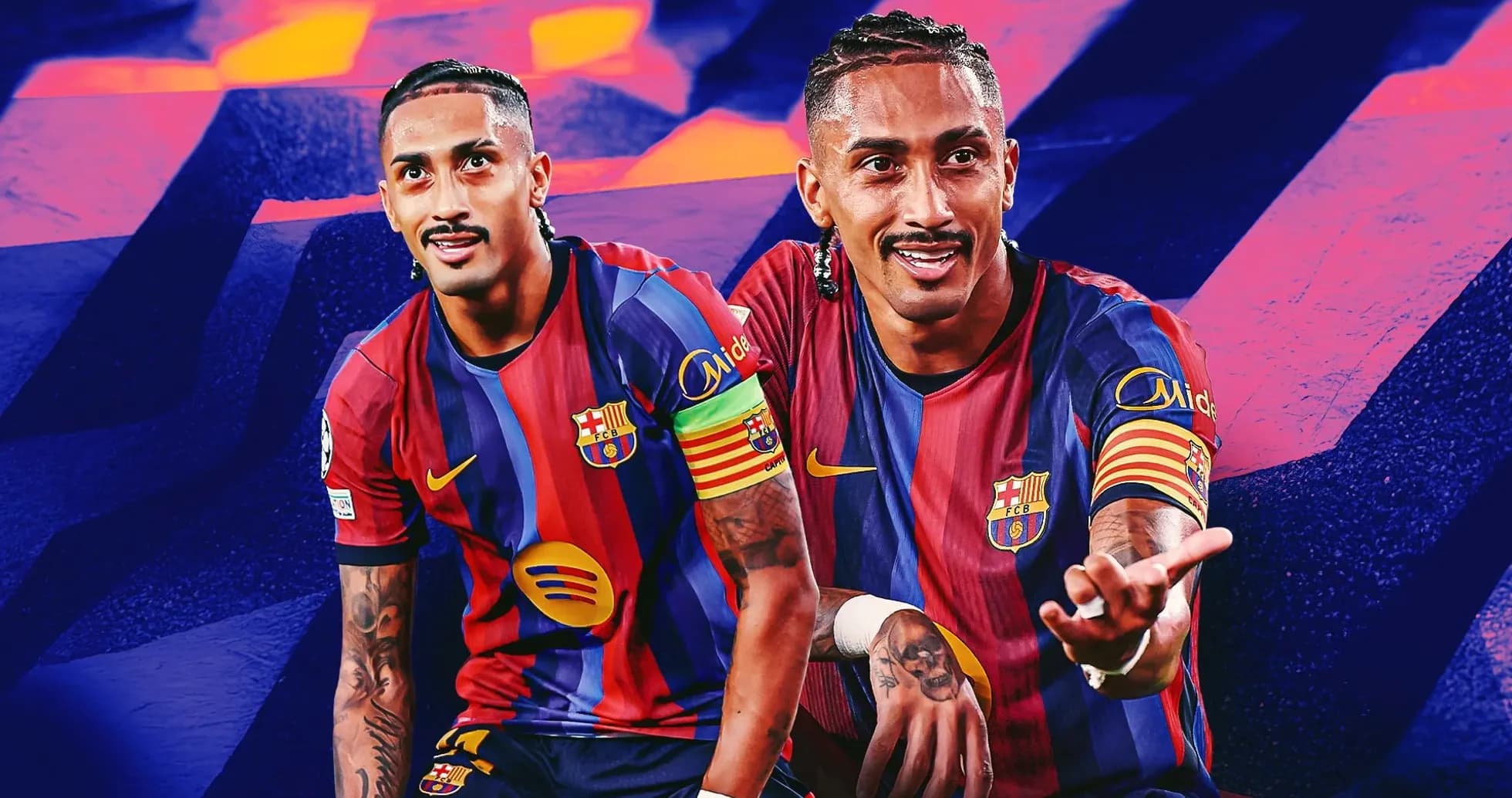
Raphinha’s Revenge Season: From Injury to Barca’s Star
The Ballon d'Or snub still stings Hansi Flick. You can hear it in his voice.
“He (Raphinha) is far too good not to be on that list, but we can’t change it,” the Barcelona coach said, fresh from watching his Brazilian forward rip Feyenoord apart in the Champions League.
A year ago, Raphinha’s story looked very different. Sixty goal contributions in a blistering 2024-25 campaign had put him on the edge of the game’s top individual prize. Then came the crash: just 29 goal involvements last season, 125 days lost to recurring hamstring problems, and a World Cup campaign shredded by injury. The Ballon d'Or dream disappeared with it.
Now he’s come back in a different position, with a different swagger, and under a coach who has rebuilt him from the inside out.
From touchline winger to ruthless spearhead
Under Flick, Raphinha has been pushed inside, away from the left flank where he had made his name. The experiment has turned into the heartbeat of Barca’s new era.
His statement performance arrived on European night. Against Feyenoord, he didn’t just score twice; he owned the pitch.
The first goal was pure theatre. A slightly loose pass from Lamine Yamal, one defender beaten, then a surge into the box. He shaped to shoot, froze two more defenders with a devastating dummy, and rolled the ball into the corner as if he had all the time in the world.
The second was centre-forward craft at its finest. He checked towards Dani Olmo in the centre-circle, dragged his marker with him, then exploded in the opposite direction. Olmo threaded the pass, Raphinha didn’t break stride, and his low drive across the Feyenoord goalkeeper made it look like a training-ground drill.
Barca won 5-1. Raphinha walked away with Player of the Match. He also walked away looking like the most dangerous forward in Europe.
“Rapha has played fantastic,” Flick said. “He’s on another level – he’s unbelievable.”
Right now, the numbers agree.
Historic numbers, historic company
Raphinha already has 11 goals this season. No Barcelona player in the last 60 years has started a campaign this fast.
Not even Lionel Messi.
Messi hit 10 goals in his first seven games of 2012-13, and reached nine at this stage twice more. Ronaldo Nazário reached nine in 1996-97. Raphinha has gone past them.
His form isn’t a quirk of finishing. It’s the engine of Flick’s system.
Lewandowski gave Barca a classic back-to-goal target. Ferran Torres brought clever runs and subtle movement. Raphinha offers something else entirely: a free-roaming focal point who can both knit play together and finish attacks with a killer’s calm.
At 29, he now floats between the lines, dragging centre-backs and midfielders into places they don’t want to go. His acceleration and touch create pockets of space for Yamal and Anthony Gordon out wide, then he darts into the very gaps he’s just opened. Defenders think they’ve tracked him; they look up and he’s already gone.
The pattern repeated in La Liga against Racing Santander. Barca won 7-2, Raphinha hit a hat-trick, and again he dictated the tempo.
Two of the goals came from the spot. The one in between showed the new Raphinha in full. Olmo, again the architect, found him ghosting between Racing’s centre-backs. One touch to set, a half-volley guided into the corner. No fuss. No wasted movement.
On the ball, he makes the game look easy. Off it, he sets the standard. Barca’s press begins with him charging at full tilt, forcing rushed clearances and panicked passes. Flick wanted intensity and dynamism up top. He got that, plus an end product that’s bordering on outrageous.
No wonder the coach no longer loses sleep over the Alvarez deal that never happened. The frontline is humming, and the transfer budget can now be pointed at other weaknesses in the squad.
Walking in R9’s shadow
Barcelona know Brazilian brilliance when they see it. Romario, Rivaldo, Ronaldinho, Neymar – the lineage is rich. Yet for all that flair, nobody has surpassed the seismic single season Ronaldo delivered in 1996-97.
Ronaldo arrived from PSV for a then-world record $19.5m fee at just 20 years old. He scored 47 goals in 49 games, lifted the Copa del Rey, UEFA Cup Winners’ Cup and Supercopa de España, and ripped La Liga apart with a frightening mix of power, pace and finishing.
He won the Pichichi with 34 league goals, claimed the European Golden Shoe, and topped the 1997 Ballon d'Or vote. His solo run against SD Compostela, his hat-trick in the 4-3 Copa del Rey comeback over Atletico Madrid – those moments still live in Barca folklore.
“He is the most spectacular player I’ve ever seen,” Sir Bobby Robson said. Laurent Blanc added: “I’ve never seen anyone with that velocity and power. He was like a freight train coming at you with a ball at his feet.”
Ronaldo, the beloved ‘R9’, was a fixed reference point in attack. Raphinha is more fluid, less static, but the instincts are similar. Both are direct. Both can shred a defensive shape in seconds.
If Raphinha sustains this level, matching Ronaldo’s raw output no longer sounds like fantasy. He may even push Barca toward an even bigger haul of trophies.
A captain rebuilt by Flick
The mindset is in place. Raphinha doesn’t see himself as complete. After the Racing demolition, his words were telling.
“I will never say I am performing well; I always strive to improve everything I can. I am happy with the goals, and with the win, and that is the most important thing, but we have to keep improving.”
He feels “comfortable” through the middle and credits Flick with reshaping his game and his outlook.
“He is the coach who changed the way I think and how I see myself,” Raphinha said. “I am extremely grateful.”
That relationship may have saved his Barca career. His first two seasons at Camp Nou under Xavi were underwhelming. He never fully nailed down a starting spot, and a departure in 2024 looked very possible.
Flick stepped in, saw a different ceiling and handed him responsibility instead of an exit route.
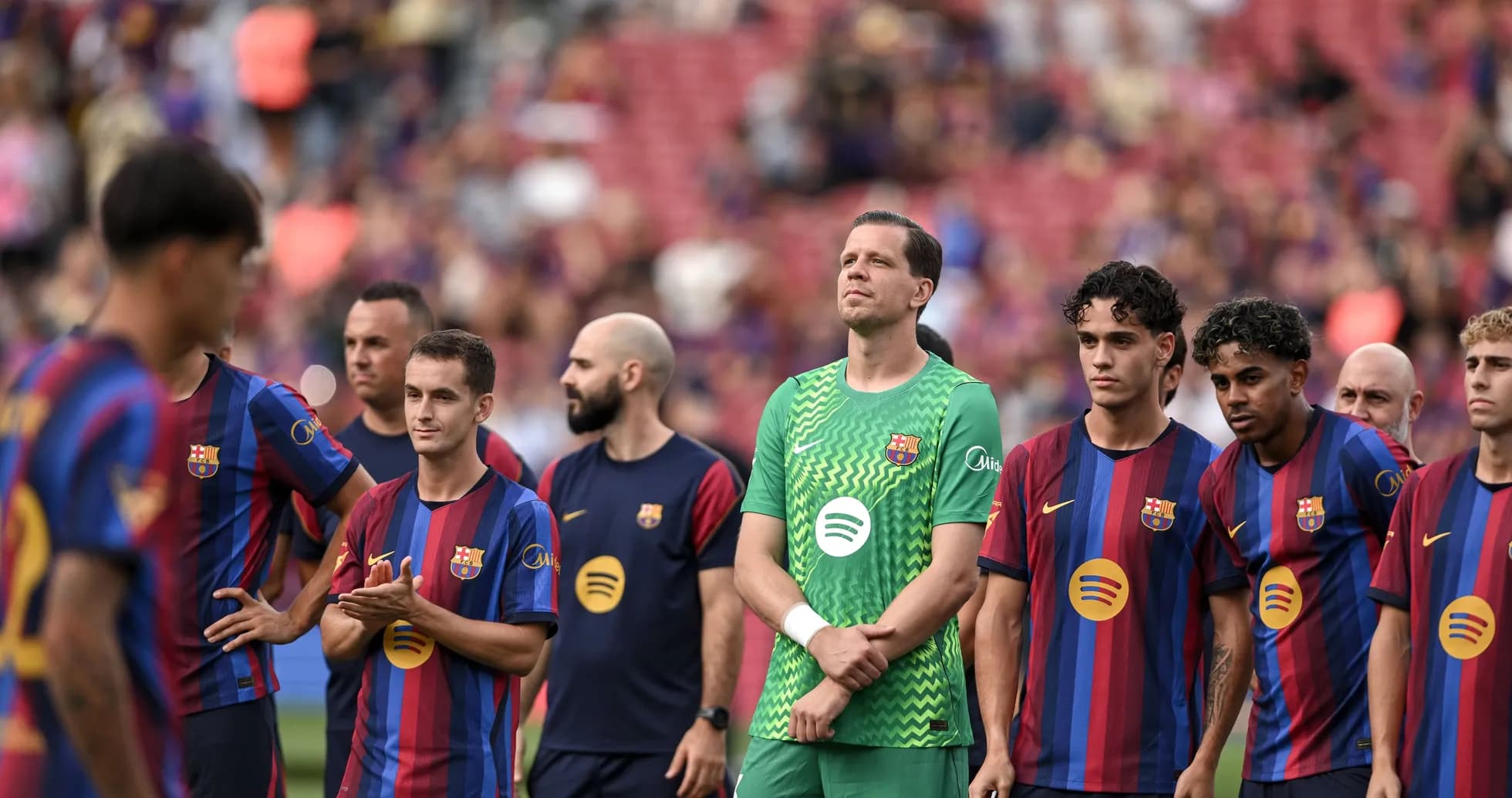
After Marc-André ter Stegen left on loan to Ajax in the summer, Flick had no hesitation: Raphinha became Barcelona’s permanent captain. The first Brazilian ever to wear the armband in Catalonia. The responsibility has not weighed him down; it has sharpened him.
His work rate, his willingness to press, his refusal to coast through games – they set the tone for a young squad. When Barca need someone to grab a match by the throat, he steps forward.
A new-look attack, with options everywhere
This is not a one-man show. Flick’s attack has been rebuilt on depth and variety.
Lewandowski and Torres are gone. Marcus Rashford is back at Manchester United. Yet Barca look more fluid, more unpredictable, more dangerous.
Gordon, Karim Adeyemi and Gabriel Jesus have all settled quickly. Hamza Abdelkarim, an 18-year-old striker from Barca B, has joined the rotation and given Flick another profile to work with.
“Raphinha, Gabby and Hamza are three different profiles, but there are other ways we could play,” the German coach has said. “Anthony and Karim can also play in this position (as striker). Or Dani Olmo. Dani has showed us in last two years he can play there – the same with Fermin [Lopez]. We have a lot of options.”
Those options are crucial for one reason: keeping Raphinha fit. Flick has already shown he’s willing to protect his captain, taking him off early against Feyenoord and in league wins over Athletic Club and Racing. After the hamstring nightmare of last season, every managed minute matters.
The same caution applies to Yamal. The teenager has grown even more dangerous playing closer to Raphinha, their understanding blossoming with every game. Their link-up is becoming a nightmare for centre-backs: glance towards Yamal, and he slips a pass into Raphinha’s blind-side run; track Raphinha, and Yamal punishes the space.
Yamal doesn’t seem bothered by the spotlight shifting. He’s content to let Raphinha carry the headline role. Inside the dressing room, egos are parked. The collective edge is sharp.
The making of a Hall of Famer?
Right now, Raphinha is the clearest expression of that collective spirit. A captain forged in adversity, playing the best football of his life, driving a Barcelona side that suddenly looks capable of something substantial.
The Ballon d'Or panel ignored him. Flick didn’t. Barcelona certainly won’t if this form continues.
R9 set the standard for Brazilian excellence at Camp Nou. If Raphinha keeps tearing through defences like this, how long before his name is carved alongside Ronaldo’s in Barca’s Hall of Fame – not as an echo, but as an equal?