RB Leipzig's Rebuild: Marco Werner's Challenge Amidst Success
The numbers say one thing. The mood in Leipzig says something very different.
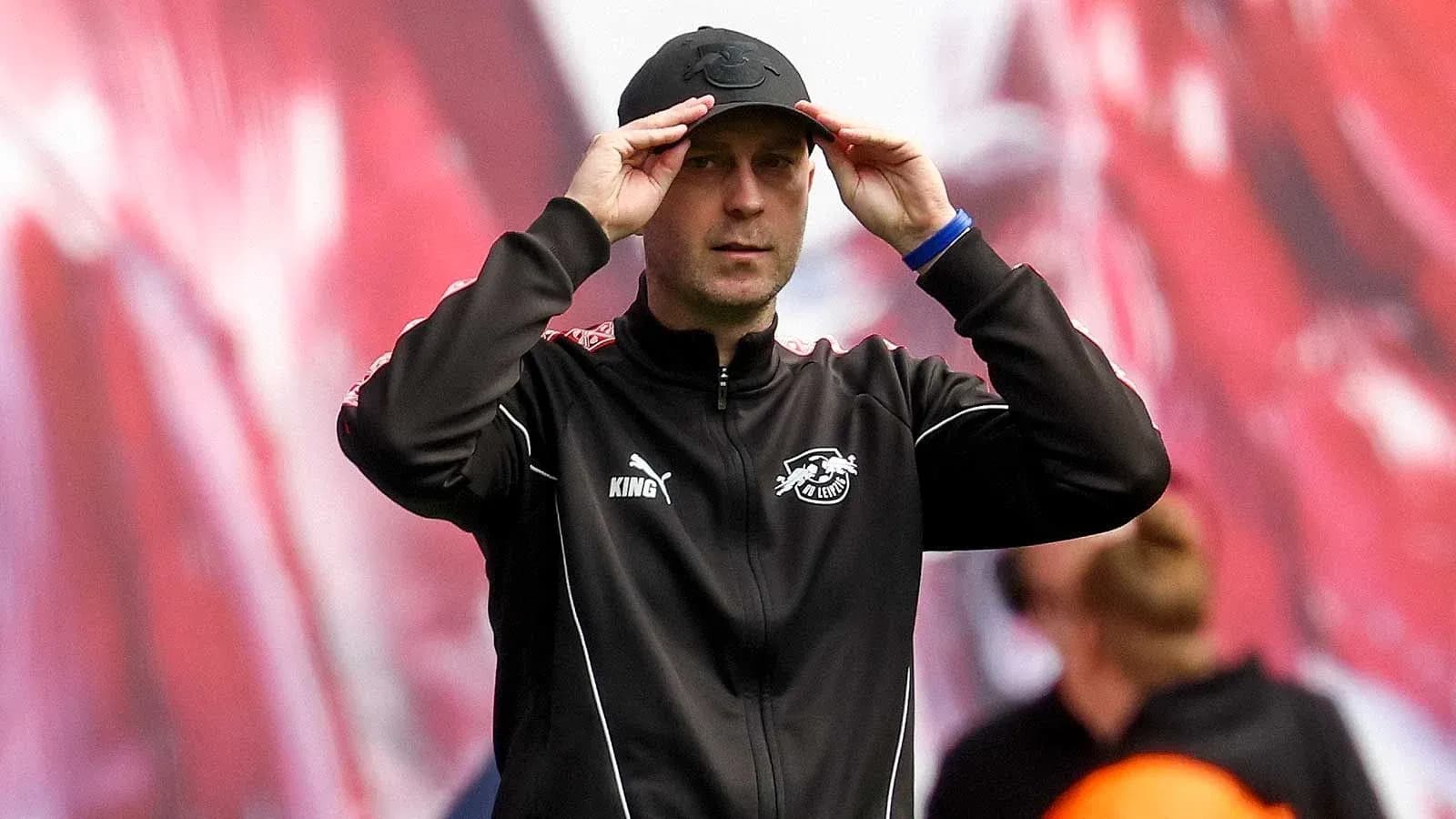
After the chaos of 2024/25 – RB Leipzig’s worst Bundesliga season and a year without European football – Marco Werner walked into a demanding, impatient club and dragged it back to respectability. More than that, he dragged it close to history.
By the end of this campaign, Leipzig finished just two points shy of their record tally from the 2016/17 season. On paper, that’s a revival. On paper, Werner has done more than enough.
Paper doesn’t sit in the Red Bull boardroom.
A rebuild that worked – at least on the pitch
Strip away the emotion and the numbers are bluntly impressive. Over 38 matches, Werner has averaged 1.95 points per game – a rate that places him among the most successful coaches Leipzig have had.
He did it while the squad around him was being ripped up.
The club lost its three top scorers from the previous campaign: Benjamin Sesko, Xavi Simons and Lois Openda. Yussuf Poulsen, a symbol of the club’s rise, moved on. Kevin Kampl, another long-serving figure, also departed. That is not a gentle refresh. That is a core torn out.
Werner didn’t fold. He rallied what was left, integrated what arrived, and squeezed improvement out of players who had previously floated on the edges. Christoph Baumgartner stepped up. Nicolas Seiwald grew in stature. Yan Diomande, the marquee signing, became a central reference point.
Inside the dressing room, the coach is said to have the squad behind him. On the pitch, the trajectory is clear: better than last season, more coherent, more competitive.
And yet, he is looking over his shoulder.
Progress under suspicion
The scepticism around Werner is not subtle. It has been building for months.
A Sky report captured the mood within the so‑called “Global Team” around Leipzig: doubts about luck, about chance, about whether the team leaned too heavily on the “Diomande factor”, and about a game plan that, in some eyes, never fully convinced.
The pressure didn’t wait for the season’s end. By February, discontent had already seeped into the club’s corridors.
The flashpoint came after a 0–2 DFB-Pokal quarter-final defeat to Bayern Munich. Against a Bayern side that has dominated this year, Leipzig’s performance was described as “respectable” and “decent”. On the night, that sounded like mitigation.
Oliver Mintzlaff wasn’t in the mood for that.
The Red Bull CEO quickly pivoted away from the cup exit and drilled into something that bothers him far more: Leipzig’s inconsistency in the Bundesliga. Four points from games against Mainz, St. Pauli and Cologne. For a club with Champions League pretensions, that return was nowhere near enough.
“In the league, that wasn't anywhere near what we want. I hold the team accountable for that,” he said, and the message was unmistakable. The squad would feel it. So would Werner.
One target for the club, another for the boss
Publicly, Leipzig had spent the season reminding anyone who would listen of the scale of their rebuild. The mantra was simple: qualify for any European competition, stabilise, and then build again.
Werner did exactly that. With a reconstructed team, he hit the stated goal.
Mintzlaff, though, set his own bar. “I want to be in the Champions League!” he declared, calling that objective “achievable”. In his view, the issue was not youth or naivety. “The team doesn't lack experience, but the ability to deliver what they're capable of for 90 minutes in every Bundesliga match.”
That line cut to the heart of the Werner debate. For the board, this is no longer a plucky, overachieving project. This is a fully grown operation that must behave like one every single week.
Soon after Mintzlaff’s comments, Bild reported that the pressure on Werner was rising and that the atmosphere around the coach had turned “increasingly frosty”. The results improved, the points piled up, but the chill never really lifted.
A coach under threat, even in success
So Werner reaches the end of the season with a strong points total, a clear step forward from the previous year’s mess, and a dressing room that, by all accounts, still backs him.
It might not be enough.
If the sporting leadership around Rouven Schröder and the club hierarchy cannot persuade the powerful Red Bull board, led by Mintzlaff, that Werner is the right man to carry this project into the next phase, the coach faces a brutal reality: he could lose his job after a season most clubs in Germany would gladly sign for.
Leipzig wanted a rebuild. They got one. They wanted Europe. They got that too.
Now the question is harsher, and simpler: is solid progress enough at a club that has decided it should live permanently at Champions League altitude?