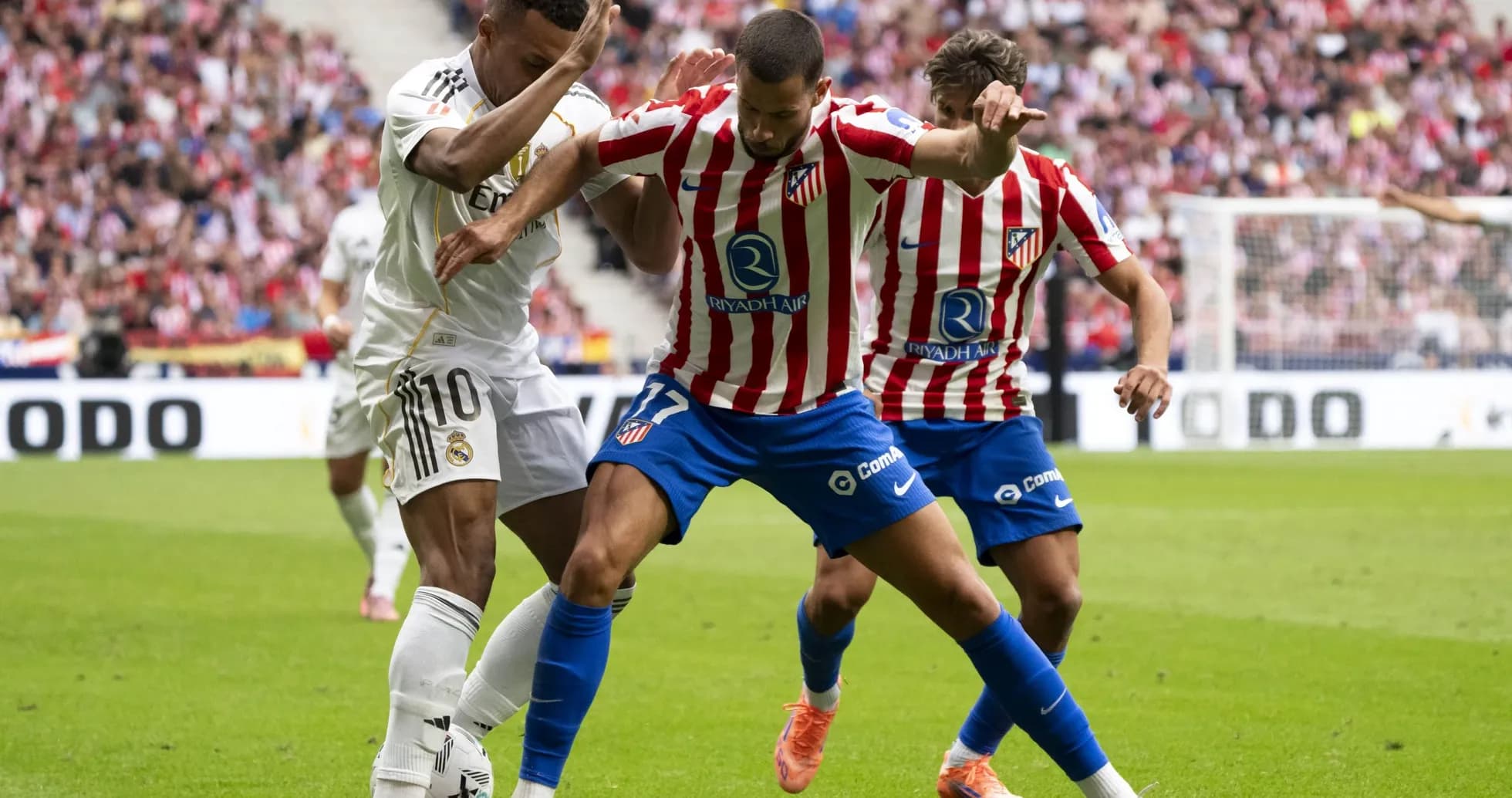
Real Madrid's Comeback Triumph Over Atletico Madrid: A Derby Analysis
Under the Bernabéu lights, this was billed as a clash of La Liga heavyweights; it ended as a statement about Real Madrid’s depth, resilience and evolving identity. Down 0–1 at half-time and still trailing 1–2 deep into the second period, Real turned a derby on its head to win 3–2, reaffirming their title push and exposing the limits of Atletico Madrid’s away pragmatism.
Coming into Matchday 29, the numbers already framed the narrative. Real, second in the table on 69 points with 63 goals scored and a +37 goal difference, had been a 2.2 goals-per-game machine across the season and even more ruthless at the Bernabéu: 36 goals in 15 home outings at 2.4 per match. Atletico, fourth with 57 points and 49 scored, brought a more modest 1.1 goals per away game and a negative away goal difference (15 for, 16 against). On paper, it was Real’s attacking juggernaut against an Atletico side that defends superbly at home but becomes more vulnerable once it leaves the Metropolitano.
Both managers doubled down on a 4‑4‑2, but with very different personalities. Alvaro Arbeloa’s Real started with A. Lunin behind a back four of D. Carvajal, A. Rudiger, D. Huijsen and F. Garcia, screening for a midfield of F. Valverde, T. Pitarch, A. Tchouameni and A. Guler. Up front, B. Diaz and Vinicius Junior led the line. Diego Simeone mirrored the shape: J. Musso in goal, a back four of M. Llorente, R. Le Normand, D. Hancko and M. Ruggeri, a midfield band of G. Simeone, J. Cardoso, Koke and A. Lookman, with A. Griezmann and J. Alvarez as the forward pair.
The context of absences mattered before a ball was kicked. Real were without T. Courtois, Eder Militao, F. Mendy, D. Ceballos and Rodrygo – a full spine of Champions League-level experience. That forced Arbeloa to lean into the youth and versatility that have underpinned their season-long form line of “WWWWWWLWWWWDDDWLWWWWWWWWLLWWW”. Lunin’s extended run is no longer an emergency patch but part of the team’s identity; the same applies to Huijsen, who arrived in this derby as one of La Liga’s more impactful defenders in terms of reading danger and, crucially, blocking shots. Across the league campaign, he has blocked 11 opposition attempts, a key reason Real have allowed just 0.9 goals per game to date.
Atletico’s own absences were just as disruptive. J. Oblak’s muscle injury removed the calming reference point behind Simeone’s back line, handing responsibility to Musso. Further upfield, the injuries to P. Barrios, R. Mendoza and M. Pubill trimmed the rotation options for a coach who often leans on fresh legs to protect leads. That lack of depth became glaring once Real began to tilt the pitch in the second half.
Discipline has been a season-long subplot for both clubs, and it shaped the tactical risk each manager could take. Real’s yellow-card profile is heavily backloaded: 24.53% of their bookings arrive between 61–75 minutes, with 20.75% more in the 91–105 band and significant spikes at 31–45 and 76–90. Red cards have also clustered late, with dismissals between 31–45, 61–75, 76–90 and 91–105. Arbeloa knows his side tend to live on a disciplinary tightrope as matches stretch, which partly explains his preference for controlling tempo rather than turning every game into a track meet.
Atletico’s yellows are more evenly spread but still peak between 31–45 (20%), 16–30 and 76–90 (both 18.18%), with 16.36% from 61–75. Simeone’s midfielders and full-backs are conditioned to make tactical fouls to stop transitions, but that aggression comes with risk in the decisive phases. With G. Simeone already one of the league’s more combative wide players – 251 duels contested and 39 fouls drawn so far – Atletico constantly flirt with the line between control and chaos.
Within that framework, the individual matchups told the story. “The Hunter vs. The Shield” was supposed to be Kylian Mbappé against Atletico’s defensive record. Mbappé, La Liga’s leading scorer with 23 goals and 4 assists, arrived as the competition’s No. 1-rated player, firing 83 shots (51 on target) and winning exactly half of his 199 duels. His penalty record – 8 scored from 9 attempts, with one miss – underlined his status as the division’s most reliable closer from the spot. Even starting on the bench, his presence distorted Atletico’s defensive line, forcing deeper starting positions and leaving more room between the lines for Vinicius and Diaz.
Atletico’s “shield” has been strongest at home, but the away numbers told a different story: 16 goals conceded in 14 trips, at 1.1 per game. That’s solid, but not the suffocating structure Simeone built his legend on. Once Real began to accelerate, that small statistical crack widened into a fault line.
In the “Engine Room Duel”, A. Guler and F. Valverde dictated Real’s comeback. Guler came into the derby ranked fourth in La Liga for rating, with 8 assists and 63 key passes from midfield, plus a 91% pass accuracy that speaks to his ability to dictate rhythm without waste. Valverde, ranked fifth, added verticality: 4 goals, 7 assists, 39 key passes and a defensive portfolio that includes 37 tackles, 20 interceptions and 6 blocked opponent shots. Together, they dismantled Atletico’s central block, repeatedly pulling Koke and Cardoso out of shape and forcing G. Simeone to drop deeper than Simeone would have liked.
On the other side, Giuliano Simeone’s 6 assists and 30 key passes showcased his role as Atletico’s primary creative outlet from midfield. His 251 duels and 34 tackles underline how much defensive work he shoulders as well. But in this match, his influence waned as Real pushed him back, turning him from an enforcer into an auxiliary full-back.
Depth ultimately decided the derby. Arbeloa’s bench offered game-changers in almost every line: K. Mbappe as the league’s most devastating impact forward, J. Bellingham as a late-arriving goal threat, E. Camavinga to reset the press, and Á. Carreras – one of La Liga’s most aggressive full-backs, with 7 blocked opponent shots and 33 interceptions so far – to lock down a flank if needed. Even F. Mastantuono and G. Garcia represented fresh legs capable of stretching an already tiring Atletico defense.
Simeone’s options were more functional than transformative. A. Sorloth, with 10 league goals but just 6.78 average rating and 1 red card, offered penalty-box presence from the bench, yet Atletico struggled to progress the ball consistently enough to feed him. N. Molina and C. Lenglet could adjust the back line, and creative sparks like A. Baena and T. Almada were available, but none carried the same gravitational pull as Mbappe or Bellingham.
From a statistical prognosis standpoint, the result aligned with the underlying trends. Real’s attack, averaging 2.2 goals per game and backed by a flawless team penalty record (12 scored from 12 to date), eventually overwhelmed an Atletico side whose away defensive solidity has been good rather than elite. Atletico’s 12 clean sheets this season include 5 away, but the Bernabéu has rarely been kind to visiting defenses, and conceding 3 here fits the broader pattern of their vulnerability on the road.
The decisive factor was the intersection between Real’s late-game offensive surge and Atletico’s propensity to pick up cards and lose compactness in the 61–90 window. As Real cranked up the tempo after the hour mark, Simeone’s side could neither maintain their pressing intensity nor keep their shape without fouling. Arbeloa exploited that fatigue with high-impact substitutions and by pushing Valverde and Guler higher between the lines.
In the end, this 3–2 comeback did more than add three points to Real Madrid’s tally. It underlined why they sit among the league’s elite both statistically and stylistically: a deep, multi-layered squad capable of dictating games, absorbing setbacks and then dismantling even the most disciplined of opponents once the match enters its decisive phase.