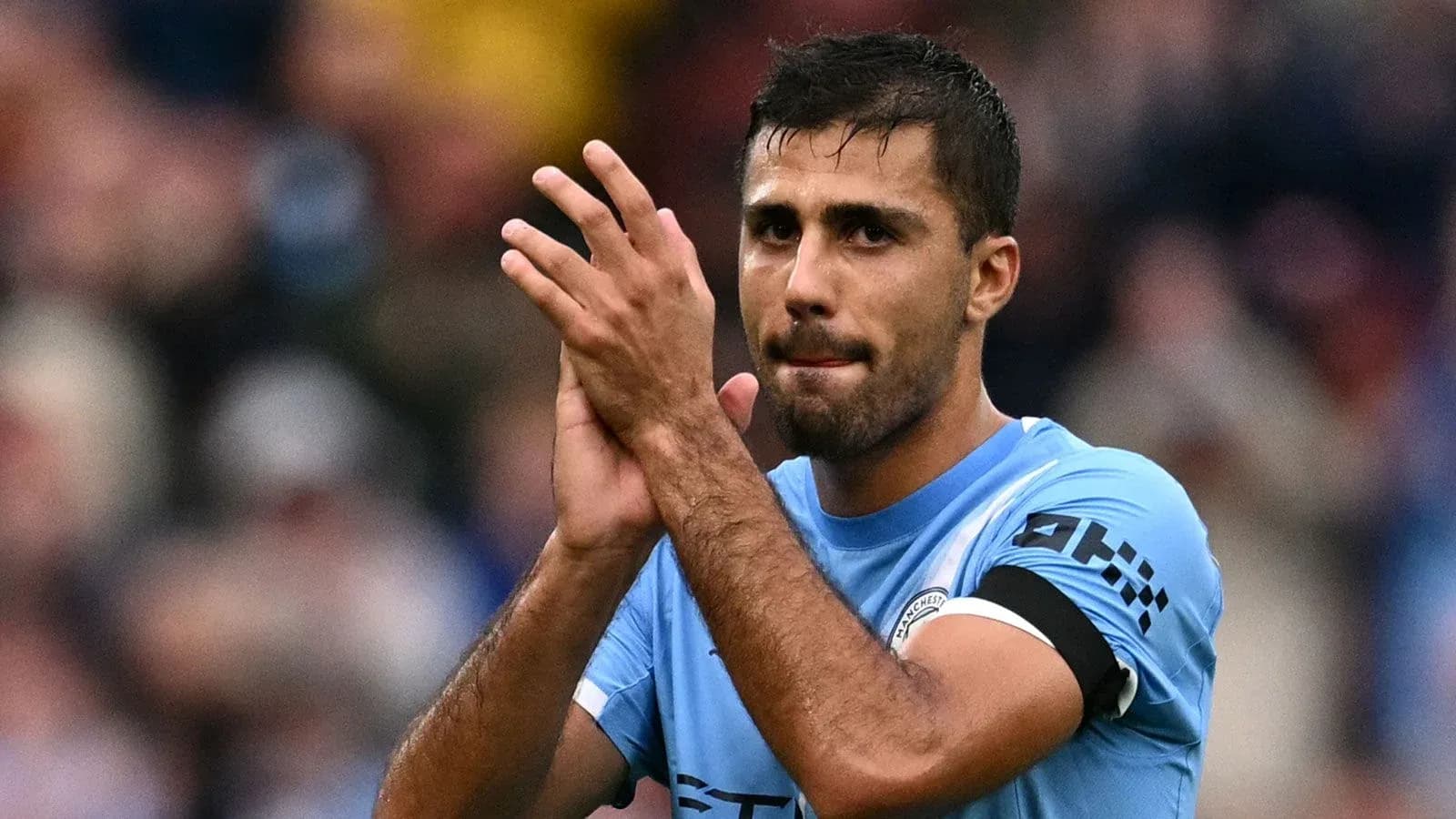
Real Madrid's Missed Opportunity: Rodri Joins Barcelona
Florentino Pérez walked into this summer’s presidential campaign promising fireworks. A “player of the calibre of Cristiano Ronaldo or Kaká,” he said. A bid of “at least €150 million,” he insisted. Real Madrid, he vowed, would move for a galáctico.
Two months on, the cheque has been written, but not in the way many expected. Michael Olise never arrived from Bayern Munich. The officially confirmed offer for Atlético Madrid striker Julián Álvarez went nowhere. Instead, the money went on Yan Diomande from RB Leipzig for a base €125m.
Another forward. Another statement of intent in the wrong area of the pitch.
A missing piece in the middle
The pattern is stark. Olise, Álvarez, Diomande: all built to hurt teams in the final third. Yet for two years, since the break-up of the Toni Kroos–Luka Modric–Casemiro triangle, Real’s most glaring need has been obvious to everyone inside the Bernabéu and out: a world-class holding midfielder.
That hole remains unfilled as the season looms into view. And now, the man who looked tailor-made to solve it has slipped away.
Rodri had seemed destined to come home. Born in Madrid, shaped at Atlético, transformed at Manchester City, he had already opened the door in public. Playing for Atleti, he said in the spring, would not prevent him from one day wearing white. Others had crossed that divide before him.
Real believed him. They believed the World Cup’s outstanding player would anchor José Mourinho’s new era, turning last season’s titleless campaign into a bad memory. They believed the project, the wage packet and the chance to dominate La Liga would be enough.
They were wrong.
Rodri has turned them down, as his agent Pablo Barquero has now confirmed. All roads now point to Barcelona.
Barcelona land a coup
The blow cuts deeper because of where Rodri is heading. Barcelona are not just taking a player. They are taking the player Real had earmarked as the cornerstone of their rebuild.
Hansi Flick’s side, who have humiliated Madrid in the league twice in a row, are about to solve their own structural problem in one stroke. Frenkie de Jong is again facing a long spell out. The midfield needed authority, order, a metronome. Rodri brings all of that, plus the aura of a world champion.
He walks into a dressing room full of familiar faces, the same Spanish core with whom he lifted the World Cup. The chemistry is pre-built. The tactical fit is obvious. For Barcelona, this is more than a smart signing. It is a power move.
For Real, it is the nightmare scenario. Once again, there is no true organiser behind the explosive front line of Kylian Mbappé, Vinícius Júnior and now Diomande. Once again, as things stand, Aurelien Tchouameni and Fede Valverde are being asked to play a role that does not suit them, despite repeated evidence that neither is a natural holding midfielder of Rodri’s profile.
The contrast is brutal. Barcelona get clarity. Real get questions.
Another chapter in an endless war
This is not happening in a vacuum. It is another flashpoint in a rivalry that long ago spilled beyond the pitch.
The shadows of the early 2000s still hang over every major transfer between these clubs. Luis Figo’s move from Barcelona to Madrid rewrote the rules of hostility. Rodri’s expected switch does not carry the same sense of betrayal, but it belongs to the same family of wounds: a symbol, a provocation, a reminder that nothing between these two giants is ever neutral.
Layered on top is the Negreira scandal, still smouldering since it broke in early 2023. Real Madrid joined criminal proceedings against Barcelona as a private prosecutor. Since then, every contentious whistle in a Clásico has been dissected through that lens, every refereeing call turned into another battle in a war of narratives.
The institutional relationship has been scorched. Joan Laporta fired back at Madrid, branding them the “club of the regime,” historically favoured by referees and, in his view, still enjoying that privilege. The old habit of presidents sharing a civil lunch before Clásicos has vanished. Real have repeatedly refused to offer Barcelona the traditional place of honour in the VIP box.
Even when they are ostensibly doing business elsewhere, the feud bleeds in.
The Álvarez saga was a perfect example. After Pérez trumpeted a record move, Real issued a press release confirming they had offered Atlético €150m for the Argentine forward, only for their city rivals to reject it. Barcelona, long serious contenders for Álvarez, were left exposed. By making the offer public, Real did not just show ambition; they likely drove up the player’s price, complicating Barça’s plans in the process.
Then came the Ballon d’Or storm. Real boycotted the 2024 gala in protest at Rodri beating Vinícius to the award. The midfielder became a lightning rod for Madrid’s sense of grievance.
Now that same player is heading to Catalonia.
Real’s slap in the face
For Madrid, Rodri’s decision lands like a slap. Not just because they lose a target, but because they lose him to the one club they least wanted to strengthen. The man who edged their superstar in the Ballon d’Or voting, the midfielder who dominated the World Cup, the player they saw as the answer in the holding role, is set to wear Barcelona’s colours.
It intensifies an already poisonous rivalry. It deepens the sense that Barcelona, despite their financial strain and off-field turbulence, can still land decisive blows in the market. It exposes Real’s skewed priorities: another huge fee on a forward while the base of the team remains incomplete.
Pérez promised a galáctico. He delivered Diomande. The Bernabéu will enjoy the goals, the dribbles, the chaos in the final third. But when the season turns on the small margins in midfield, on control and composure and structure, the question will come back: who holds this team together?
Barcelona believe they have that answer in Rodri. Real Madrid are still looking for theirs.