The Return of the Fallen: Clubs Rising Again in Europe
Across Europe this season, promotion isn’t just a change of division. It is resurrection, reinvention, and in some places outright defiance. From Galicia to Diyarbakir, from Saarland to the Circuit de la Sarthe, a clutch of clubs are stepping back into the light with wildly different stories – but the same blunt objective: prove they belong.
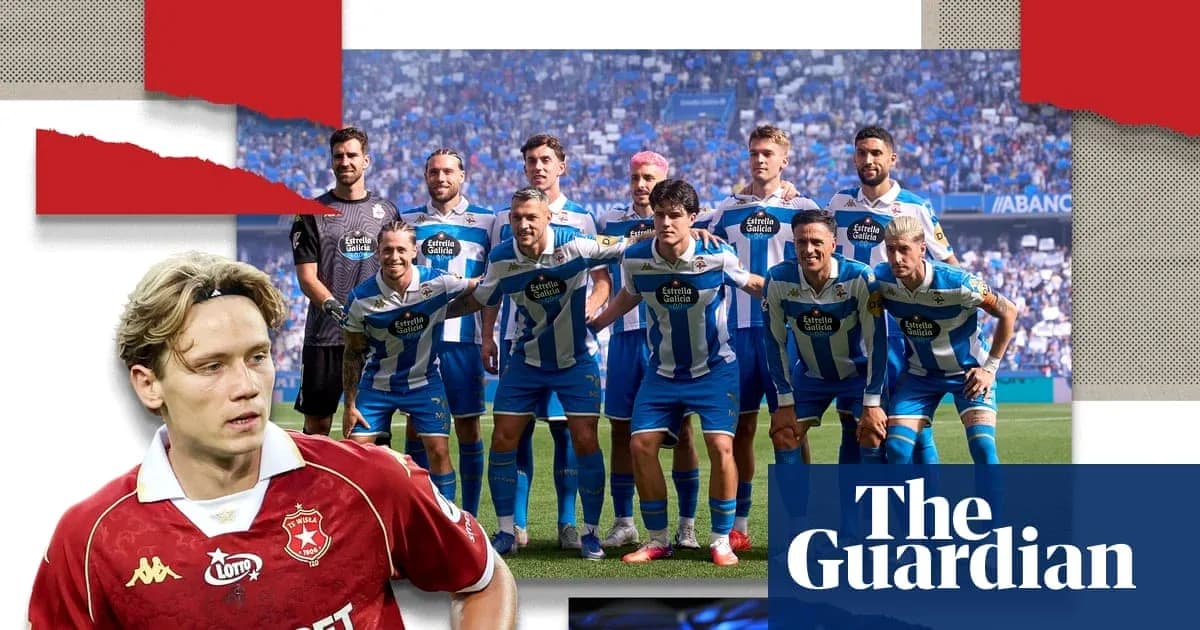
Deportivo La Coruña: Back From the Brink
For a generation, Deportivo La Coruña were a problem the Spanish giants could not quite solve. They barged into the title conversation in the 1990s and refused to leave, finishing in La Liga’s top three nine times between 1993 and 2004 and taking the crown in 1999. They rattled Europe too, reaching the 2004 Champions League semi-finals before José Mourinho’s Porto slammed the door on a dream that felt entirely plausible.
Then came the long slide. Mid-table mediocrity turned into something worse. By 2020, Dépor were not just out of La Liga, they were buried in the regional third tier – an astonishing fall for a club once mentioned in the same breath as Barcelona, Valencia and Real Madrid.
It has taken four hard years to claw back to the second division, and then one dizzying surge to escape it. From 15th in 2024-25 to automatic promotion the very next season, Deportivo didn’t just steady; they accelerated.
The ghosts of Juan Carlos Valerón and Diego Tristán still haunt the Riazor, but the club is no longer trading on nostalgia alone. The intent is clear. In comes Mallorca goalkeeper Leo Román. Up front, a heavyweight name: Pierre-Emerick Aubameyang, a veteran striker with goals in every league he has touched.
This is not a romantic lap of honour. It is a survival mission dressed in ambition. Deportivo know exactly how far a big club can fall. Now they get to find out how far back up they can climb.
They will not be alone on that road. Racing Santander, champions of the Segunda, return to the top flight after 15 years away. Málaga, relegated in 2018 and briefly marooned in the third tier in 2023-24, are also back. Spain’s past is crowding its present again.
Elversberg: The Village That Crashed the Party
Germany’s promotion races have become a familiar clash of cultures: industrial giants versus clubs who look more like community projects than corporations. Last season was no different.
Schalke, weighed down by history and expectation, finally muscled their way out of a division they have visited far too often in recent years, winning the 2. Bundesliga title after spending four of the last five campaigns there. That was the headline.
The story, though, might be Elversberg.
The runners-up come from a small town in Saarland whose entire population could fit into Schalke’s Veltins-Arena four times over. Three years ago, in 2021-22, they were still playing in the regional leagues. Now they are preparing for Leverkusen and Bayern Munich.
The rise has been sharp and unapologetic. Horst Steffen built the platform, driving Elversberg up the pyramid before leaving for Werder Bremen after the club lost in the promotion playoff. His move looked like a step up. It wasn’t. He lasted just nine months.
Back in Elversberg, the project did not stall. Vincent Wagner arrived from Hoffenheim’s second team and simply kept the momentum going, taking the club over the final ridge into the Bundesliga.
The infrastructure is scrambling to keep pace. Their stadium will be expanded during the season to meet the 15,000-capacity threshold. The stands will grow in stages; the learning curve will not. Leverkusen and Bayern are the first visitors. No gentle introductions. No time to breathe.
Elversberg have spent years climbing. Now they find out what it feels like to stand on the cliff edge and look down.
Le Mans: From Financial Ruin to a New Engine
Le Mans is a city more used to the scream of engines than the roar of a crowd. The football stadium sits inside the famous Circuit de la Sarthe, a constant reminder that this is a place defined by endurance and speed.
The club’s own journey has had both. A brief Ligue 1 spell in the 2010s ended in financial collapse, a slow-motion crash that sent Le Mans tumbling down the French pyramid. They fought their way back to Ligue 2, but for a while that felt like the ceiling.
Then came new ownership, and a little stardust.
Last August, a Brazilian consortium called OutField took over. The names attached to the project turned heads: Novak Djokovic, Thibaut Courtois, Felipe Massa, Kevin Magnussen. Football, tennis, Formula 1 – a cross-sport cast lending glamour to a club that had spent years in the shadows.
The temptation in such situations is obvious: throw money at the problem, chase quick glory. Le Mans have chosen another route. They are reopening the club academy, investing in youth, and targeting potential rather than big-name signings. The idea is to move quickly through the gears without blowing the engine.
They step into a Ligue 1 landscape increasingly shaped by investors. Paris FC have billionaire backing. Strasbourg sit under the BlueCo umbrella. City Football Group are in the room with promoted Troyes, while another CFG “partner club”, Lommel, is climbing into Belgium’s top tier.
Le Mans arrive with famous shareholders and a modest plan. The track around them is built for speed. The club insist they are here for the long race.
Amedspor: Promotion as a Political Act
Some promotions change a club’s life. Amedspor’s may shift an entire conversation.
Based in Diyarbakir, a Kurdish-majority city in Turkey’s south-east, Amed SK – widely known as Amedspor – will play in the Turkish Super Lig for the first time this season. Geographically, they are closer to Iraq and Syria than to Istanbul. Symbolically, they are closer still to the heart of Turkey’s most fraught identity questions.
For years, the club drifted between the third and fourth tiers. The turning point came in 2014, when they added “Amed” – the Kurdish name for Diyarbakir – to their official title. It was a simple act, but a charged one.
The change drew a broader, more diverse fanbase, turning Amedspor into a focal point for Kurdish identity. It also brought hostility. Opposing supporters targeted them with abuse, intimidation and, at times, physical attacks. The Turkish FA’s solution was drastic: a ban on Amedspor fans attending away games, a measure that lasted until 2020.
Against that backdrop, their rise has been nothing short of remarkable. A club once confined to the margins now sits in the country’s top division, its badge and name beamed across Turkey every weekend.
Security concerns remain. So do fears of violence. The Super Lig has never hosted a club quite like this, in a climate quite like this.
Yet there are signs, faint but real, that some of the old ice is thawing. President Recep Tayyip Erdogan, who has consistently refused to use Diyarbakir’s Kurdish name, surprised many by publicly congratulating Amedspor on their historic promotion. It was a small gesture, but in this context, a loaded one.
Amedspor’s debut season will be judged on results, of course. But every away trip, every televised game, every chant will also be part of a much bigger story – one that stretches far beyond the touchline.
Wisla Krakow: The White Star Rises Again
In Poland, the return of Wisla Krakow feels less like a promotion and more like a correction.
Founded 120 years ago, Wisla are one of the country’s great institutions, with 14 league titles and decades of top-flight continuity behind them. They were ever-present in the Ekstraklasa until 2022. Then, suddenly, they were gone.
Four seasons outside the elite followed. For a club of Wisla’s size, that could have been a period of denial and drift. Instead, they used it to reset. With former star Jakub Blaszczykowski on board as a minority investor, the club leaned into analytics, gave academy players more responsibility and tried to modernise how decisions were made.
There were still flashes of their old stature. In 2024, while still a second-tier side, Wisla lifted the Polish Cup for the fifth time. It was a reminder: the badge still carried weight.
Their return to the top flight last month came with all the theatre you would expect. A 2-1 win over Katowice, a red-and-white pyro show in the stands, a sense that a sleeping heavyweight had finally rolled its shoulders.
The city’s football map has changed in their absence. The “Holy War” derby with Cracovia is back on the calendar, but Krakow will now send three clubs into the Ekstraklasa. Wieczysta Krakow have clambered up through the playoffs to make their top-flight debut and will ground-share with Wisla while their own stadium is brought up to standard.
One city, three clubs, one league. Wisla used to look down on the rest from a great height. Now they share a stage and a stadium, fighting to reassert an identity that once felt untouchable.
Across these stories, the common thread is not just promotion. It is what comes next. Deportivo trying to prove they are more than a memory. Elversberg bracing for a storm they have never seen. Le Mans resisting the urge to overspend. Amedspor walking into a league that has never quite known what to do with them. Wisla Krakow, the White Star, burning to shine as brightly as it used to.
The ladder is the same for everyone. The weight each club carries on it could not be more different.