Robbie Ure's Journey from Rangers to Success in Scandinavia
Robbie Ure’s name first flickered on the Rangers radar in August 2022. Eighteen years old, thrown into a League Cup tie against Queen of the South, and he did what strikers are supposed to do. He scored.
Then, almost as quickly as he appeared, he vanished.
A minute off the bench against St Mirren in November. Another single minute against Hibs in May. Two Premiership cameos, 60 seconds at a time, six months apart. For a teenager desperate to play, this wasn’t a pathway. It was a cul-de-sac.
Rangers were struggling on multiple fronts during that period, yet even in a team searching for answers, Ure could not find a route to meaningful minutes. The club’s decisions in his position told their own story. Around £6m went on Danilo, a package that climbs towards £10m when wages are included. Another £3.5m on Sam Lammers, north of £4m with salary. The message was unmistakable: the future up front would be bought, not built.
So Ure walked away.
From Ibrox to Anderlecht, then on to IK Sirius in Sweden. A career that had stalled in Glasgow has caught fire in Scandinavia. At 22, he is now a striker in form, not a prospect in limbo: 15 goals in 15 games, 10 of them in his last six outings. On Sunday, word emerged that Sevilla want him, and are ready to pay close to £8m.
The timing could hardly have been more painful in Govan. On the same day Rangers were losing 2-1 at home to Hibs, news broke that a forward they let leave for nothing is being lined up for a multi-million pound move to one of Spain’s grand old clubs. No fee, no sell-on, no upside. Just a reminder of what slipped away.
For the Scottish FA, though, Ure’s rise is something else entirely: ammunition.
A forum, a warning, and a case study in boots
Next month in St Andrews, the SFA will gather the owners and chief executives of the country’s senior clubs for what they describe as a “critically important” forum. The presentation, titled “Made In Scotland?”, will be fronted by chief executive Ian Maxwell and chief football officer Craig Mulholland.
Strip away the branding and it is, in essence, a plea. A plea to look again at the pathways, or lack of them, for young Scottish players. A plea to stop talking about opportunity and actually create it.
If they chose to, Maxwell and Mulholland could simply flash Ure’s face up on the screen. Here is the argument in boots. Trust your own, and you might save millions in recruitment and earn millions more in sales. Ignore them, and you risk watching them flourish somewhere else, wearing another club’s badge and carrying another league’s flag.
It is never quite as simple as that. Ure at 18 was not Ure at 22. Rangers could argue that the version they had did not yet show the form he is displaying now. There is hindsight at work here, and plenty of it.
But it still stings. Just as Celtic will still wince when they think of Ben Doak – now Gannon-Doak – barely used in their first team before departing for England and transforming into another multi-million pound export whose development and profit sit on someone else’s balance sheet.
The stories keep stacking up. So do the numbers.
A league that talks youth and picks imports
The opening two rounds of the new Premiership season have already painted a stark picture. Only 31% of the players who have featured are Scottish. Just 5% are Scots aged 21 or under. Across those early fixtures, 46 different nationalities have been represented.
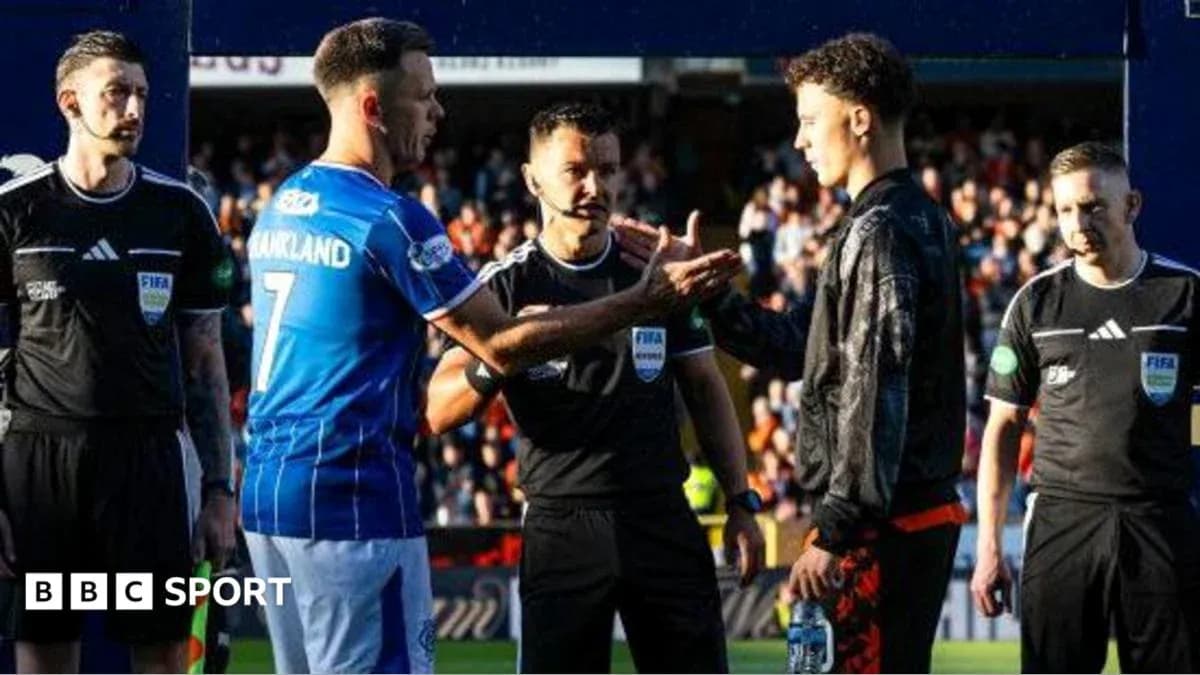
One statistic jumps off the page. Dundee United, across their first two league games, have used a single Scottish player: Dylan Tait. One.
Ask chairmen, chief executives and managers if they want homegrown players in their first team and the answers are almost always the same. Of course they do. Of course they care deeply about bringing through their own. Then comes the list of reasons why it isn’t quite happening. Some valid. Others less so.
There are nuances. Dundee United will point to their investment in youth and the loss of 16-year-old Kai Hutchison to Everton, one of a growing band of Scottish teenagers heading south in the post-Brexit landscape. Celtic can reference Dara Jikiemi’s move to Liverpool and Daniel Cummings’ switch to West Ham. Rangers have seen Cameron Scott go to Burnley and Chris Eadie to Sheffield United. Hearts have lost Boyd Fraser to Nottingham Forest and Keir McMeekin to Manchester City. Hibs can point to Ben Vickery at City and Josh Landers at West Ham.
Those names barely scratch the surface. The reasons for leaving are layered. Money plays its part, of course, but that explanation suits clubs a little too neatly. Greed is one thing. A blocked pathway is another.
These youngsters, and the parents advising them, are looking at Scotland and not seeing much of a route to first-team football. Not at the biggest clubs. Not often enough.
The poster boys are thin on the ground. Too few examples of academy players being trusted, playing regularly, then kicking on. Too many squads padded out with short-term foreign signings, some of them with modest CVs at best. A promising teenager watching yet another journeyman arrive must ask themselves: stay and stagnate, or leave and hope?
Mission statements, brick walls and a bunker in St Andrews
That is the mindset Maxwell and Mulholland will be up against in St Andrews. They will have an audience. Whether they have a truly receptive one is another matter.
Appealing to the national interest will not be enough. Everybody in that room has a primary duty to their own club, their own shareholders, their own bottom line. If that journey happens to involve a clutch of homegrown players, so much the better. Many clubs lower down the pyramid already live that reality and are proud of it.
But if some owners believe that scouring every corner of the globe – or Mars, if it comes to it – is the quickest way to success, that is where their money will go. Their obligation, as they see it, starts and ends with their own badge.
So if you are going to ask Scotland’s biggest clubs to give more minutes to their kids, you had better arrive with hard evidence and a compelling sales pitch. This is not a room that will be swayed by romantic notions of tartan talent blossoming for the national team in 10 or 15 years. They want to know what helps them win now, grow assets now, balance the books now.
They have heard some of this before. In August 2024, the SFA published its Transition report, a 114-page analysis led by then chief football officer Andy Gould and former head of men’s elite football strategy Chris Docherty. It was exhaustive: global player data, case studies, interviews, challenges to long-held dogma about the supposed risks of playing young footballers.
The report laid out, in black and white, the footballing and financial logic of trusting academy graduates. It highlighted the vast transfer income generated by European clubs who have made a habit of nurturing, showcasing and then selling their own. It contrasted that with the meagre minutes afforded to Scottish academy players compared with their peers in other successful leagues and nations.
The central message was blunt: giving more game time to young Scots is in everyone’s interest. On the pitch. On the balance sheet. Across the board. The old line about kids “winning you nothing” simply doesn’t stand up to scrutiny.
The document was powerful. It did not echo in an empty room. But it did not spark a revolution either. Some recommendations were taken on board. The bolder thrust – be brave, back youth – was not.
In October 2025, another report followed, this time 133 pages. Gould and Docherty again. Another serious piece of work, full of ideas and data. Both men have since left Hampden. You suspect the number of brick walls they hit eventually outnumbered the doors that opened.
And so here we are again. Another push. Another attempt to nudge the mindset of the people who control the teams young Scottish players dream of representing.
Next month, just outside the window of the room where those owners and chief executives will sit, lies the Old Course’s infamous Road Hole bunker at St Andrews. A trap that has ruined many a golfer’s round.
For Maxwell and Mulholland, finding a way to change entrenched habits in Scottish boardrooms may feel even trickier than escaping from that sand. The question now is simple: will the people holding the power finally see what’s in it for them if they trust the next Robbie Ure, or will the cry of “Fore!” be the only thing that cuts through?