Rodri's Future: Barcelona Pursues as Real Madrid Hesitates
The defining midfielder of his generation has reached the point every superclub dreads. World Cup winner. Ballon d'Or holder. Contract running down. A childhood league calling him home.
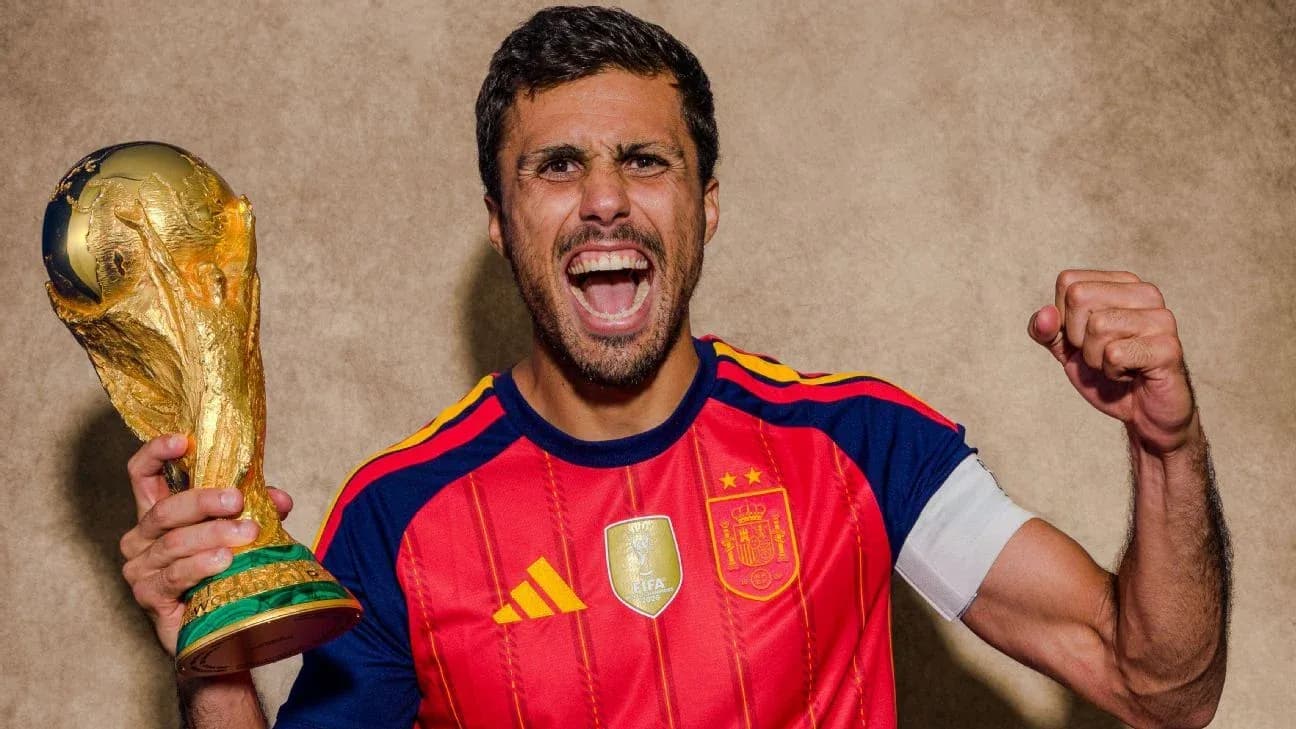
Rodri has just captained Spain to a World Cup title, beating Lionel Messi's Argentina in a final that confirmed what most already knew: there is no more complete midfielder in the game. He left the tournament with the trophy in his hands and the Golden Ball around his neck, the latest additions to a haul that already includes four Premier League titles, a Champions League winner with the decisive goal in the 2022-23 final, and 13 trophies in seven years at Manchester City.
Now, with one year left on his deal at the Etihad, the axis of European football is spinning around his next move.
Barcelona: from long-term dream to live opportunity
For years, Barcelona viewed Rodri as the perfect heir to Sergio Busquets. An idea more than a plan. A "one day" signing, filed away under fantasy rather than feasibility.
This summer, that changed.
The Catalan club did not start the window expecting to be in the race. Then Frenkie de Jong got injured, the market shifted, and whispers from Manchester suggested Rodri might actually be gettable. As the possibility hardened into something more concrete, Hansi Flick and sporting director Deco locked on to the opportunity.
The pressure finally told last week.
Barcelona learned that if Rodri left Manchester City, he would prioritise them over Real Madrid. That alone marked a dramatic twist. For years, the assumption inside Spanish football was that if Rodri came home, it would be to the Bernabéu. Instead, the World Cup changed the equation.
He had just lifted the trophy with eight Barcelona players. He liked Flick’s football. And a steady stream of Catalans who have worked at City over the past decade spoke glowingly about what a return to Spain – and specifically to Barça – could look like.
His head turned.
Club sources now say there is a loose agreement on personal terms. Rodri wants the move. Barcelona believe they will get it done. The last barrier is City and the fee.
One opening offer has already been rejected. Negotiations continue on a package that could rise to €70 million. That is serious money for a club still juggling financial levers, but inside the sporting department the conviction is clear: this is the midfielder worth stretching for.
If it happens, Rodri will walk into a midfield already stacked with talent: Pedri, Gavi, Marc Bernal, Fermín López, Dani Olmo. The question then flips to De Jong. What happens when he returns from injury? Who gives way? Those are problems Barcelona are happy to have.
Inside the club, the feeling is that Rodri, even at the expense of a priority centre-back signing, is the piece that can drag them back to the top of Europe. LaLiga has been conquered in back-to-back seasons. The Champions League has not been won since 2015. Flick has been hired to change that. Rodri, they believe, is the cornerstone.
Real Madrid: from cool distance to late regret
Real Madrid’s relationship with this saga has been a story in itself.
For months, the message from the Bernabéu was blunt: Rodri is not on the agenda. This, despite the obvious fit. Madrid-born. Best in the world in his role. One year left on his contract. A ready-made solution to anchor a midfield already loaded with talent.
Inside the club, president Florentino Pérez held doubts over his injury record, according to sources. José Mourinho, back on the Madrid bench, preferred a different profile. Renewing Aurélien Tchouaméni’s contract was framed as a show of faith in the Frenchman. Rodri did not even make the short list.
Then came the World Cup.
Rodri dominated the tournament, erased concerns about his form and fitness, and forced a rethink. Director general José Ángel Sánchez and chief scout Juni Calafat shifted position and opened the door to a potential move, sources told ESPN. Confidence began to grow.
By late July, some inside Madrid believed the deal was there to be done. Rodri wanted to come home. City, though, had their own conditions. They wanted to secure a replacement before signing off on anything, and there was no agreement on a transfer fee.
Days passed. Madrid’s attention drifted to other fronts: talks for Yan Diomande, discussions over Vinícius Júnior’s new contract. The club stayed calm. They felt time was on their side. Rodri wanted Madrid, they believed; the rest would follow.
Then came Wednesday night.
News broke that Barcelona were in. Not just lurking, but serious. Some inside Madrid were told the race was now 50-50. Rodri was listening to both.
Within 24 hours, the mood darkened. Madrid sources began to accept they were out. There was a growing sense that Rodri had not forgotten the initial doubts from Pérez and Mourinho, while Flick had gone the other way: a direct call, a clear plan, a feeling of being central rather than optional.
Madrid prepared one last push, but privately they feared it was too late. The player’s camp, sources said, felt the Spanish champions had moved decisively while Madrid hesitated.
Unless the story takes another wild turn, Rodri will not be the man anchoring Madrid’s midfield. The club must now decide whether to pivot to another target or double down on what they have. Reports in Spain suggest Mourinho sees Bernardo Silva as a possible central option alongside Tchouaméni or Federico Valverde.
The pivot point of their summer may already have passed.
Manchester City: relaxed face, hard choices
On the surface, Manchester City’s stance is simple. Enzo Maresca says Rodri is fundamental. The club would like him to stay. They want him to sign a new contract.
Behind the scenes, the picture is less straightforward.
City have known for a long time that Rodri dreamed of returning to Spain. It shaped their decision to bring in Kalvin Phillips from Leeds United in 2022, a move that never truly worked. It also feeds into one of the unwritten rules of the Guardiola era that Maresca has inherited: City do not like to keep unhappy players.
Rodri’s age, his recent injuries and the ticking clock on his deal all matter. In 12 months, he can walk away for free. This is the last window where City can command a fee that reflects his status.
The internal calculation is clear. If Barcelona or Real Madrid put more than €70 million on the table, City will talk. They will not sanction a bargain exit, but they also know the danger of waiting too long and losing control.
The bigger problem lies in replacing him.
Tijjani Reijnders and Nico González both face uncertain futures, leaving City’s midfield in flux. Elliot Anderson has arrived from Nottingham Forest, and talks continue with Lille over Ayyoub Bouaddi, Morocco’s breakout star from the World Cup. Those are smart, forward-thinking moves, but they are not like-for-like solutions for the best holding midfielder on the planet.
City cannot afford to leave Maresca short in the one area of the pitch that has defined their dominance for a decade. This season is already a transition after 10 years under Pep Guardiola. Losing Rodri without a clear succession plan would turn that transition into a full-scale rebuild.
For now, the club can wait. No acceptable bid has landed. Scouting work on potential replacements is underway. Inside the Etihad, there is a growing belief that Rodri will go, but the trigger still sits in Spain.
Barcelona have made their play. Real Madrid have blinked. City are holding their nerve.
The next move belongs to the club that decides Rodri is not just a luxury signing, but the player their entire project revolves around.