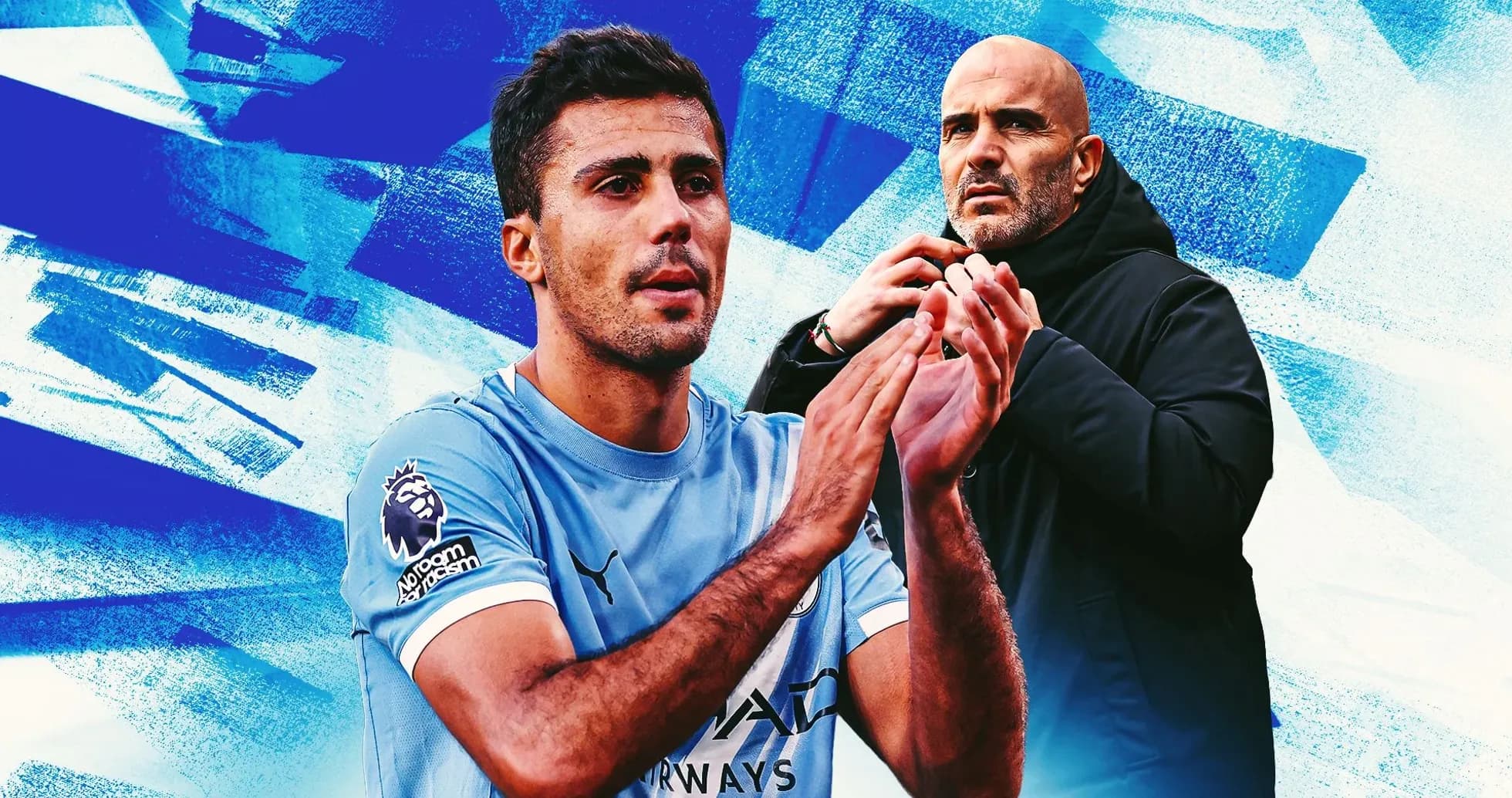
Rodri's Journey: From Injury to World Cup Glory and City's Future
Rodri has lived the full arc of a footballer’s nightmare and redemption in less than two years. An ACL rupture in September 2024, a month before he lifted the Ballon d'Or in Paris, ripped through the rhythm of a career that had looked almost indestructible. The injury, followed by a string of niggles, turned the game’s most reliable metronome into a stop-start presence.
For Manchester City, that absence has been more than a medical bulletin. It has been a fault line. Before the ligament went, Rodri had missed just seven games for the club. Seven. In an era of relentless schedules and rotating XIs, he had been the constant. Since then, City’s grip on the Premier League has loosened. The title last arrived in 2023-24, just before his body betrayed him. Since then, they have watched others climb the podium.
Pep Guardiola always insisted the story would swing back. Back in October last year, he was adamant: “In the World Cup, he will be the best Rodri, and next season he will be the best Rodri.” He was half-right already.
In North America this summer, Rodri owned the World Cup. At 30, he dictated Spain’s tempo from the base of midfield, killed counters before they could breathe and set Luis de la Fuente’s side on the path to the trophy. It was a masterclass in control, a reminder that when Rodri is fit, he bends tournaments to his will.
For City, it was also a warning. This is what they stand to lose.
Guardiola’s era has already closed, his departure leaving a void that no whiteboard can fill. Rodri has only one year left on his contract. If he feels the cycle has ended, if the lure of a return to Spain — and Real Madrid in particular — becomes irresistible, City may never see “the best Rodri” in sky blue again.
Enzo Maresca, Guardiola’s former assistant and now the man tasked with inheriting his empire, knows exactly what is at stake, even if he won’t show alarm in public.
“First of all I have to say, that around big players there are always speculations so I am not worried about that,” he said in his first press conference back at the City Football Academy. “I think it is normal, also because they won the World Cup, because he is one of the best players.
“I think every manager wants to have Rodri because he is a top player. But now, surgery on Monday [on his back]. He needs a holiday, he needs to rest and recover and then he will be back with us.”
Calm words. The reality is anything but calm. Rodri is not just another midfielder in Maresca’s fluid system. He is the hinge. The player who can drift between roles, drop into the back line, step into the half-spaces, or sit deep and launch attacks with one pass. On top of that, he now returns as a World Cup-winning captain, a dressing-room authority figure at a time when leaders are walking out of the door.
City’s midfield options underline the problem. Beyond Rodri and £116 million signing Elliot Anderson, this is not a department overflowing with ready-made heirs.
Nico Gonzalez, brought in partly to cover during Rodri’s ACL layoff, has been one of the stark disappointments of City’s 2025 January splurge. He barely registered under Guardiola, spending most of the run-in on the bench. A sale has already been floated.
Tijjani Reijnders told a different story at first. A £46m arrival from AC Milan last summer, he started brightly, then faded. By the second half of the season he was reduced to a bit-part role, still trying to come to terms with the intensity and physicality of English football. City can only hope that a year of adaptation pays off now.
Then there is the group City have already mentally moved on from. Mateo Kovacic, Rico Lewis and Kalvin Phillips have all reportedly been deemed surplus to requirements. Take Rodri out of that picture as well and the Etihad midfield goes from carefully curated to dangerously thin in a single window. The recruitment department would be staring at a full-scale rebuild.
Amid the uncertainty, Anderson stands there like an opportunity wrapped in potential. He would surely have relished learning alongside Rodri. Instead, he might be auditioning to replace him.
At Nottingham Forest, Anderson’s rise was ferocious. He became a pillar for Thomas Tuchel’s England, a midfielder who could both destroy and create. Last season in the Premier League, no one won possession more times (306). No one won more duels (297). He still topped Forest’s creativity charts despite the presence of Morgan Gibbs-White, carving out 54 chances, nine of them classified as big chances. At the 2026 World Cup, he finished with the joint-most tackles (18) — level with Rodri.
Those are not just promising numbers. They are the profile of a modern No.6 who can handle the chaos and dictate it. If Rodri goes, Anderson looks ready to be the new anchor.
He might not be alone. City are weighing up whether to accelerate the arrival of Ayyoub Bouaddi, Morocco’s breakout star of the World Cup. The 18-year-old, currently at Lille, had been earmarked for a buy-and-loan-back arrangement. Rodri’s situation could rip that plan up and pull Bouaddi straight into Maresca’s orbit.
All of this plays out against a backdrop of upheaval that would unsettle any club, never mind one used to the smooth, controlled dominance of the Guardiola years. Bernardo Silva, captain last season and one of the dressing room’s most influential voices, has left for Madrid. John Stones, another serial winner, has joined Inter at the end of his contract. Two pillars of the era gone, just as the architect himself walks away.
Strip out that leadership and the emotional exit of Guardiola becomes even heavier. Keeping Rodri would at least give Maresca a cornerstone. The idea of him leaving underlines just how fragile the transition could be.
City’s hierarchy have lived through cautionary tales. Manchester United’s slide after Sir Alex Ferguson, Arsenal’s long drift post-Arsene Wenger — these are not abstract case studies. They are warnings. The club will do everything to avoid the same fate, but Maresca’s mixed spell at Chelsea means nothing is guaranteed.
Continuity around him will be vital. Lose Rodri to Real Madrid and that continuity takes another punch.
Maresca, though, is not blinking.
“I want to say it is a privilege because the reason why the club decided to go for me, that is a privilege,” he said when asked about following Guardiola. “I have said many times, I consider Pep the best coach in the world in the last 20-25 years. It is a challenge.
“Also the history of the manager with many years in the same club, they struggle a bit. Sir Alex, Arsene. But it is also a challenge to do the right things.”
For him, the key word is time.
“I know the organisation quite well and the people inside the club from years ago. I just said before that when a club has three [sic] managers in almost 20 years, it shows how serious [they are]. The structure understands to give time for everything.
The organisation is the main thing. This club and organisation has had three [sic] managers in 17 years. That is not normal and has not happened often. I am confident that we can continue to do a great job and continue to do the job that has been done in the last 14, 15 years since Roberto Mancini was here.”
He will need every second of that patience. Next season at the Etihad is not going to glide. It will jolt, it will test, it will expose.
Whether Maresca walks through that storm with Rodri still at the heart of his midfield could define not just his own tenure, but the shape of City’s next era.