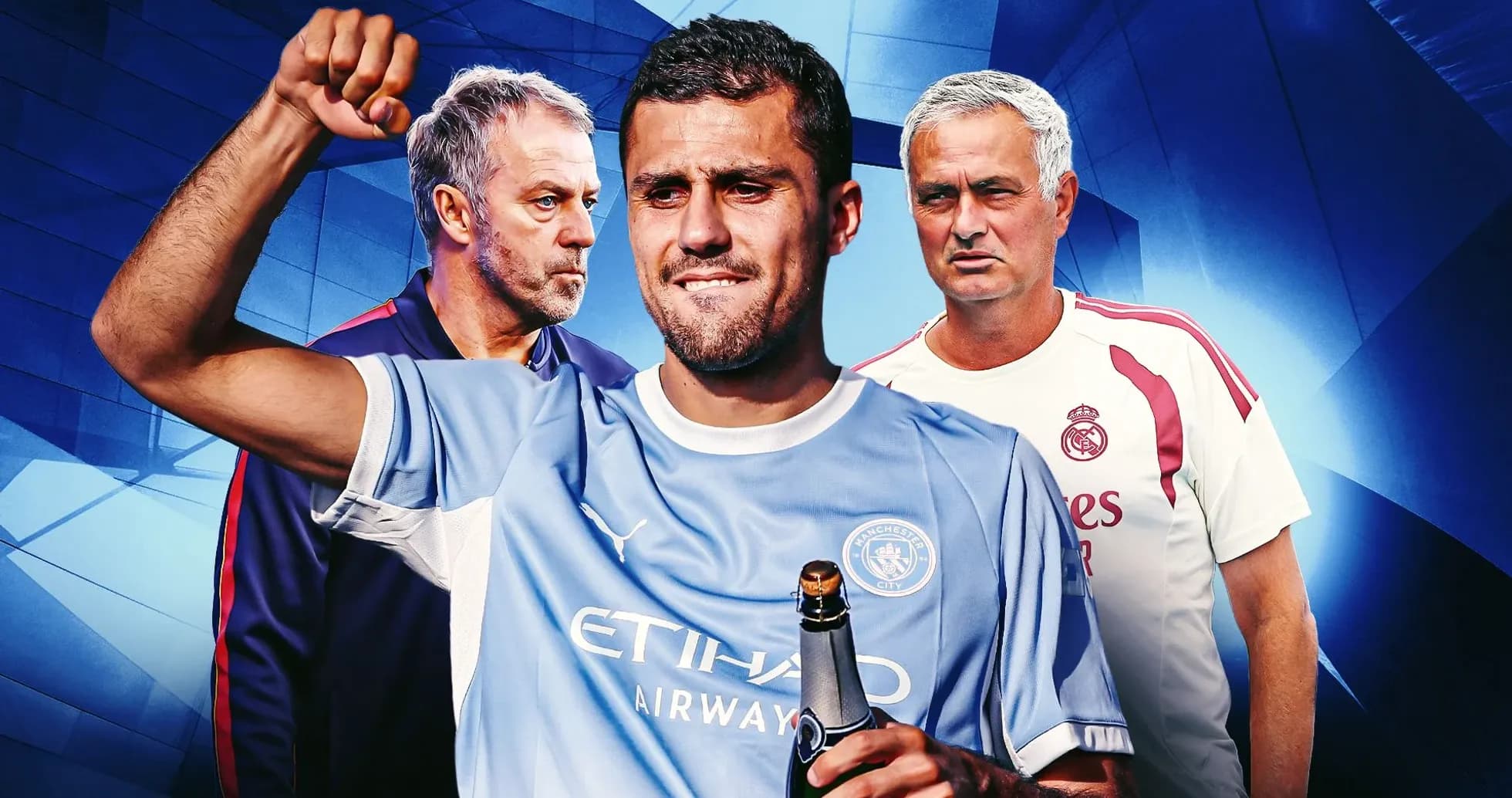
Rodri Chooses Barcelona Over Real Madrid: A Defining Moment in Spanish Football
There are transfer battles, and then there are moments that redraw the map of a rivalry. Rodri choosing Barcelona over Real Madrid belongs firmly in the second category.
When the best defensive midfielder in the world, fresh from winning the 2024 Ballon d’Or and the Golden Ball at a World Cup, suddenly becomes available for around £60 million with a year left on his deal, the elite usually move in straight lines. This time, Madrid zigged. Barcelona pounced.
And that could define the next few years of Spanish football.
City’s era ends – and Rodri looks home
Manchester City never expected this summer to be simple. Pep Guardiola’s departure ripped the spine out of an era, and with it came the inevitable question for the players who had grown into his ideas and defined his dominance.
Rodri is one of them. At 30, with his contract ticking into its final 12 months, his future was always going to be a pressure point. City’s stance has softened to the point that reports now suggest they will accept as little as £60m to avoid losing him for nothing next year. For a Ballon d’Or winner in his prime, that is a cut-price escape route.
The midfielder has not hidden his desire to return to Spain. The emotional pull of home, the sense that the Guardiola chapter is closed, the knowledge that his game intelligence can keep him at the top level for another two or three years – it all pushes him towards La Liga.
Naturally, Madrid moved first. Or thought they had.
Madrid in pole position – until they weren’t
Real Madrid have tracked Rodri for years. His control of Spain’s World Cup-winning midfield only sharpened that interest. He was the ideal solution: an upgrade on Aurelien Tchouameni and Eduardo Camavinga, a ready-made organiser for a side trying to squeeze the last great titles out of a squad already built to win.
The expectation in Spain was clear: Madrid were in front. Talks with City, talks with the player, a long-standing admiration. Rodri himself had stoked the flames in March, saying he would like to return to La Liga and that “you can’t turn down one of the world’s best clubs” when asked about Real specifically.
Yet the deal never landed. Reports in Spain have painted a chaotic picture. One version says Madrid reached an agreement with City, then tried to shave the fee down at the last minute and stalled the move. Another insists Rodri simply grew tired of waiting for the club to act decisively, with Real only willing to go as high as £34m.
There are claims he never truly wanted Madrid at all, that their interest was a lever to flush out Barcelona. Others suggest he had identical offers from the capital and Catalonia and simply chose Barça. There is even the wild allegation that City and Barcelona are working in tandem to squeeze a higher bid out of Real.
What is clear is this: while Madrid hesitated, Barcelona moved.
Barcelona smell an opening
Barcelona’s entry into the race earlier this week changed everything. What began as a Madrid-led pursuit quickly turned into a Clasico tug-of-war – and then into something more one-sided.
The Catalan club’s interest is rooted in both opportunity and necessity. Rodri should not be on the market at all, not at this price, not at this stage of his career. Add to that Frenkie de Jong’s serious knee injury – a torn medial collateral ligament on World Cup duty, with around four months out and possible surgery still on the table – and the need for a controlling midfielder becomes urgent.
So Barcelona acted. They spoke to Rodri. They opened communication with City. Their first bid was rejected, but the intent was unmistakable.
The player’s preference emerged quickly. The project at Camp Nou appeals to him: a possession-heavy, ball-playing style under Hansi Flick that mirrors the best of what he enjoyed under Guardiola, and a dressing room full of his Spain team-mates. On top of that sits the historical echo – Rodri is about as close as modern football gets to a Sergio Busquets successor.
The fit feels natural. And Rodri knows it.
“His decision is to join Barca”
The decisive blow came not from an anonymous source but from the player’s own camp. Speaking to Cadena SER, Rodri’s agent Pablo Barquero laid it out plainly. Out of respect for Madrid, he said, Rodri had informed them that his decision is to join Barcelona.
Respect, but rejection. For Real Madrid, that stings more than any rumour.
The fallout has been instant. Spanish media, never shy of drama, has exploded with competing narratives. Somewhere in the middle of it all, José Mourinho is said to be furious. Having taken over at Madrid and believed this signing was within reach, he has reportedly unleashed his anger on chief scout Juni Calafat, who has in turn told his coach he will have to make do with what he has in midfield.
For a club that prides itself on getting what it wants, this is a rare and public defeat.
A shift in power – on the pitch and in the ego
Strip away the noise and the implications are brutal for Madrid. They have watched, almost in slow motion, as arguably the best midfielder on the planet has slipped from their grasp and headed straight into the arms of their greatest rival – and likely for a fee that will look like a bargain in hindsight.
Rodri is not just another signing. He is a system. At City, he orchestrated title after title from the base of midfield, dictating tempo, closing space, and deciding matches with his brain as much as his boots. At the World Cup, he did the same for Spain, walking away with the Golden Ball as the tournament’s best player.
Drop that profile into a Barcelona side already boasting Pedri, De Jong and Gavi, and the picture changes quickly. If he settles as expected, he can anchor a team capable of winning a third straight league title and finally ending the club’s 12-year wait for the Champions League. He gives Flick a fulcrum. He gives Barcelona control.
For Madrid, the what-if is enormous. Rodri could have been the difference between reclaiming La Liga or finishing second again. Between stabilising a midfield in transition or watching their rivals build a platform to dominate.
This is not just a tactical loss. It is a psychological one. After surrendering the league in a feeble Clasico defeat in May, Madrid’s ego has taken another hit. They are not used to losing transfer battles, least of all to Barcelona, and certainly not when the price is this low and the upside this obvious.
They had the chance. The player was open. The need was glaring. Yet as the dust settles, Rodri is on his way to Catalonia, and Real Madrid are left staring at a midfield that could – and perhaps should – have looked very different.
In a rivalry defined by fine margins and big moments, this may be the decision they regret most.