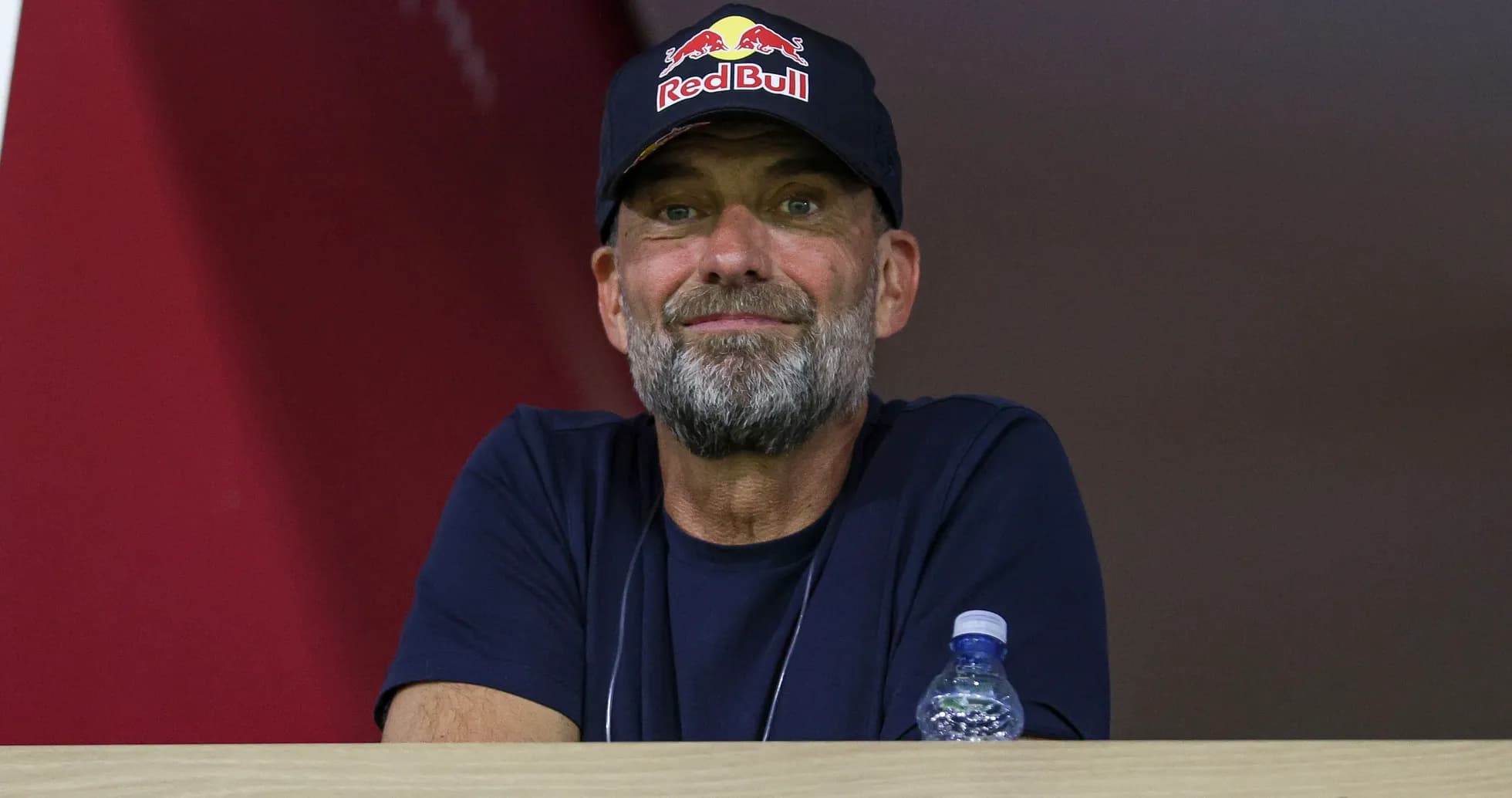
Roger Schmidt Appointed Global Head of Soccer for Red Bull
Red Bull have gone back to a trusted old hand to run their sprawling football operation, appointing former RB Salzburg and Bayer Leverkusen coach Roger Schmidt as their new Global Head of Soccer.
The 59-year-old has signed a long-term deal and will officially step into the role on October 1, taking charge of the sporting direction across Red Bull’s multi-club network at a moment of significant change.
Filling the Klopp Void
The move comes just a week after Jürgen Klopp vacated the same position to become Germany’s new national team coach, succeeding Julian Nagelsmann following the World Cup. Red Bull needed a heavyweight replacement. They have turned to a coach who already understands the company’s footballing DNA.
Schmidt will work alongside Florian Scholz, Head of Global Soccer Commercial, in a two-pronged leadership structure designed to tie together the sporting and commercial strands of Red Bull’s football portfolio.
This is not a cold start. It is a reunion.
A Familiar Face Returns
Schmidt first carved out his reputation within the Red Bull universe at RB Salzburg between 2012 and 2014, where his aggressive, high-pressing football became a calling card for the brand. That success propelled him to Bayer Leverkusen, then to Beijing Guoan, PSV Eindhoven and Benfica, before he moved upstairs in Japan as Global Sports Director for the J-League.
Now he comes back with a broader, more global perspective and a CV that touches four countries and multiple levels of the game.
Red Bull CEO Oliver Mintzlaff made no secret of his enthusiasm at bringing Schmidt back into the fold.
“We are delighted to welcome Roger Schmidt back to Red Bull,” Mintzlaff said, as quoted by Sky Sport. He pointed to Schmidt’s “many years of experience,” “outstanding football expertise,” and “clear understanding of our philosophy” as the reasons he is “the right person to be responsible for the sporting direction of our global football portfolio.”
The emphasis was clear: Red Bull want someone who knows their way of thinking and can impose it from Salzburg to New York.
Built on Youth, Driven by Identity
Schmidt’s track record with young players has long been one of his calling cards, and Mintzlaff underlined that again: “Throughout his career, he has earned an excellent reputation for developing young talent and successfully promoting them at the highest level.”
For a group that has turned youth development into both a sporting model and a business strategy, that matters.
Schmidt himself highlighted exactly that alignment when his appointment was confirmed.
“I am really looking forward to this new challenge and am proud to be part of the Red Bull family again in the future,” he said. He described Red Bull’s international club portfolio as “unique, ambitious and characterised by a clear philosophy,” and pinpointed the blend of youth and elite competition as the key attraction: “To develop young talent while succeeding at the highest level – exactly this combination makes this task particularly attractive to me.”
Those are not throwaway lines. They are a blueprint.
A Network in Need of a Conductor
Red Bull’s football empire now stretches across continents: RB Leipzig in the Bundesliga, RB Salzburg in Austria, New York Red Bulls in MLS, and a wider network of partnerships and pathways. It is a system that thrives when there is clarity from the top.
Schmidt’s swift appointment restores that clarity. There is no long vacuum, no drift. He steps into a role that demands he align recruitment, playing style and talent development across clubs that compete in different leagues, with different pressures, but under one shared philosophy.
His primary mission is straightforward to describe and far harder to execute: create a seamless pathway for talent and a unified football identity from academy to first team, from Europe to the United States and beyond.
New Chapters, New Stakes
While Schmidt takes charge of Red Bull’s global project, Klopp begins his own high-profile chapter as Germany head coach, tasked with leading the DFB into a new era after Nagelsmann’s post-World Cup exit. Two men, two very different jobs, both stepping into roles that will help shape the next international cycle.
For Red Bull, the question is not whether Schmidt understands the philosophy. He helped write it at Salzburg. The real test now is whether he can impose that same clarity and edge across an entire global network, in a football landscape that has never been more competitive or more interconnected.