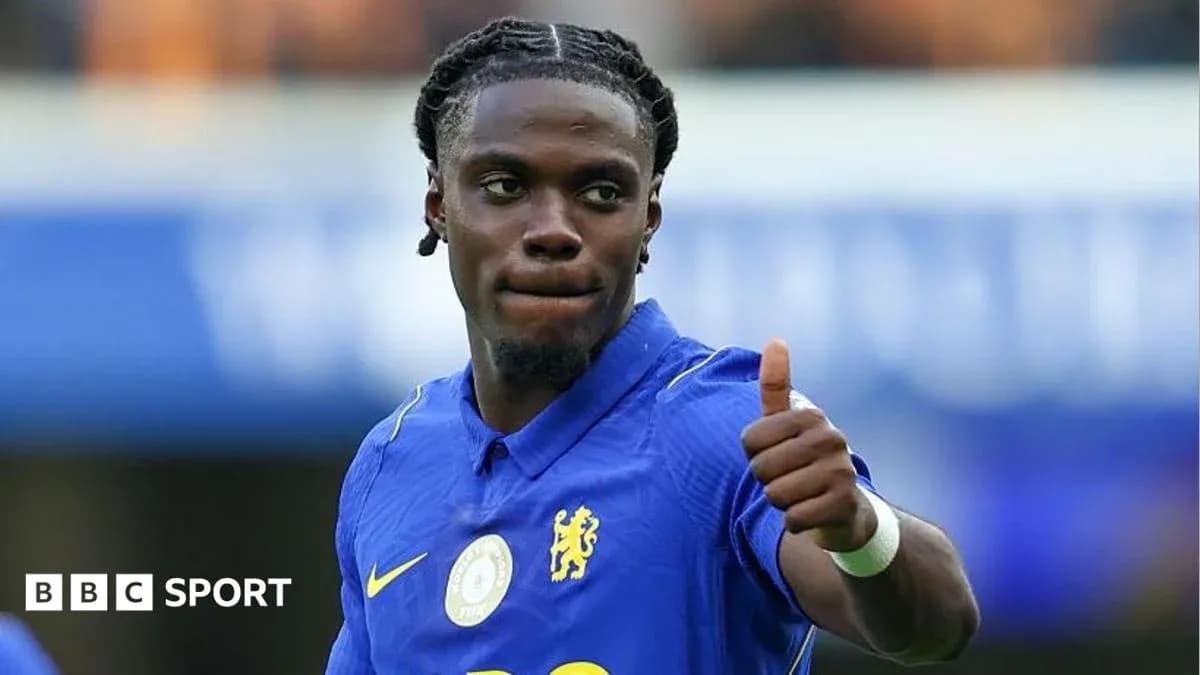
Romeo Lavia's Journey: From Injury Struggles to Chelsea Midfield Regular
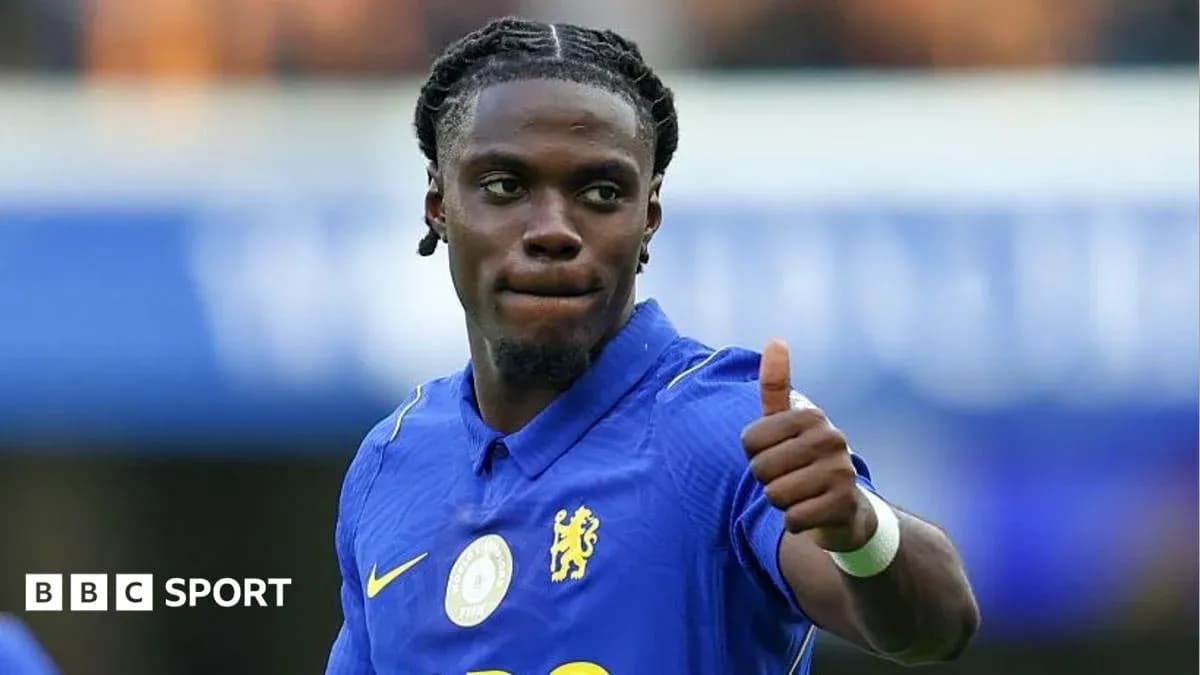
Romeo Lavia leans back in his chair at Cobham and smiles. Not the polite, media-trained smile. A lighter one. The kind that comes from a player who finally feels his body is listening to him again.
“I feel free,” he says. And for the first time since he walked through the doors at Chelsea, it looks true.
From treatment room to turning point
Lavia is 22 now, on the brink of something that should be ordinary for a young midfielder but has become a personal landmark: a sustained run of minutes. If he gets through an hour against Brentford on Friday, he will set a new personal best for consecutive game time without injury at Chelsea – surpassing 518 minutes, including pre-season.
It sounds like a small number. It isn’t, not when you know the road he has taken.
His first year at Stamford Bridge was almost a write-off. One appearance, then a serious hamstring injury. Season gone. The second campaign brought more frustration: a string of setbacks, 33 matches missed – an improvement on the 42 he sat out the year before, but still a painful watch from the sidelines.
Last season, something finally shifted. He featured in about half of Chelsea’s games, his availability trending in the right direction. This summer, he has gone a step further: fit throughout pre-season, present for the opening weeks of the new campaign. No breakdowns. No new scans. Just football.
“There is so much that goes on behind the scenes,” Lavia tells BBC Sport. He talks about a checklist he ticks through before every game, a routine that keeps his body and mind locked in. “It’s a big process but we’re doing well at the moment.”
The word “we” matters. This has not been a solo recovery.
Breaking the mental block
The physical side is obvious: rehab, gym work, conditioning. The less visible battle has been in his head. Repeated injuries do that to players. You start to brace for the next twinge, the next sprint you might pull out of. You stop trusting your own body.
Xabi Alonso saw it. During pre-season in August, in a friendly against AC Milan, the Chelsea manager pushed Lavia through the barrier he had built for himself: 90 minutes.
Alonso called it a “mental block”. Lavia calls it a lesson.
“I’ve learned you can always go further than you think you can. You can always push your limits, especially when you feel like everything is going against you,” he says.
He has known those dark corners: “It’s always easy to think about giving up, or to feel that whatever you do will take you back to the same point where you started.”
So he built what he calls a “bubble” – a space carved out with help from team-mates, staff, club employees and people close to him away from football.
“In that bubble you concentrate only on what you can control,” he says. No noise. No labels. No constant replaying of what went wrong last time.
At Chelsea, he is not alone in that struggle. Reece James and Wesley Fofana have both fought through long-term injuries, both trying to rewrite their own stories. Lavia wants to be next.
From prospect to pillar
That story is changing fast. Lavia is no longer the new kid who can’t stay fit. He is now a regular in Alonso’s midfield, often operating alongside captain Reece James, who has shifted inside from his original right-back role.
The context has sharpened his importance. Moises Caicedo has played just 14 minutes this season. Enzo Fernandez left for Manchester City on deadline day in a £125m move. The vacuum in midfield needed filling. Lavia stepped in.
“It’s part of my game as well to take responsibility and have some character,” he says. “I really like being in that position and also being at this club. Having this responsibility, it’s not even pressure, it’s just like privilege, so I’m actually living the dream.”
He sounds like someone who understands exactly what he has fought for.
“This is why you’ve been playing and training all these years for, so just go and enjoy it.”
Inside the dressing room, he feels the “love” of his team-mates. Outside it, Chelsea have made a point of backing him publicly and privately, even as injuries threatened to define him. They see a key player in their next cycle, not a medical file.
Chelsea’s new edge
The club around him is changing too. Chelsea have adjusted their transfer strategy, blending experience into a previously raw squad and then detonating the market with the £117m signing of Morgan Rogers from Aston Villa – a player who, like Lavia, came through Manchester City’s academy.
Rogers has slotted into an attack already boosted by Cole Palmer and Joao Pedro. The result? Eighteen goals in six games across all competitions. Stamford Bridge, often tense and restless in recent seasons, has started to buzz again.
“It’s honestly amazing,” Lavia says. “Obviously I knew Morgan, but just the way he’s come in and then they’ve all clicked together up front. Sometimes I wish I could go in the stands and enjoy watching it.”
He laughs at the thought, but the point stands. When the front line is flying, life in midfield changes.
“It makes your job easier, because it’s like ‘you guys go and work your magic and then we do the rest’,” he says. “So we’re really, really happy to have them all and hopefully we can achieve great things together.”
The excitement is real, but it is tempered.
Changing the narrative
Lavia has seen enough at Chelsea to know that hype can run ahead of reality. He talks about the squad having been “too immature” in the past. About the need to stay “realistic” about what this team is and what it still has to become.
For him, progress is now about milestones. Staying fit. Stringing games together. Growing into responsibility. And, occasionally, allowing himself to feel the emotion of a moment.
His first Chelsea goal arrived in a 4-3 thriller against Brighton. A wild game, a cathartic strike.
“It was just a moment where I felt free,” he says. “It feels like all the work that you’re putting in, you gain the reward of it, so it was a very emotional moment.”
There was another layer to it. His first Premier League goal had come against Chelsea, for Southampton in 2022.
“I wanted to change the narrative,” he admits. “My first Premier League goal was against Chelsea, so I always felt like it was a bit strange.”
He had watched team-mates celebrate their own breakthroughs. He waited. And waited.
“I saw all my team-mates score, so I was waiting for it to be my turn and when it happened I was very, very happy and excited. I wanted to express it as much as possible with the fans and I really loved it.”
Now the narrative he talks about is bigger than one goal. It’s about a career that once seemed stuck in the treatment room finally moving at full speed. About a midfielder who no longer flinches when he looks at the fixture list.
If he clears that 60-minute mark against Brentford and stays on the pitch in the weeks to come, the question will stop being whether Romeo Lavia can stay fit.
It will be how far he can drive this new-look Chelsea.