Ronaldinho's Impact on Ravenna Calcio: A Dream Come True
On a blistering afternoon in Ravenna, the heat shimmers off the cobbles outside Dante’s tomb and the basilicas that made this city a museum long before it was a football town. Yet the talk in the cafés is not of mosaics or poets. It’s of a 46-year-old with a crooked grin and a pair of golden feet: Ronaldinho.
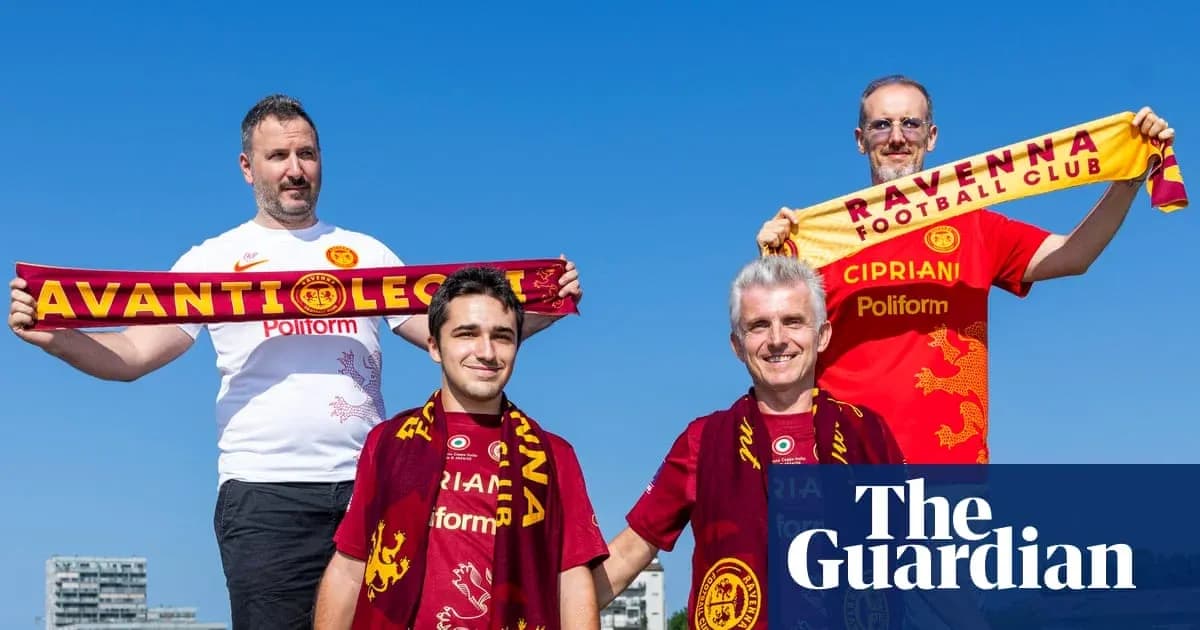
Four Ravenna fans sit under an awning, thumbing through La Gazzetta dello Sport, half-laughing at the headlines that have turned their quiet club into a global curiosity.
“We haven’t seen him yet,” they say, dryly. They don’t quite believe it. Not fully. But they want to. Deep down, they’re already picturing the 2005 Ballon d’Or winner, the 2002 World Cup champion, pulling on their yellow and red. Just once. Just long enough to leave a final footprint on a pitch that has never known anything like this.
Cipriani’s wild idea
The man who has dragged Ravenna into this surreal orbit is Ignazio Cipriani, heir to the Venetian hospitality empire behind Harry’s Bar and grandson of Raul Gardini, the tycoon-sailor who took Il Moro di Venezia to the America’s Cup final in 1992. A name steeped in luxury, risk, and spectacle has now attached itself to a club that, until recently, was slogging away in Serie D.
Cipriani arrived in 2024 with Ravenna in Italy’s fourth tier. Within a year, they had lifted the Serie D Cup and climbed into professional football with promotion to Serie C. For most presidents, that would buy time and patience. Cipriani chose the opposite.
“Serie A is the goal I declared from day one because I intend to reach it,” he says. “And the Champions League remains the ultimate horizon we want to walk towards, step by step. I like working with my back against the wall: when you have no way out, you are forced to find solutions instead of excuses.”
No alibis. No soft landings. And now, no hiding place either, because this summer he lit the fuse on an idea that sounded like a hoax when it first appeared on phone screens: Ronaldinho, back as a player.
The connection came through Lorenzo Tonetti and Ariedo Braida, two long-serving figures from AC Milan’s corridors who once worked directly with the Brazilian at San Siro. Cipriani admits the thought of involving Ronaldinho arrived almost as soon as he bought the club. A fantasy, at first. Then a meeting. Then, improbably, a friendship.
“From that relationship came many ideas for the club’s growth,” Cipriani explains. “And to the question everyone is asking, I am happy to answer: Ronaldinho will wear the Ravenna shirt as a player, and he will try – maybe scoring the last goal of his career with us!”
One sentence, and a provincial side instantly becomes a global headline.
The Ronaldinho Effect
The reaction was immediate. A special-edition shirt hit a dedicated website, stamped with the “R10” logo that has long outgrown the man and become a global brand in its own right. The stock vanished within hours. A club with a 6,300-capacity ground suddenly found its crest scattered across social media timelines in countries that had never heard of Ravenna Calcio.
For Fabio, a lifelong fan, the scale of it all still sounds absurd.
“If someone had told me three years ago that Ronaldinho was coming to Ravenna, I would have sent them straight to the psychiatric ward,” he laughs. “The night the news broke, international headlines everywhere read ‘Ronaldinho to Ravenna’. It was an extraordinary operation.”
Extraordinary because Ravenna is no sleeping giant. This is a club scarred by bankruptcies in 2001 and 2012, a team that has spent most of its existence shuttling between the lower rungs of the Italian pyramid. Seven seasons in Serie B stand as the peak of its footballing history. The city has always felt more comfortable being known as a volleyball stronghold than a football capital.
Now, that identity is being tugged in a different direction.
“Ronaldinho is a unique icon,” Cipriani says. “His way of playing made my generation fall in love with the game. We want him today to make the next generation of fans, in Italy and around the world, fall in love with Ravenna. It’s not just a visibility stunt; it’s about building a bridge between different eras of football and growing a truly global fanbase around it.”
The bridge is already taking shape. Season tickets have gone on sale with a target of 2,800, a bold figure for a club of this size. Prices are up by an average of around 12%, varying by section. The gamble is clear: the “Ronaldinho Effect” must do more than sell shirts. It has to fill seats, fund ambition, and turn a whimsical signing into a sustainable project.
A city steps into the spotlight
To match the sporting dream, Ravenna’s infrastructure must grow with it. The club is working with the municipality to renovate the Stadio Bruno Benelli and push its capacity beyond 6,300. Cipriani’s vision stretches further still: a new multi-purpose venue, open all week, with retail units, concert spaces, and an integrated Hotel Cipriani to plug directly into the city’s expanding tourism scene.
For mayor Alessandro Barattoni, the arrival of a world-famous footballer dovetails neatly with a broader plan to project Ravenna far beyond its Adriatic shoreline and port traffic.
Recent years have seen the city deepen its ties with the Anglo-Saxon world, welcoming a visit from the British royal family and opening the Lord Byron Museum. Culture and history remain the bedrock, but now there is a new hook to draw the world’s gaze.
“Ronaldinho brings a whole new level of global fame,” Barattoni says. “When the news broke, my phone exploded with messages from former schoolmates. For younger kids today, he might be someone to discover on YouTube, but the fascination remains intact.”
He smiles at the thought of personally guiding Ronaldinho through the city’s mosaics, schedule permitting. Yet he is careful to define the municipality’s role.
“Our common ground with the club is internationalisation: bringing Ravenna’s image to the world. Ronaldinho has been a global ambassador for countless brands. There is an overarching project that can bring great visibility to the team and allow the city to showcase its initiatives beyond standard routes.”
The mayor also points to something more intimate than marketing plans and tourism charts.
“Even before Ronaldinho’s arrival, the club did a fantastic job engaging younger generations. The average age in the stands is lower, more vibrant, and more engaged than ever before. A genuine sense of community is forming.”
Tradition versus spectacle
Not everyone is swept away by the spectacle. In the Curva Mero, where the most hardline supporters gather, the mood is more guarded. They have seen clubs chase quick fame before. They know the cost when football becomes a luxury product.
“There is a certain reluctance among some factions,” Fabio concedes. “Modern football pushes values that many don’t share: rising ticket prices, losing accessibility for lower-income families. As a result, visibility and marketing stunts risk being viewed sideways.”
Cipriani, for all his cosmopolitan background, speaks the language of roots and belonging when confronted with that unease.
“Without roots, no global project makes sense,” he says. “Ravenna is not a brand we are building from scratch; it’s a history and an identity that existed before us. Tradition isn’t a brake on ambition: it’s the foundation. A club without its people is worth nothing.”
That sentiment resonates with Giovanni, another fan who has been climbing the same terraces since his school days.
“I’m 50 years old and I’ve been coming to the stadium since my school days,” he says. “I’m rediscovering the enthusiasm of the past. If it takes an icon like Ronaldinho and a local entrepreneur to make us dream of Serie A, then so be it. The important thing is never to forget the people in the stands.”
This is the tightrope Ravenna now walks: between authenticity and aspiration, between the curva and the corporate box, between the old banners and the new brand partnerships that will inevitably follow.
Waiting for R10
For the moment, the city is simply buzzing. On the pitch, the club is piecing together a squad built not just to survive in Serie C but to win it. Off it, Ravenna circles a date in red: 20 August.
That is when Ronaldinho is expected to appear at a three-day summer festival in Marina di Ravenna, staged in pure Cipriani style. It will be the first tangible glimpse of the man whose name has thrown this modest club into the global conversation.
Will he actually step onto the pitch when the season starts? How many minutes can a 46-year-old conjurer still give? Will there be that one last free-kick, that final no-look pass, that farewell goal he has promised to chase?
No one in Ravenna knows. But in a city built on centuries of history, the idea that its next great story could be written by Ronaldinho, on a patch of grass rather than a church wall, is enough to make even the sceptics look up from their coffee and wonder what might be coming next.