Ronwen Williams Faces Online Hate Amid World Cup Challenges
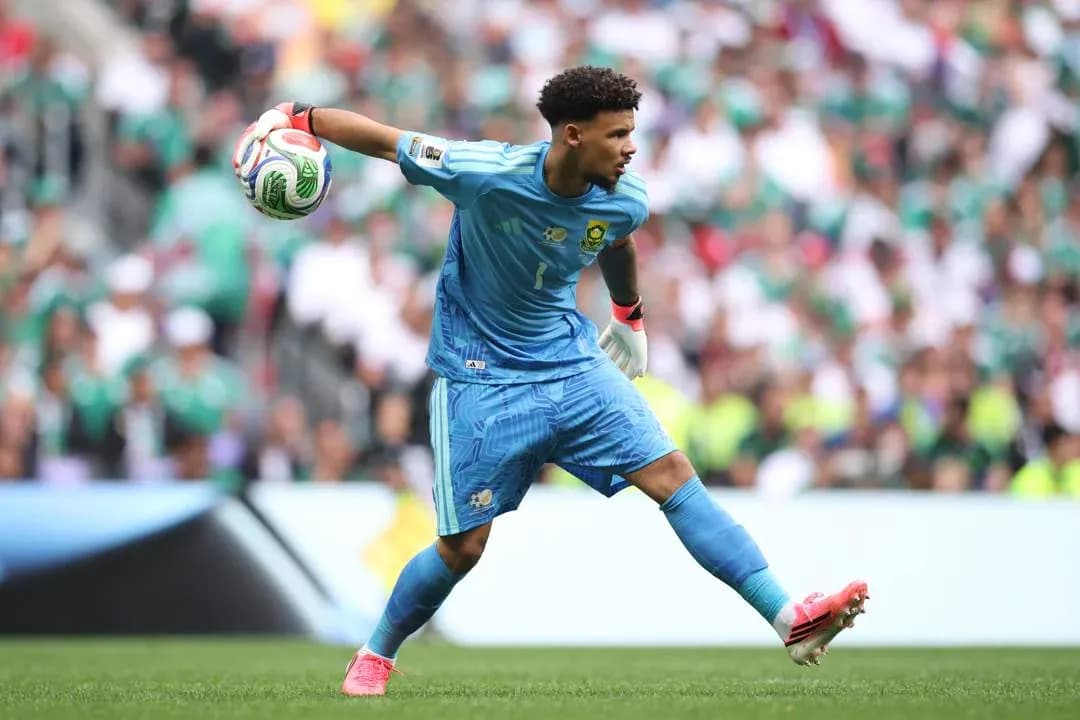
Ronwen Williams stands in the middle of a World Cup storm that has very little to do with football.
On Thursday, on the International Day for Countering Hate Speech, the Bafana Bafana captain will lead his country out at Atlanta Stadium for a crucial 2026 FIFA World Cup Group A clash against Czechia. The stakes are clear: lose, and South Africa’s campaign could unravel. Win, and the path to the last 32 opens up again.
But the noise around this team is not just about tactics, line-ups or missed chances. It is about politics, anger and a wave of online hatred that has turned a generation’s World Cup dream into something darker.
Abuse from home and beyond
FIFA’s social media protection service has revealed that Bafana Bafana players have been subjected to unprecedented levels of online abuse since the tournament kicked off. The number of incidents detected at this World Cup has already surpassed the total from Qatar 2022 – and that is just a week after the opening match at Azteca Stadium, where Bafana went down 2-0 to Mexico.
That defeat lit the first flame. South Africa’s current anti-immigrant posture poured fuel on it.
What began as stinging criticism of a flat performance has been twisted into something more toxic, with Bafana players – and Williams in particular – targeted by both their own supporters and angry voices from across the continent. Some Africans, furious at developments back in South Africa, have turned Bafana into a symbol of those grievances and are now “hate watching” the team.
The captain has found himself at the centre of it.
“We know how difficult it is now on social media, where everyone is attacking you,” Williams said. “Sometimes it’s (because of) false information. If you lose a game, and you don’t perform, you can take it as players. You can put your hand up. But when there’s false information that goes around, then it hurts.”
One fake quote, attributed to him and picked up by reputable publications, claimed he had criticised Africans for supporting Mexico over Bafana and said the team “almost shed a tear”. None of it was true.
“I have been a target over the last few days over things I didn’t say,” he explained. “I didn’t say anything about Africa, or people supporting Mexico. I have always said that as Africa, we are one. We support each other in good and bad moments.”
The abuse has not only questioned his words, but his loyalty and his country’s politics.
“I have been attacked... my country as well, for things that are going on back home,” he said. “We’ve all got our own politics, our own problems and our own fights that we deal with back home. Every country has that. I don’t know where that stems from. It does hurt.”
Politics at the door of the dressing room
The national team has become collateral damage in a much larger argument.
The rise of vigilante group March and March, which calls itself “a grassroots citizen movement addressing growing concerns about undocumented immigration in South Africa”, has sharpened continental tensions. Their increasingly loud voice even forced President Cyril Ramaphosa to address the nation on South Africa’s porous borders.
March and March has gone further than speeches. The group has set 30 June as a deadline for undocumented migrants to leave South Africa, without clearly stating what will happen after that date. The images from their marches hint at potential violence and intimidation.
Governments around Africa have responded with facilities for voluntary repatriation. On the terraces and online, the backlash has taken another form: hostility towards Bafana Bafana.
This is not new territory for the national team. In 2019, amid xenophobic attacks in South Africa, Madagascar and Zambia refused to play international friendlies against Bafana. Then-coach Molefi Ntseki, newly installed after Stuart Baxter, went into the 2021 Africa Cup of Nations qualifying campaign underprepared. Bafana failed to qualify, finishing third in a group with Ghana, Sudan and São Tomé and Príncipe.
Six years on, the political climate has again seeped into football. The players are paying the price.
“Players are human beings as well. We go through it. Sometimes it gets a lot,” Williams admitted. “You want to focus on doing your job, which is being a footballer, but then you get involved in politics even though you don’t want to get into that space.”
‘Let us just play football’
In Atlanta, the contrast is striking. Inside the National Centre for Civil and Human Rights, just a few kilometres from the stadium, FIFA officials outlined the scale of online hate at this tournament. Outside, the city is a swirl of colours and flags – South African, Mexican, and from across Africa.
“We are in Atlanta now, and I see so many Africans... so many South Africans and people from Mexico, in one room,” Williams said. “That’s the beauty of sport. That’s the beauty of football.
“So, let’s just enjoy and have a wonderful time, and we leave politics to the politicians. Let us just play football, and enjoy ourselves.
“Criticise [us] for what happens on the field, but off the field things – we can’t deal with that, and it has nothing to do with us. As Africans, let’s unite and keep going because we are all in this together.”
His words carry the weight of a captain trying to hold a fractured space together – the dressing room, the fan base, even the wider African football community.
Blocking out a million voices
Inside Bafana’s camp, the response has been to close ranks.
“As sad as this sounds, players have accepted it (the online abuse), that that’s how things are in the world now,” Williams said. “We’ve had meetings to discuss this as players.”
The key, he insists, is to narrow the circle of influence.
“You have an experienced coach in coach Hugo (Broos), who says that the most important thing is to analyse the game. That is the most important thing, to block out the noise, focus on how we can do better, learn from our mistakes and just stick together as a team.
“If you are going to listen to a million people’s opinions, then you will lose your mind. So, at this moment, the most important comment and the person to listen to is our coach and technical team. He knows us, and we know him. He knows our strengths and weaknesses.
“We are there for one another. We came here together, and we will leave here together. So, let us stick together as a team and keep the focus.”
That focus now rests on Czechia and the mathematics of Group A.
The top two teams in each group move straight into the knockout phase, while eight of the 12 best third-placed sides also reach the last 32. Bafana’s route will be shaped not only by what happens over 90 minutes in Atlanta, but by how well the players shield themselves from the hatred and misinformation swirling around them.
For a squad that grew up watching the 2010 World Cup on home soil, this tournament was supposed to be the stage where they finally stepped into the light. Instead, they walk out against Czechia carrying the weight of a nation’s politics and a continent’s anger on their backs.
How they respond – with the ball at their feet, and with the world in their mentions – will decide whether this campaign remains a nightmare or turns into the revival they have waited a generation to write.