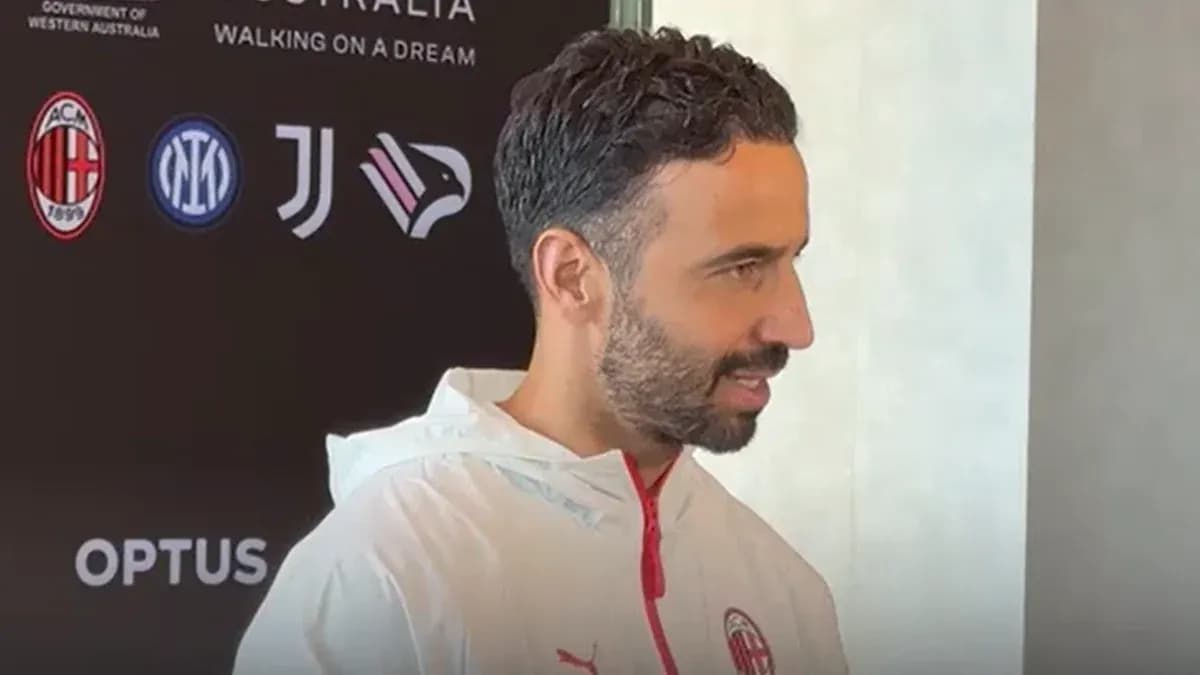
Ruben Amorim Reflects on Manchester United Mistakes and New Role at AC Milan
Ruben Amorim doesn’t dodge the question. He leans into it.
“I made a lot of mistakes,” he admits, looking back on a Manchester United spell that unravelled quickly and ended even quicker.
The numbers back him up. In the Premier League, Amorim left Old Trafford with the worst win ratio of any United manager in history – 32 per cent. His side conceded 1.53 goals per game on average and kept clean sheets in only 15 per cent of league matches. For a club built on defensive steel and relentless standards, those figures were brutal.
The end came in January. Tension with the United board had been building, then burst into the open after a trip to Elland Road. In the aftermath of a game against Leeds, Amorim publicly challenged the club’s decision-makers, suggesting others needed to focus on their own jobs. It was the sort of moment that rarely goes unpunished at a club of United’s scale and volatility. It didn’t.
The axe fell, and with it a tenure that never truly settled.
From failure at Old Trafford to a fresh start in Milan
If United represented a bruising lesson, AC Milan have offered a rapid redemption arc. The Italian giants moved decisively last month, appointing Amorim and betting that the scars of Old Trafford would harden him rather than haunt him.
Now in Australia on Milan’s pre-season tour, the Portuguese coach sounds like a man who has replayed his United stint over and over in his head – and finally found some clarity.
“They appointed me because they felt I was the right guy for the way I want to play,” he told Sky Italia. Milan, he says, want to mirror his footballing principles. But that wasn’t the only attraction.
“They signed me not just for my success, but also for my experience with a top club like Manchester United and the reflections I shared in our meetings with Mr Cardinale,” Amorim explained, referencing Milan owner Gerry Cardinale. “They understood that I was prepared for this job, not just because of my past success, but also because of my failures.”
The word hangs there: failures. Most coaches avoid it. Amorim doesn’t. He insists it helped him in those talks. Helped convince Milan that the man in front of them had already been through the fire.
‘It doesn’t matter anymore’ – but the lessons do
Asked directly what went wrong at United, Amorim’s first instinct is to push it into the past.
“The first thing is that it doesn’t matter anymore. That is the feeling,” he says. “There’s a history, then something happens, the context changes, and you focus on the next challenge.”
He doesn’t offer a single excuse. No mention of recruitment rows, dressing-room politics or structural chaos. Instead, he turns the spotlight on himself.
“I learned a lot. It would be hard to point to one thing, but the important thing that I clearly know is that I made a lot of mistakes,” he admits. “When you do this kind of reflection, and you understand that it was not just their fault, but also my fault, I think you can be a better coach and a better man.”
For a manager once hailed as one of Europe’s brightest young tacticians, it is a strikingly candid assessment. The man who arrived in Manchester as a rising star now talks like someone who has been humbled and hardened.
He still calls managing United “an honour”. Yet there is no longing in his voice, no attempt to rewrite history. That chapter is closed. The next one is already being written in red and black.
A boyhood Milan fan chasing a “new future”
If Old Trafford felt like a storm, San Siro feels like home. Amorim has been open about his long-standing affection for Milan, and he has wasted little time immersing himself in the club’s fabric.
“I spoke with some people at the club, like Massaro and Baresi and we exchanged messages,” he reveals. For any coach, those are not just names – they are custodians of Milan’s identity.
“That is the most important thing. To understand what kind of club I am and what the history of the club is,” he says. This time, he insists, that process is easier. “For me, it was easier this time, because I’ve been a Milan fan since I was a boy. I understand the culture of the club and their history.”
Then he cuts the nostalgia short.
“But that is the past. Our goal is to be the new future.”
It’s a line that lands with intent. Milan have chosen him, he says, precisely because he gravitates towards teams that are struggling, teams that need rebuilding.
“I know it’s tough, but we want to rebuild something,” Amorim says. “We have many things in a good place. The staff is in a good place; the organisation is fantastic.”
The job, in his eyes, is not to protect a legacy but to create the next one.
United pay the price, Milan take the chance
Back in Manchester, the Amorim experiment came at a cost. United were hit with a £15.9million compensation bill to cover his departure and that of his backroom staff – Carlos Fernandes, Adelio Candido, Emanuel Ferro and Jorge Vital. It was an expensive admission that the project had failed.
That figure dropped once Milan moved in and appointed him, easing the financial blow but not the sporting disappointment. United had gambled on a young, progressive coach and ended up with the worst statistical record of any manager in their Premier League era.
Milan, by contrast, are betting that the same man, armed with those painful lessons, can turn a proud club’s recent frustrations into a new cycle of success.
“If this is my final destination, I’ll be pleased because it’s a dream to coach this club,” Amorim says.
From Old Trafford regret to San Siro ambition, his career now hangs on one question: were those “lot of mistakes” at United the making of him – or the warning sign Milan chose to ignore?