Santi Denia: The First Foreign Coach of the Czech Republic
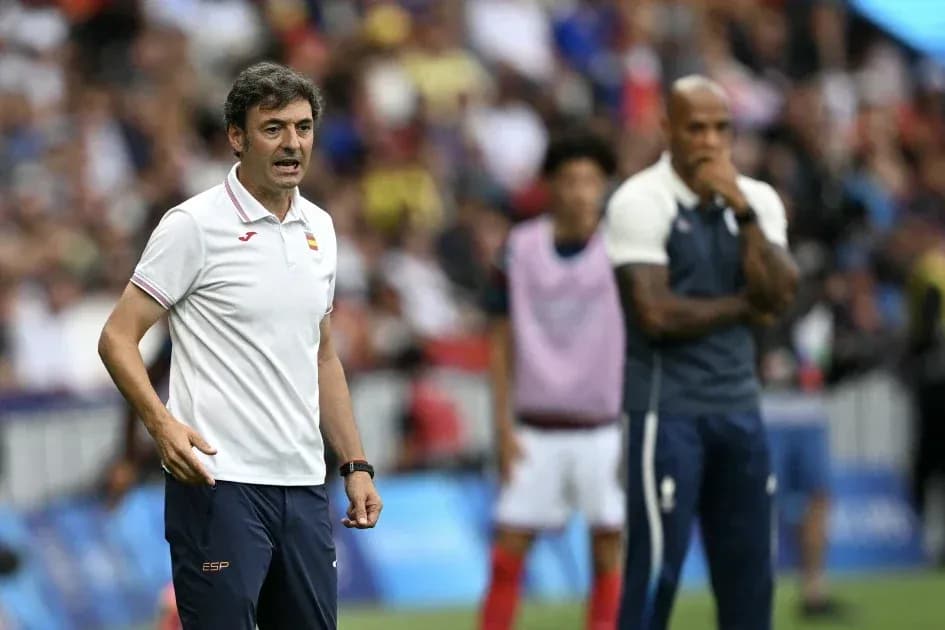
Santi Denia, the coach who led Spain to Olympic gold this summer, has taken on one of the most intriguing international jobs in Europe: he is the new head coach of the Czech Republic.
The appointment, confirmed on Friday by the Czech federation (FACR), is historic. At 52, Denia becomes the first foreigner to take charge of the Czech national team, a bold break with tradition and a clear signal that the federation wants a fresh direction after a disappointing World Cup campaign that ended with the Czechs bottom of their group.
A Gold-Medal Coach for a Rebuilding Job
Denia has signed a two-year contract with an option to extend, stepping into the role vacated by Miroslav Koubek. The contrast in profiles is stark. Koubek, a seasoned domestic figure, represented continuity. Denia arrives as an outsider with a winning pedigree on the international stage.
His résumé is hard to ignore. A former centre-back with Albacete and Atletico Madrid, he has quietly built a reputation as one of Spain’s most astute developers of young talent. He guided Spain to European titles at under-17 and under-19 level, then took over the Olympic team from Luis de la Fuente and drove them all the way to gold in Paris.
Now he swaps the familiar rhythms of Spanish youth football for a senior national side in need of renewal.
“I’m delighted to be here. And I’m extremely motivated, because I see the chance to lead the Czech national team as a great opportunity. Czech football has a glorious history,” Denia told the FACR website. “I have just one wish: to get down to work as soon as possible.”
That urgency will be welcome. The Czechs have looked short of identity and confidence in recent major tournaments. Denia’s track record suggests he will try to rebuild both, starting with structure and clarity on the pitch.
A Spanish Axis on the Touchline
Denia will not be alone. The FACR also confirmed Pablo Amo as assistant coach. Like Denia, Amo worked in Qatar last season, and the pair now bring a distinctly Spanish axis to the Czech dugout.
The choice is deliberate. It hints at a desire to blend the traditional Czech strengths of organisation and resilience with a more modern, possession-based approach honed in Spain’s youth ranks. Whether the current player pool can execute that shift is the central question, but the federation clearly believes the risk is worth taking.
“I can sense that he is ready to get stuck in and will help us build a new identity for the national team,” said Pavel Nedved, general manager of the Czech national teams. From a figure of Nedved’s stature, that is not faint praise; it is a statement of intent.
A Brutal First Test
There will be no gentle introduction. The Czech Republic’s next competitive fixtures come in the Nations League in late September and early October, against England, Croatia and Spain.
For Denia, it is a baptism of fire and a reunion rolled into one. He will stand opposite the country he has represented as player and coach, measuring his new project against the standards he once helped uphold.
Those matches will not just test tactics. They will reveal how quickly Denia can impose his ideas, how the squad responds to a foreign voice, and whether this historic appointment can jolt Czech football out of its recent stagnation.
The federation has turned to an Olympic champion to redraw the map. The question now is simple: how fast can Santi Denia turn promise into a new Czech identity on the pitch?