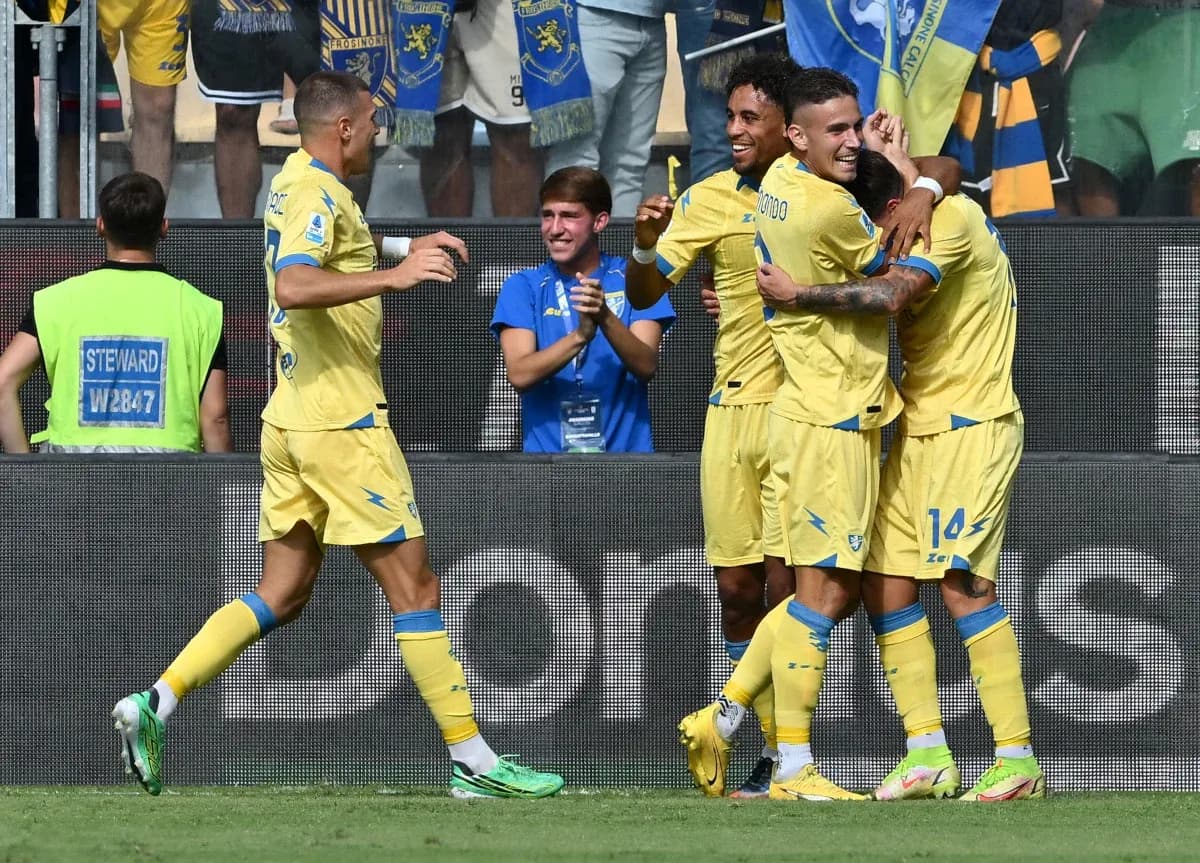
Sassuolo’s Tactical Triumph Over Como: A 2–1 Statement
Under the Reggio Emilia lights, Sassuolo’s 2–1 win over Como at MAPEI Stadium felt less like a mid-table skirmish and more like a tactical statement from a side sitting 10th and determined to bloody the nose of a Europa League contender. Heading into this game, the table painted a clear hierarchy: Como in 5th on 58 points with a formidable +29 goal difference (57 scored, 28 conceded overall), Sassuolo on 45 points with a goal difference of -3 (41 for, 44 against). Over 33 matches, Como had been the more complete machine; on this night, Sassuolo bent that script.
The hosts leaned into their seasonal identity. Their 4-3-3, used in 31 league outings, reappeared with familiar lines: Stefano Turati in goal, a back four of Woyo Coulibaly, Tarik Muharemović, Jay Idzes and Sebastian Walukiewicz, Nemanja Matić anchoring midfield with Ismael Koné and Kristian Thorstvedt, and a fluid front three of Cristian Volpato, M’Bala Nzola and Armand Laurienté. It was a selection that embraced verticality and risk, consistent with a side that, heading into this game, averaged 1.2 goals overall but also conceded 1.3.
Opposite them, Como arrived with the control and structure that have defined a season of quiet excellence. Their staple 4-2-3-1 – deployed 29 times this campaign – framed Jean Butez behind a defence of Alberto Moreno, Marc Kempf, Jacobo Ramón and Ivan Smolčić. Maxence Caqueret and Lucas Da Cunha formed the double pivot, with a high-technical line of three in Martin Baturina, Nico Paz and Assane Diao operating behind Álvaro Morata. It was a blueprint built to protect a defence that, heading into this game, had allowed just 0.8 goals per match overall, while scoring 1.7.
Yet both squads were shaped by absences. Sassuolo were stripped of a whole layer of experience and creativity: D. Berardi (red card), D. Boloca (muscle injury), F. Cande, E. Pieragnolo and F. Romagna (all knee injuries), J. Doig (suspended for yellow cards) and D. Bakola (injury) all missed out. That is not just depth; it is leadership and set-piece threat removed in one sweep. Como’s list was shorter but not trivial: J. Addai (Achilles tendon injury) and S. Roberto (muscle injury) were unavailable, trimming their options in wide and utility roles.
Those missing pieces forced tactical rebalancing. Without Berardi’s left-footed gravity and creative output (7 goals, 4 assists heading into this fixture), Sassuolo shifted more responsibility onto Laurienté and Volpato between the lines. Laurienté, one of Serie A’s leading providers with 8 assists and 5 goals, became the natural reference for progression on the left, his 46 key passes and 69 dribble attempts this season a roadmap for how Sassuolo would escape Como’s press.
In midfield, the “engine room” duel turned on Matić’s ability to dictate tempo against Como’s younger legs. The Serbian, with 1 assist, 42 tackles and 20 interceptions this season, is more metronome than creator, but his 1,478 completed passes at 85% accuracy have underpinned Sassuolo’s attempts to play through pressure. Across from him, Caqueret and Da Cunha had to balance Como’s urge to step onto the game with the need to screen a back line already busy this year: Jacobo Ramón, for instance, has made 45 tackles and blocked 13 shots, while committing 28 fouls and picking up 9 yellow cards plus 1 red. His aggression is an asset, but also a risk in a match where Sassuolo’s front three constantly attacked the half-spaces.
Higher up, the “Hunter vs Shield” narrative was embodied by Nico Paz. Heading into this game, Paz stood as one of the league’s standout performers: 12 goals, 6 assists, 82 shots (48 on target), and 48 key passes. He is the creative and scoring hub of Como’s attack, but his penalty record tells a more fragile story – 2 penalties missed and none scored this season. Against a Sassuolo side that concedes heavily in the opening quarter of matches (23.26% of their goals against arriving between 0–15 minutes), the expectation was that Paz and Morata would press early, trying to exploit that soft underbelly.
Instead, Sassuolo’s own attacking timing shaped the night. Heading into this game, their goals for were most concentrated between 61–75 minutes (23.81%) and 46–60 (21.43%), signalling a team that grows into matches. Como, conversely, are most dangerous late, with 23.21% of their goals coming between 76–90 minutes, but also most vulnerable just after half-time, conceding 27.59% of their goals between 46–60. That intersection – Sassuolo’s second-half surge against Como’s post-interval wobble – was the critical tactical seam. The 2–1 scoreline, shaped by a 2–1 half-time advantage that Sassuolo then managed rather than chased, showed a home side that understood when to accelerate and when to harden their block.
Discipline and risk management were ever-present subplots. Sassuolo’s season-long yellow-card curve peaks in the final quarter of matches, with 27.40% of their bookings arriving between 76–90 minutes. Como show a similar late spike, with 20.83% of their yellows and all of their reds (three, all in the 76–90 range) coming in that same window. This is not a fixture for naïve pressing in the closing stages; it is one where a single mistimed tackle can flip control. Players like Walukiewicz (7 yellows) and Matić (6 yellows, 1 red) on one side, and Ramón, M. Perrone and Smolčić on the other, walked a thin line between assertiveness and self-destruction.
From a statistical prognosis perspective, Como remain, over the season, the more “trustworthy” defensive structure: 28 goals conceded overall, with 15 at home and 13 on their travels, and 15 clean sheets split between home (8) and away (7). Sassuolo, by contrast, have only 6 clean sheets overall and have failed to score 10 times. Expected Goals data is not provided, but the underlying indicators – Como’s low goals-against averages (0.9 at home, 0.8 on their travels), their 57 goals for, and their strong under/over profile at the 1.5 threshold – suggest a side that usually wins the xG battle through territorial control and shot quality.
Yet football lives in the gap between models and matches. Following this result, the story is of a Sassuolo side whose 4-3-3 can still out-punch a top-five defence when their timing, intensity and wide play click, even without Berardi. Como, for all their season-long solidity, were dragged into a game state that exposed their post-interval vulnerability and the disciplinary edge of their back line.
In narrative terms, this 2–1 is more than three points. It reinforces Sassuolo’s identity as a dangerous, streaky side – one that, heading into any given game, can lean on Laurienté’s creativity, Matić’s control and a flexible front line to unsettle even the most balanced of opponents. For Como, it is a reminder that promotion-chasing structures must be resilient not only in the aggregate numbers, but in the small, volatile windows – especially just after half-time – where seasons are truly decided.