Sebastian Pedersen Joins Orlando Pirates: A New Chapter
Erling Haaland and Sebastian Pedersen are not cousins. Not in any way that matters to a passport office, at least.
On a football pitch, though, their stories brush up against each other in a way that now matters very much to Orlando Pirates.
From Haaland’s shadow to Soweto’s spotlight
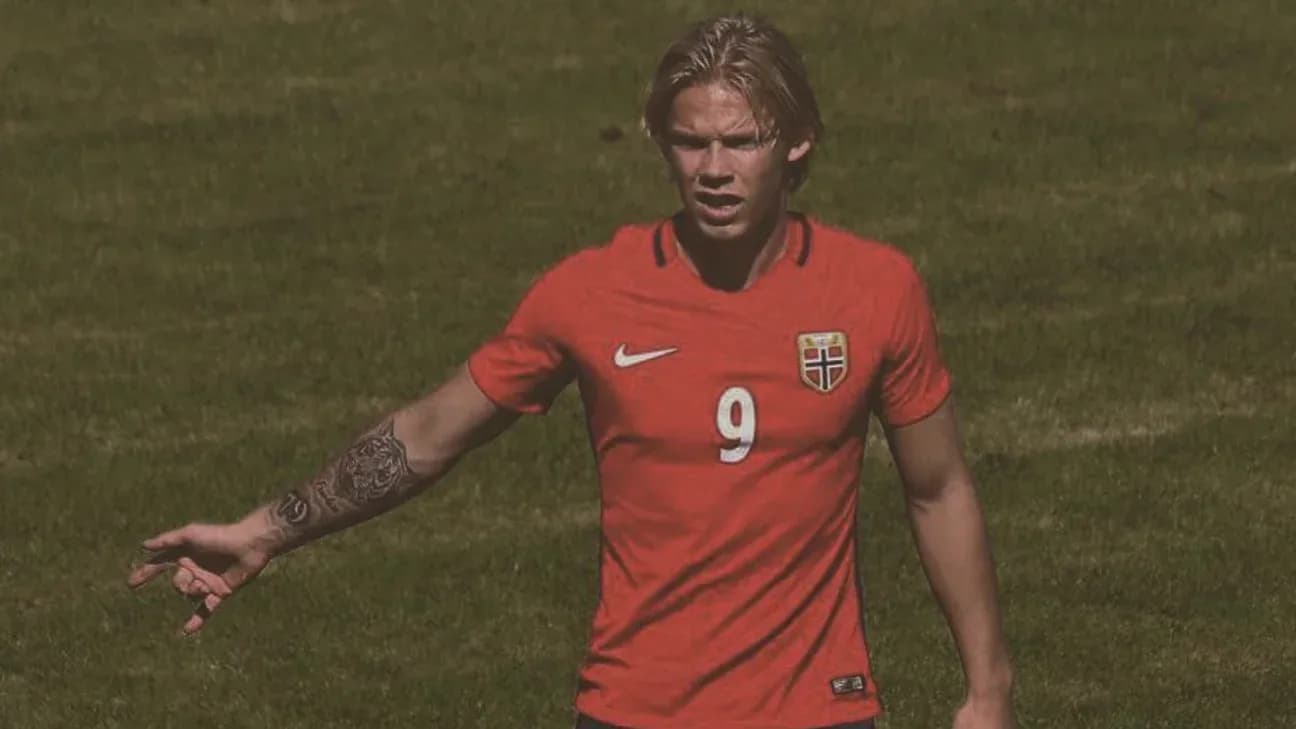
Long before he signed in Soweto, Pedersen was the other Norwegian No. 9. The one battling Haaland for minutes in Norway’s U18 and U19 sides, sharing squads but rarely the pitch.
According to Transfermarkt, the pair were called up together on five occasions, three of those in UEFA Euro Under-19 qualifiers. The pattern was telling: when one came on, the other went off. Norway rarely trusted them together. Two young strikers, one shirt.
Haaland’s rise is now global folklore. Pedersen’s path has been quieter, more circuitous, but not without substance. And now, it leads straight into the heart of a Pirates team that has been crying out for his profile.
On Sunday, Pirates made it official.
“Orlando Pirates Football Club is pleased to announce the signing of striker Sebastian Pedersen from Norwegian side Sogndal Fotball,” the club confirmed on their website, adding that the 27-year-old has signed a two-year deal with an option for a further season.
He becomes the latest piece in Abdeslam Ouaddou’s evolving squad, drafted in for what the club openly expects to be a demanding, “competitive season ahead”.
The ‘blonde bomber’ and his brief
Pedersen arrives from what Pirates themselves call one of Norwegian football’s “great talent factories”. His CV backs that up. He has represented Norway at every junior level from U15 through to U21, a steady progression that speaks to long-term faith in his finishing instincts.
Those instincts are specific. Pirates describe him as a one-touch finisher rather than a bulldozing centre-forward. The numbers support that profile: 51 goals in his last 117 matches, and 59 goals plus 9 assists across 166 club appearances overall.
He is not just a penalty-box statue either. Pedersen can operate from the flanks, particularly the left, which mirrors part of the role recently vacated by Relebohile Mofokeng. Yet early indications are clear: the Buccaneers see him primarily as a central striker, not a touchline hugger.
That matters in context. With Tshegofatso Mabasa gone and last season’s title-winning campaign exposing a shortage of ruthless finishing, Pirates have moved for a specialist. Evidence Makgopa and Yanela Mbuthuma brought work rate and structure – Makgopa with his hold-up play, Mbuthuma with his off-the-ball running – but they ended the season with six and five goals respectively. Useful numbers. Not title-defining for regular starters in a champion side.
Pedersen has built his reputation on being the man at the end of moves, the final touch rather than the build-up artist. For a Pirates side that often creates enough but doesn’t always punish enough, that distinction is key.
There is a caveat. Most of his damage has come in Norway’s second tier, the OBOS-ligaen. He has just one goal in 12 Eliteserien appearances, spread over 275 minutes. This is not a striker arriving off the back of top-flight dominance. He is arriving as a specialist finisher who still has a point to prove at a higher level.
The other Marcus Pedersen
The surname has caused its own small storm of confusion.
Norway’s 2026 World Cup squad featured Torino right-back Marcus Holmgren Pedersen, and some assumed he was Sebastian’s brother. He is not.
Sebastian does have an older brother named Marcus, and he too has worn the Norway shirt – just in a different era and in a different role. The elder Marcus Pedersen, now 36, earned nine caps between 2013 and 2015, scoring once. His international days are a distant memory, his recent football played in the Norwegian lower leagues, well below the professional spotlight, but his career was far from anonymous.
A classic journeyman forward, he could also operate off the left like his younger brother and built a respectable résumé: a stint at Vitesse in the Netherlands, a loan spell at Barnsley, further loans with Vålerenga in Norway and Odense Boldklub in Denmark. His most productive football came at Strømsgodset, where he enjoyed two spells between 2009–2010 and 2015–2019, regularly troubling defences and goalkeepers alike.
So yes, there is a Marcus Pedersen linked to Sebastian. Just not the one who played at the 2026 World Cup.
The missing piece?
Strip away the social-media jokes about Haaland’s “cousin” and what remains is a very straightforward equation for Pirates.
They needed a penalty-box predator after Mabasa’s exit. They needed someone who lives for that final touch, who turns half-chances into winning goals. They have turned to a 27-year-old Norwegian who has made a career out of doing exactly that in a league one rung below the elite.
Pedersen is not Haaland. He is not being asked to be.
He is being asked to be the man who turns Pirates’ dominance into cold, hard numbers on the scoreboard. In a side that has already shown it can win the Premiership without a prolific No. 9, the question now is simple: what happens if the “blonde bomber” really catches fire in black and white?