Serie A Season Opener: Udinese vs Como Tactical Analysis
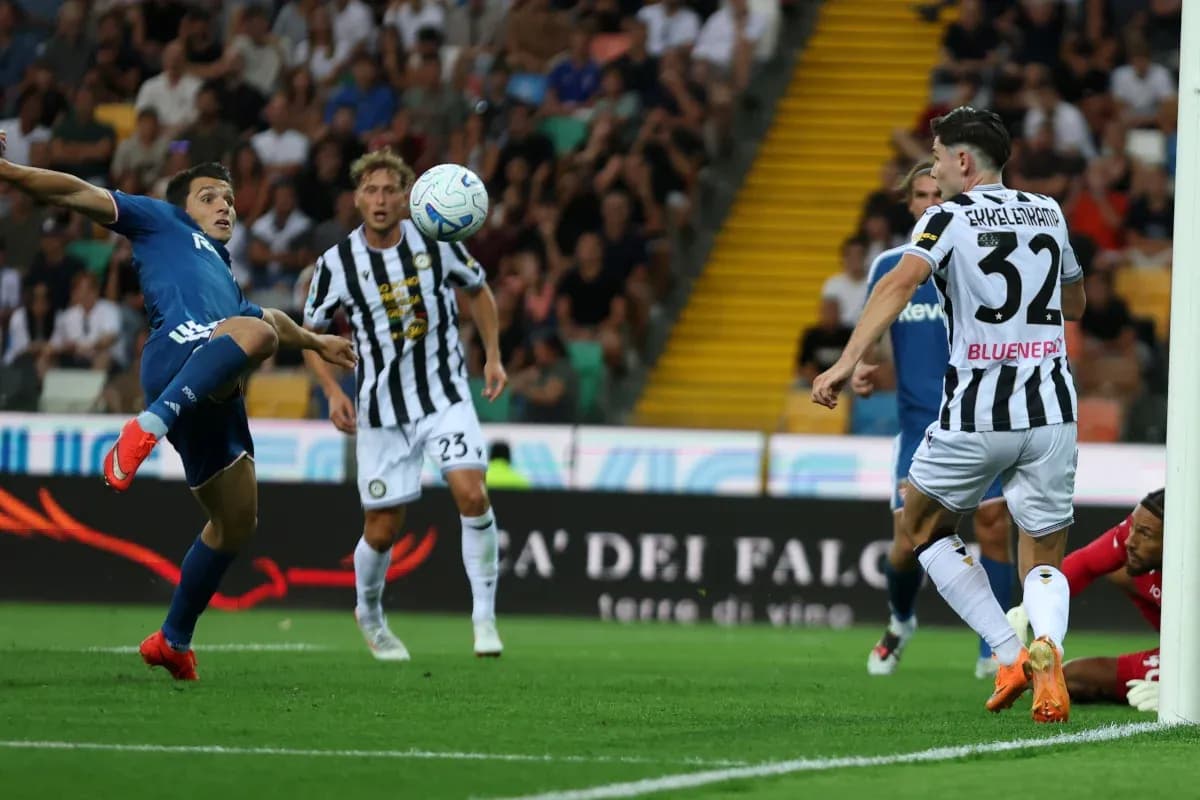
On a warm evening at the Bluenergy Stadium – Stadio Friuli, Udinese and Como opened their Serie A seasons with a 1–1 draw that felt less like a conclusion and more like the prologue to two very different tactical stories.
I. The Big Picture – Two New Identities Emerge
Following this result, both sides sit on 1 point from 1 match in Serie A. Udinese are 9th, Como 8th, each with a goal difference of 0 after scoring 1 and conceding 1 overall. At home, Udinese’s record now reads 1 draw from 1, with 1 goal scored and 1 conceded. Como’s first outing on their travels likewise ends with 1 goal for and 1 against.
The numbers are thin this early, but the shapes already speak volumes. Kosta Runjaic has stamped Udinese with a 3-4-2-1 that prioritises structure and vertical surges from wide and half-spaces. Cesc Fabregas, meanwhile, has brought Como into the top flight with a 4-2-3-1 that is recognisably modern: double pivot, fluid three behind the striker, and an emphasis on controlled possession before striking through the lines.
In total this campaign, both teams have averaged 1.0 goal for and 1.0 against per match. Neither has kept a clean sheet, neither has failed to score, and neither has taken or missed a penalty. It is a statistical stalemate that mirrors the scoreline, but beneath it lie contrasting blueprints.
II. Tactical Voids – Absences That Shape the Story
Udinese’s squad sheet came with notable gaps. A. Buksa was absent as “Inactive”, while G. Chakvetadze (foot injury) and A. Zanoli (knee injury) removed options in the creative and wide defensive lanes. Most tellingly, C. Kabasele missed out due to a red-card suspension, forcing Runjaic to trust a new-look back three of J. Abankwah, M. Palma and O. Solet.
That defensive trio, protected by the energy of J. Karlstrom and J. Piotrowski in midfield, gave Udinese a sturdy but still raw feel. The card profile underlines the adjustment pains: heading into this game, all of Udinese’s yellow cards in Serie A had been concentrated in three windows – 16–30, 31–45, and 91–105 minutes, each accounting for 33.33% of their cautions. It paints a picture of a side that can be over-aggressive as halves open and close, exactly when concentration and control are most needed.
For Como, the main confirmed absence was J. Addai with an Achilles tendon injury. Fabregas still had the luxury of depth, especially in defence, where the bench listed M. O. Kempf, E. Goldaniga, I. Smolcic and Kaiki as potential alternatives. That depth allowed Como to maintain their 4-2-3-1 identity despite the step up in level.
Disciplinary-wise, Como arrived with a clean slate: no yellow or red cards recorded in any time window so far this season. It hints at a side still defining its competitive edge in Serie A, perhaps erring on the side of caution in duels.
III. Key Matchups – Hunter vs Shield, Engine Room vs Engine Room
The headline duel was always going to be “Hunter vs Shield”: Anastasios Douvikas against Udinese’s improvised back line. Douvikas, already on the scoresheet this season with 1 goal in 1 appearance, showed why he is central to Como’s survival hopes. He produced 3 shots, all on target, and while he did not convert from the spot – there were no penalties in this fixture – his movement constantly tested the angles of Udinese’s back three.
J. Abankwah, in particular, stepped into the role of primary shield. Across his 90 minutes, he made 2 tackles and blocked 2 shots, a clear indicator that he was often the one stepping out to confront Douvikas and the supporting runners. His single yellow card this campaign underlines the fine line he walks between proactive defending and overstepping the mark.
In front of him, the “Engine Room vs Engine Room” battle was engrossing. For Udinese, Karlstrom and Piotrowski formed a double axis of circulation and bite. Piotrowski’s numbers – 30 passes at 96% accuracy, 1 key pass, and a yellow card – sketch a midfielder willing to set tempo and break lines, but also to foul when the structure is threatened. Karlstrom added balance, allowing the wing-backs and advanced midfielders to push on.
Como’s response came through L. Milla and M. Perrone at the base. Their brief was clear: shield the back four against Udinese’s dual “10s”, N. Zaniolo and J. Ekkelenkamp, and initiate transitions into the feet of N. Paz, M. Baturina and J. Rodriguez.
Ekkelenkamp, already among the league’s top assist providers with 1 assist from 1 appearance, embodied Udinese’s creative threat. He completed 30 passes with 1 key pass, attempted 4 dribbles and won 6 of his 10 duels. Operating between Como’s lines, he repeatedly asked questions of the space between Milla/Perrone and the centre-backs J. Ramon and T. Chalobah.
Out wide, H. Kamara gave Udinese thrust and end product. With 1 goal, 3 tackles and 2 interceptions in his first league outing, he bridged the gap between wing-back industry and penalty-box threat. His 3 shots, 2 on target, underlined his willingness to arrive late into advanced zones, a recurring pattern in Runjaic’s 3-4-2-1.
For Como, the attacking three behind Douvikas – Paz, Baturina, Rodriguez – had to navigate Udinese’s congested central block. Their success was sporadic, but whenever they managed to drag Solet or Palma out of position, Como’s 4-2-3-1 looked capable of slicing through.
IV. Statistical Prognosis – What This Draw Tells Us
With both teams posting identical overall records – 1 draw, 1 goal scored, 1 conceded – the early-season statistical picture is symmetrical. Without explicit xG values, we infer from shot volume and chance creation that this was a balanced contest, marginally tilted by the sharpness of individual moments: Kamara’s box entries for Udinese, Douvikas’ efficiency in getting all his efforts on target for Como, and Ekkelenkamp’s ability to knit attacks.
Defensively, Udinese’s three-at-the-back experiment without Kabasele showed promise. They conceded 1 goal at home, matching their overall average of 1.0 goal against per match, but the presence of a proactive blocker like Abankwah and the screening of Karlstrom and Piotrowski suggest that, as familiarity grows, this could become one of the more awkward low-blocks to break down.
Como’s back four allowed 1 goal on their travels, in line with their away average of 1.0 goal conceded. The structural solidity of a double pivot and full-backs Y. Couto and A. Valle means they can hold a medium block without collapsing under pressure, but the real test will come against sides with more sustained attacking waves than Udinese produced here.
Following this result, both clubs leave Udine with more questions than answers, but also with a clear tactical identity. Udinese look like a side built on structure and wing-driven surges, Como like a team intent on playing through the thirds with a focal-point striker. If the early numbers hold and the defensive lines tighten, this 1–1 may be remembered as the night two coherent, competitive Serie A projects quietly announced themselves.