Spain's Transformation: From Entitlement to a Winning Machine
There was a stretch of time when Spain didn’t just compete with the rest of the footballing world – they hovered above it. From 2008 to 2012, La Roja built a dynasty so suffocating that everyone else felt like extras in their passing drill. Euro 2008, World Cup 2010, Euro 2012. A style, a swagger, a sense that this was how the game should be played, and that Spain alone had the manual.
Then the empire collapsed.
The decade that followed was brutal: early exits, tactical identity crises, a carousel of managers and false dawns. The country that once moved the ball with arrogance had to swallow humility instead. The entitlement vanished; the scars remained.
Now, as Spain head to the 2026 World Cup in North America, something more sustainable has replaced it. Not chest-beating. Not fatalism. A steady, almost clinical belief that this is once again a team built to go deep.
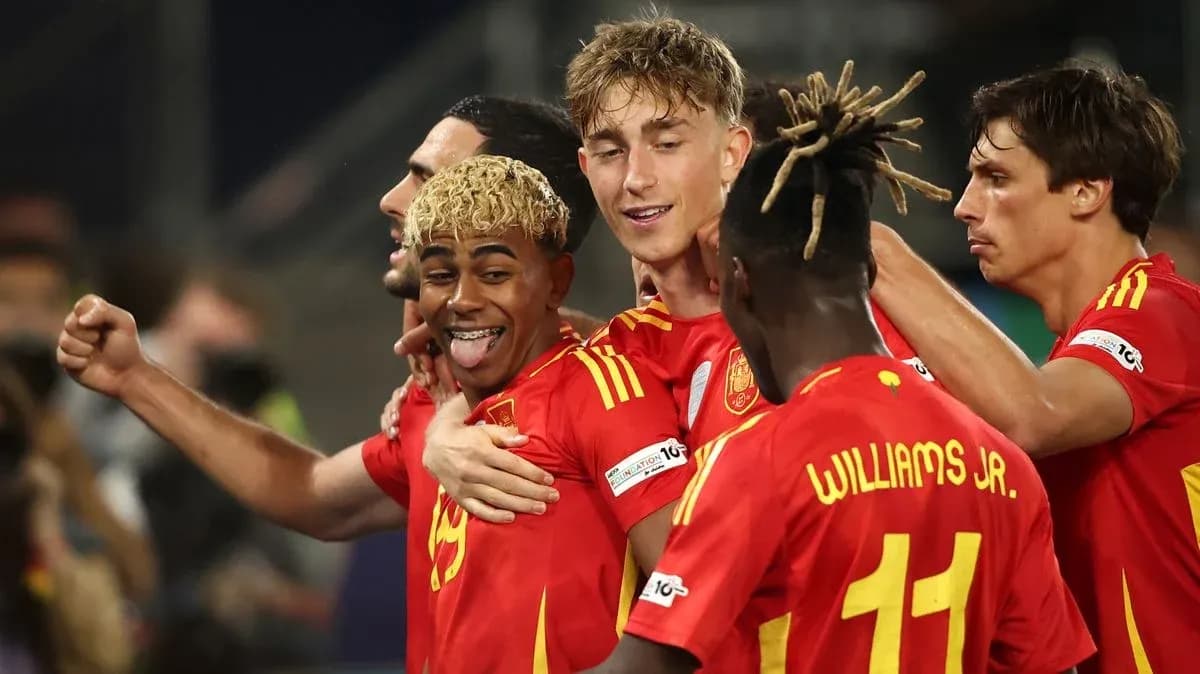
Fresh from ripping through Euro 2024 – beating Croatia, Italy, Germany, France and England on the way to the trophy – Luis de la Fuente’s side travel across the Atlantic looking less like hopeful contenders and more like a machine that knows every gear.
Semra Hunter, Spanish-American journalist and ITV World Cup presenter, has watched that transformation up close. On the Make Football Great Again podcast, she painted a picture of a nation that has finally recalibrated its relationship with its own team.
From suffocating pressure to a healthier pact
The old Spain lived under a constant ultimatum: win or be branded failures. That era, Hunter argues, has gone.
“I don't think it's that extreme anymore,” she says. The fans, she believes, were forced to grow up. “They learned their lesson from how spoiled they were getting with all the success from 2008 to 2012. There was almost this level of confidence that we were untouchable. But things came crashing down very hard after 2012, and it was very painful.”
That pain bred scepticism. By the time Euro 2024 rolled around, it had curdled into open distrust of De la Fuente.
“Going into the Euros, fans were super critical of Luis de la Fuente. There was almost no hope,” Hunter recalls. The mood was flat, the noise hostile. And that, ironically, lit the fuse. “I actually think that helped because the players went in with a chip on their shoulder to prove everyone wrong. They were consistently the best team.”
The result? A reset of the national pact. “Now, fans feel confident and they trust the team again,” she says. “But it isn't a case of ‘you have to do it or you're failures’.”
Spain arrive at this World Cup not burdened by destiny, but emboldened by structure.
Yamal and Williams: the anxiety on the flanks
If Spain are to climb the mountain again this summer, they need their two most explosive weapons. And that’s where the tension starts.
Inside the camp, all eyes are on the hamstrings of Lamine Yamal and Nico Williams – two wingers who, in Hunter’s view, change the entire feel of this team.
In April, Yamal went down with a hamstring problem. The expectation is that the 18-year-old will make the tournament, but no one can guarantee how sharp he’ll be when the first whistle blows.
“They are two of the most special, unique wingers in world football at the moment and they give Spain an edge they wouldn't have without them,” Hunter says. Yamal, she adds, brings a level of chaos Spain once lacked. “Lamine Yamal provides so much unpredictability; he's a destabilising force. We've even seen him starting to evolve into the Messi role a little bit, coming more inside. He's capable of conjuring up a moment of brilliance when the going gets tough.”
Williams, arguably Spain’s standout performer at Euro 2024, then suffered his own hamstring issue in May. A double scare, right when De la Fuente wanted rhythm, not rehab.
“Thankfully, that one doesn't seem to be as bad, and he should be back to fitness to start training,” Hunter says. The message is clear: Spain can cope without them because of the structure. But coping is not the aim. “Spain can win without them because of the team's structure, but they really need both at full tilt to go all the way.”
The system is strong. With Yamal and Williams at full speed, it’s terrifying.
A midfield that keeps regenerating
If there is one area where Spain still look like Spain, it’s the middle of the pitch. The names keep changing; the quality doesn’t.
Rodri, the metronome and shield at Manchester City. Pedri, the silk at Barcelona. Gavi, Dani Olmo, Martin Zubimendi, Mikel Merino, Fabian Ruiz. It reads like a shortlist for a Ballon d’Or decade.
For Hunter, two of them are untouchable.
“As long as Rodri and Pedri are fit and firing, they are non-negotiable starters,” she says. Everything else, she insists, is optional. “Then after that, it's a question of what the manager wants to do. Gavi provides more of the bite, the aggression, and the physicality. Dani Olmo is someone who can break through the lines, score goals, and practically play as a forward.”
The depth took a hit, though, before a ball was kicked. Barcelona’s Fermin Lopez, who posted 30 goal contributions this season, fractured his foot and underwent surgery.
“Fermin Lopez is a big loss. He's somebody who probably could have been a breakout player for Spain, but he underwent surgery and won't make it in time,” Hunter says. One potential wildcard, gone.
Even so, the options remain obscene. “Luckily, Spanish players are so versatile. Even with Martin Zubimendi acting as a direct, like-for-like backup for Rodri, Spain is completely spoiled for choice.”
The midfield is not a concern. It’s an advantage.
The old wound that never quite heals
The same cannot be said of the centre-forward position. For all the midfield luxury, Spain’s most persistent flaw stares back from the team sheet.
“Our biggest weakness is so obvious for me,” Hunter admits. “We haven't had a proper, lethal ‘fox in the box’ striker who can put balls away first touch since the days of David Villa and Fernando Torres.”
It’s not a slight on the current crop. It’s a structural reality. “No disrespect to Alvaro Morata but Spain just doesn't produce that kind of player. It's all about midfielders.”
Real Sociedad’s Mikel Oyarzabal, who scored the winner against England in the Euro 2024 final, is expected to lead the line again. Intelligent, technically polished, ice-cold in big moments – but not the sort of striker who terrifies defences just by existing.
Spain have learned to live with that. They spread the goals, rotate the threats, lean on runners from deep. Yet in the tightest World Cup nights, the absence of a ruthless, one-chance-one-goal predator still hangs over them like a question.
A nation of whiteboard romantics
What Spain lack in pure No. 9s, they more than make up for in football philosophers.
The country’s production line of elite coaches is absurd: Pep Guardiola, Mikel Arteta, Unai Emery, Xabi Alonso, Andoni Iraola. Different personalities, shared roots. For Hunter, this isn’t a coincidence; it’s cultural.
“In Spain, football is a language,” she says. From the earliest age, players don’t just play; they think. “From a very young age, players learn about tactics. Everybody fancies themselves a football philosopher in Spain, really. There's so much romance about it.”
That mindset travels. “When Spanish managers go to the Premier League, they bring that tactical obsession with them. Players like Guardiola and Xabi Alonso were already managers on the pitch when they played.”
The philosophy is collective, not individual. “They focus on the collective, on being collaborative, on the whole being more important than the individual. They're very humble, they're hardworking people. And I think that is reflected in their management style – and the players' playing style too.”
This is the backbone of De la Fuente’s Spain: a team where the system matters more than the star, where structure outlives any single generation.
The path through North America
Spain’s first assignment in North America looks manageable on paper: Cape Verde, Saudi Arabia and Uruguay.
Hunter expects authority in the early games. “They should get through relatively comfortably. Cape Verde are debutants and Saudi Arabia are organised, but Spain should get past them,” she says.
Then comes the real examination. “Uruguay will be the biggest test. They are intense, aggressive, streetwise, and technically more talented than people give them credit for. If they want to rough up Spain, they certainly can.”
That’s the clash that will reveal how far De la Fuente’s side have moved on from the fragile, possession-obsessed teams that sometimes wilted under physical pressure. Spain now carry more speed, more directness, more edge. Uruguay will try to drag them into a fight.
Hunter is unshaken. “I see them getting seven to nine points, topping the group and advancing. Quite honestly, I think they will make it all the way to the final.”
Pressed for a final verdict, she doesn’t flinch.
“I think it's going to be Spain to win it.”
This is not the Spain of old, drunk on its own brilliance. This is a Spain that has known failure, rebuilt its identity, and walks into a World Cup not expecting the world to bow – but fully prepared to take it anyway.