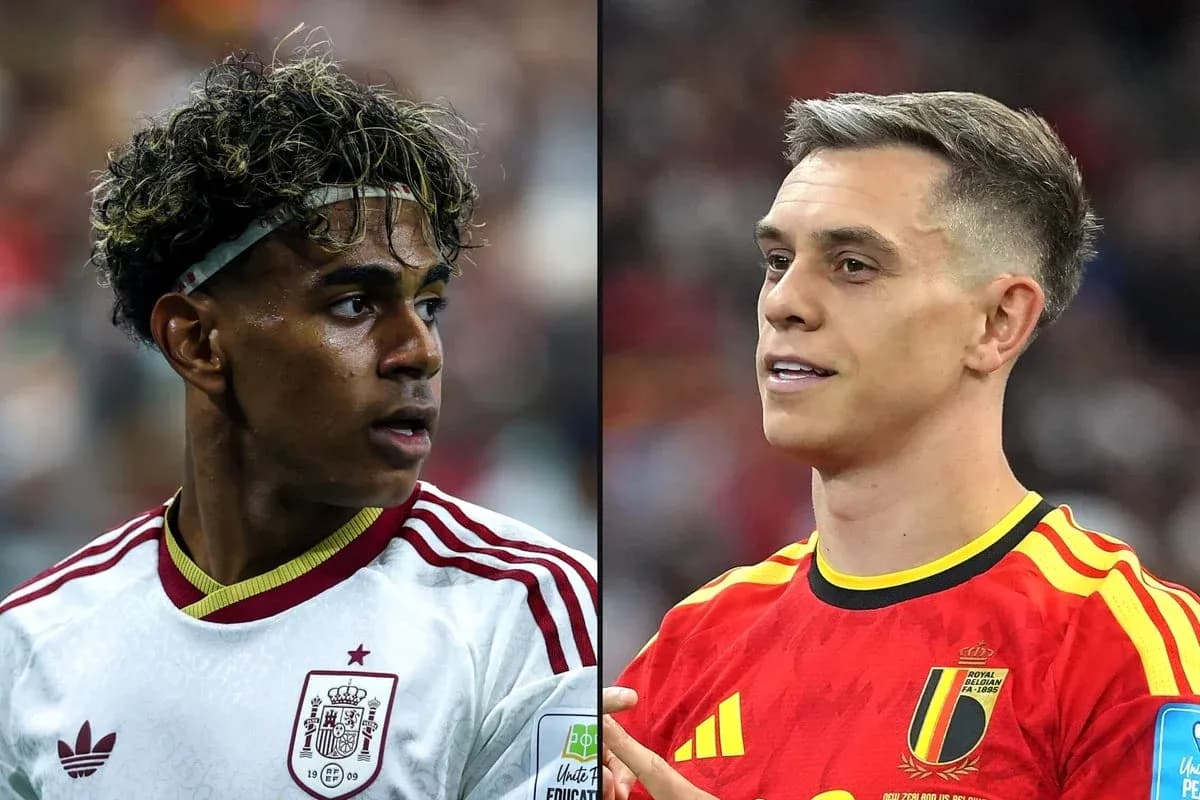
Spain vs Belgium: A Quarter-Final Clash of Styles
Spain arrive in Inglewood with the look of a heavyweight who has barely broken sweat. Belgium walk into SoFi Stadium still buzzing from the punch they landed on the hosts. One side unbeaten, unbreached and methodical. The other chaotic, controversial and suddenly dangerous.
The prize is France in the semi-finals. The route there could not be more different.
Spain’s quiet stranglehold
Luis de la Fuente’s team have eased into this quarter-final without ever needing to reach the heights that made them European champions two summers ago.
- Top of Group H with seven points.
- A laboured opening 0-0 against Cape Verde, then a 4-0 dismantling of Saudi Arabia and a more workmanlike 1-0 over Uruguay.
- Austria swept aside 3-0 in the round of 32.
- Portugal suffocated in the last 16, undone in stoppage time by Mikel Merino’s 91st-minute header.
The numbers behind that calm surface are brutal. Spain are the only side at this World Cup yet to concede a goal. Unai Simon has five clean sheets, stretching an all-time tournament record of 609 minutes without letting one in, a run that dates back to 2022.
Aymeric Laporte and Pau Cubarsi have anchored a defence that rarely looks flustered because it rarely has to defend in the traditional sense. Spain starve teams. They hold the ball, pin opponents back, then hunt it down in packs when they lose it. The counter-press is sharp, the line high, the offside trap ruthless — 18 opponents caught offside, more than any other team.
They are as good without the ball as they are with it. That is their real edge.
What they have not yet found is a consistent cutting edge. Mikel Oyarzabal’s doubles against Saudi Arabia and Austria suggested a No 9 in rhythm, but long spells against Uruguay and Portugal drifted by without incision. The patterns were neat, the chances fewer.
Lamine Yamal, the Barcelona prodigy who turns 19 on Monday, has flickered rather than exploded. Nuno Mendes and then Nelson Semedo kept him largely quiet in the last 16. The talent is obvious, the final product still waiting for its World Cup moment.
Rodri has been playing his way into form at the base of midfield, knitting everything together. Around him, the choices tell their own story. Dani Olmo has had a solid tournament in the No 10 role, yet Merino’s late winner against Portugal has forced a question De la Fuente cannot ignore. Pedri has not hit his old levels; Fabian Ruiz lurks as an alternative. Alex Baena has done enough on the left to suggest he keeps his place.
Spain are not spectacular. They are suffocating. And that, so far, has been enough.
Belgium rip it up and start again
Belgium’s path could hardly contrast more sharply.
They stumbled through Group G with five points and little identity: 1-1 with Egypt, 0-0 with Iran, then a 5-1 release of pent-up energy against New Zealand. The sense was of a team caught between eras, still defined by big names who could no longer carry them.
Then came Senegal and a turning point that may yet define Rudi Garcia’s reign.
Two goals down with five minutes of normal time left in the round of 32, Belgium were heading home. Garcia made the call almost nobody expected — and he admits he barely believed he would make himself. Jeremy Doku off for Dodi Lukebakio. Kevin De Bruyne off for Nicolas Raskin.
On paper, it looked like a retreat. In reality, it freed Belgium.
Raskin, a ball-winner rather than a playmaker, gave structure alongside Amadou Onana and Youri Tielemans. The team pressed together, covered the loose balls they had been losing all tournament, and suddenly looked coherent. Romelu Lukaku and Tielemans struck late to drag the game into extra time, Tielemans then buried a penalty to complete a 3-2 comeback.
Garcia kept faith with that new spine against the United States in the last 16. Onana’s first start of the tournament was cruelly cut short by an ACL injury after 21 minutes, but Hans Vanaken stepped in without breaking the rhythm. Belgium, now compact and aggressive, overpowered the co-hosts 4-1.
The shock was not just the scoreline. De Bruyne did not play a minute. Doku started on the bench. Belgium’s improvement has been collective, not star-led.
That is likely to continue. Against a Spain side that will dominate the ball, Garcia is expected to stick with the more workmanlike XI, hold his nerve, and keep De Bruyne and Doku as weapons to be unleashed when the game stretches. It is a bold way to treat the country’s biggest names, but the evidence so far backs him.
Leandro Trossard has become the creative hub, leading the tournament with 17 chances created. Tielemans has been the metronome and the late-arriving threat, his runs into the box as important as his calm on the ball.
Belgium are still flawed. They have allowed 53 shots, almost double Spain’s 29, and have made six errors leading to shots, a tally bettered only by the United States and Brazil. Their midfield can be bypassed, their back line exposed. Yet they keep finding a way to turn chaos into opportunity.
They also shoot. A lot. No side has had more efforts blocked — 32 of their 107 attempts have hit a defender. Only 14 of those 107 have been clear looks at goal, with zero or one defender in the way. They have scored with 13 of those 14, a conversion rate that outstrips France, England and Spain. When they do get a clean sight, they punish.
The battle on the flanks
This quarter-final may be decided in the wide areas.
Yamal is one of the purest one-on-one threats left in the competition. The final product has not yet exploded, but the hints are there — the feints, the body swerves, the sharp exchanges with right-back Pedro Porro. Against a Belgian defence that has creaked under pressure, this could be the night he finally tears a game open.
On the opposite side, Marc Cucurella and Baena have been relentless in overloading the left, dragging full-backs out of shape and sliding runners in behind. Austria felt that pattern repeatedly. Belgium’s full-backs, encouraged under Garcia to make off-the-ball runs of their own, will need to pick their moments carefully. Get it wrong, and Spain will pour into the space they leave.
Both sides love the low cross. Each has created three chances from balls drilled across the six-yard box, joint-highest in the tournament alongside the Netherlands and Switzerland. Belgium lead the field for first-time shots with 58; Spain sit third with 46. If the ball gets to the byline, defenders will be scrambling.
Then there is the work when the ball is lost. Spain’s counter-press has been ferocious, pinning opponents in and preventing transitions before they start. Belgium, by contrast, have struggled to stop teams playing through their midfield, which is where Raskin and Vanaken must stand up to Rodri and company.
This is not just a test of systems. It is a test of nerve.
Stars waiting, or already shining?
The headline names may not start, but the star power is undeniable.
For Spain, the conversation keeps circling back to Yamal. The teenager has not yet had his World Cup game, the one that lives on highlight reels for years. Against Portugal, he was contained rather than conquered. Against Belgium, with their issues at the back and their tendency to invite pressure, the stage is set.
Olmo, quietly effective, has added thrust and intelligence between the lines since coming into the XI. Oyarzabal has goals in him. Merino has the knack of appearing at the decisive moment.
Belgium’s traditional icons — Lukaku and De Bruyne — may again be asked to watch the opening exchanges from the bench. That in itself says everything about how this team has changed. Trossard’s creativity, Tielemans’ timing, Lukebakio’s directness and the structure behind them have turned a drifting side into one that believes.
And if the game opens up in the final half-hour? Few managers will relish the idea of seeing De Bruyne and Doku jogging onto the pitch against tiring legs.
The verdict from those watching closest
The weight of expert opinion leans heavily towards Spain. Multiple analysts see a 2-0 win for De la Fuente’s side: control the tempo, lean on that watertight defence, wait for Yamal or one of the midfielders to find the gaps. One prediction stretches to 3-1, with Belgium landing the first blow before Spain’s structure and depth take over.
The pattern feels familiar. Spain sliding through rounds without drama. Belgium thrilling in spurts, living on the edge, then surviving.
But this is a quarter-final in California, not a training exercise. Spain’s aura of control has yet to be tested by a team willing to embrace risk the way this new-look Belgium has. Belgium’s new-found balance has yet to face a side that can smother space like this.
Something has to give: the only defence yet to concede, or the tournament’s most ruthless finishers when the shot finally clears the crowd.
By the time the lights dim at SoFi Stadium, we will know which version of these teams is real — and which one was only ever a story waiting to be rewritten.