Spain's Dominant 4-0 Victory Over Saudi Arabia
Spain did not just respond. They roared.
Four days after a sterile stalemate with Cape Verde had reopened every old doubt about La Roja, Luis de la Fuente’s side tore into Saudi Arabia with a 4-0 win that felt like a formal declaration: Spain are at this World Cup, and they plan on staying a while.
At the heart of it all, a teenager who was watching the last tournament from a classroom.
Yamal lights the fuse
Lamine Yamal returned to the starting XI in Atlanta after that electric cameo in the opener and needed barely 10 minutes to rip the tension out of Spain’s game.
Thirty-nine passes. One flowing move. Then a flash of ruthlessness.
Arriving at the back post, Yamal darted into the space, met Mikel Oyarzabal’s low, fizzing cross and, from an absurdly tight angle, stabbed the ball past Mohammed Al Owais. Not a trademark curling masterpiece, not the sort of goal that will dominate highlight reels. But a finisher’s goal, a predator’s touch. His first World Cup goal, on his first World Cup start.
For a player who told DAZN he watched Qatar 2022 from school and now scores with his mother and family in the stands, the leap in just four years is dizzying. On the pitch, he played like this stage already belongs to him.
From the opening whistle he drove at defenders, whipped in crosses, took on shots. Every time he received the ball wide on the right, Spain’s tempo spiked. The spark that never quite caught against Cape Verde suddenly became a blaze.
Oyarzabal ends the argument early
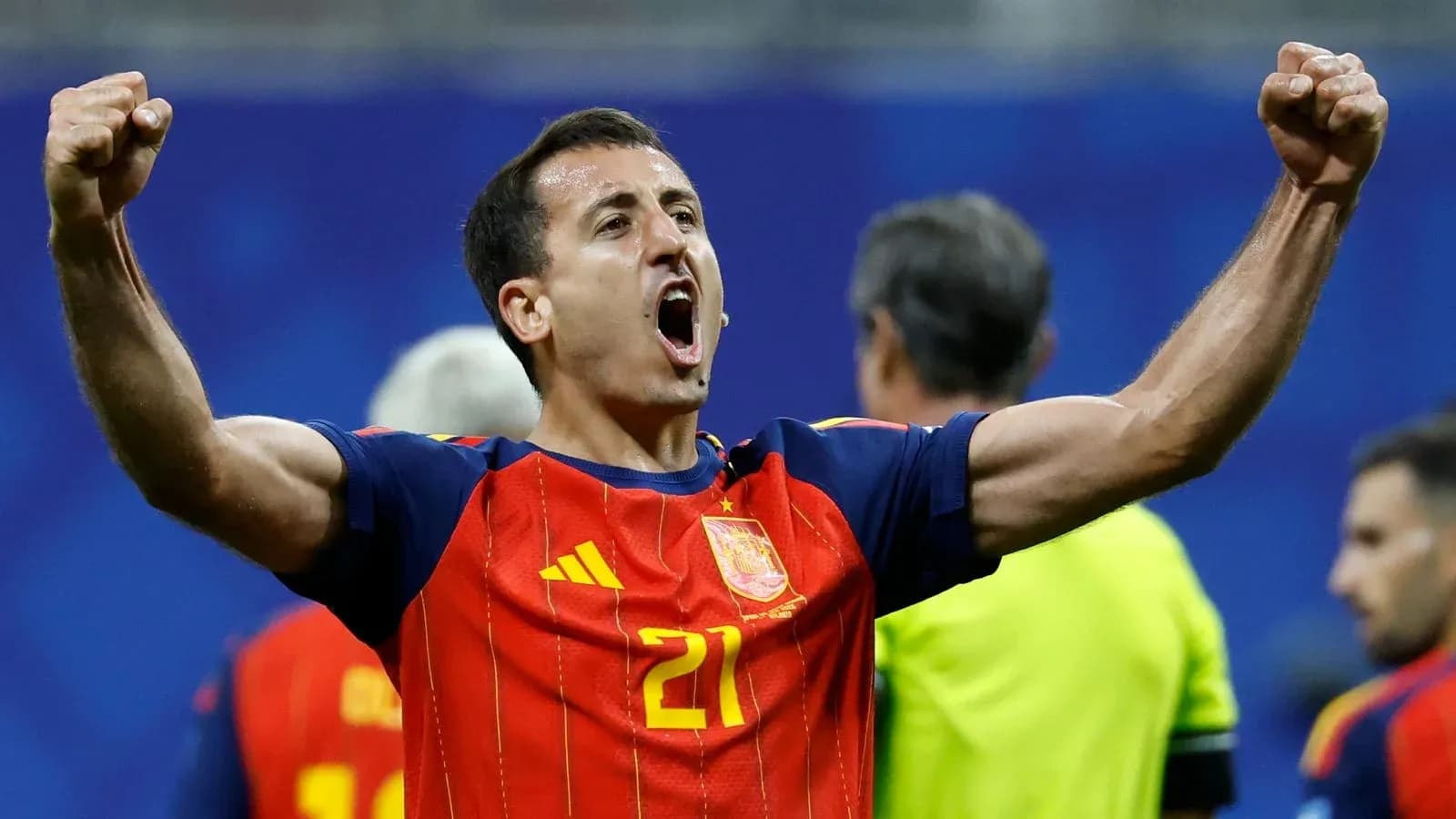
Once Yamal had opened the door, Oyarzabal kicked it off its hinges.
Spain were already suffocating Saudi Arabia when the forward pounced again in the 21st minute. A scrappy sequence, bodies flying, the ball bobbling across the six-yard box. Oyarzabal reacted first, stretching to poke home at the back post. Ugly, but devastating.
Two minutes later, he added something far more deliberate. Another attack, another red wave, and Oyarzabal timed his movement perfectly to meet a ball into the area and guide it past Al Owais from close range. Three goals inside 23 minutes. Spain became the first team since Germany in 2014 to score three so quickly at a World Cup.
The pressure that had weighed on them all week simply evaporated.
Oyarzabal almost had the match ball before the first drinks break. A loose back pass from Al Owais gifted him the chance for a hat-trick. He went for the instant finish, lifting his shot over the keeper, only to see it crash off the top of the crossbar. A fraction lower and the game would have turned into a personal exhibition.
Even without that third, his work was done. He and Yamal walked off at half-time, replaced with the job complete. For De la Fuente, celebrating his 65th birthday, it was the perfect scenario: statement made, legs saved, bigger battles to come.
“It turned out the way we wanted,” Yamal told DAZN. “Being 3-0 up allowed me to rest so it was perfect.” The draw with Cape Verde, he said, “stings” and had forced Spain to think. This, he insisted, was the real version.
De la Fuente gets the reaction he demanded
Spain’s head coach had been blunt in his assessment of that opening draw. The team needed more verticality. More intensity. Less sterile control, more incision.
He got exactly that.
From the first minute, Spain pressed high and hard, pinning Saudi Arabia back into their own area. Shots came early and often. The passing was still there, but now it had teeth. When Yamal scored, those 39 passes had not been sideways for the sake of it; they had been a coiled spring, building towards the kill.
“We played an exceptional first half and a good second half too,” De la Fuente told DAZN. The first 45 minutes justified the description. Spain hunted in packs, flooded the box, and refused to let Saudi Arabia breathe. This was the suffocating version of possession football he had demanded.
He also underlined Yamal’s growing status. “Lamine is in perfect condition to take on full matches now,” he said, though he admitted it was “good to take him off like that, leaving him hungry for more.” As for Oyarzabal, the coach revealed the forward had been managing a minor issue, but still “always delivers an exceptional performance.”
This, De la Fuente insisted, was “an important step for what’s to come.” Next up: Uruguay, and a very different kind of fight.
Second-half control, and a cruel own goal
With the contest effectively decided before the interval, Spain eased off after the break. The intensity dipped, the passing remained. The pattern of the game did not change: Saudi Arabia sat deep and chased shadows; Spain prodded and probed.
The fourth goal arrived on 49 minutes and underlined a strange theme of this tournament. From a corner flicked on at the near post, Marc Cucurella lashed a shot that Al Owais did well to parry. The rebound, though, smashed straight into Hassan Al Tambakti and bounced over the line.
Another own goal. The eighth of World Cup 2026, at a rate of almost one every four games. Only 2018 has seen more, and that record is already in sight with the group stage barely halfway through. Al Tambakti, like several defenders before him this summer, could only watch in disbelief.
Spain kept the ball, controlled the rhythm and waited for gaps. They thought they had a fifth in stoppage time when Ferran Torres slid in to convert a Fabian Ruiz cross. The celebrations were cut short. A long VAR check dissected the move and, five minutes later, ruled Torres offside. No goal, no gloss, but no real complaint either. The work had been done long before.
A superstar and a statement
For all the quality spread through this Spain squad, Atlanta showed how one genuine superstar can raise everyone around him.
When Yamal hit the net, he completed a move that summed up De la Fuente’s blueprint: long passing sequences with a sudden, ruthless punch. His dribbles, crosses and shots set the tone. His fearlessness bled into those around him. The anxiety that had crept in against Cape Verde vanished.
He has already answered that challenge at club level. Now, on the biggest international stage, he looks ready to embrace being the main man for his country as well.
The table reflects the shift. Spain go top of Group H, ahead of Uruguay’s late kick-off against Cape Verde, while Saudi Arabia sink to the bottom. The numbers matter, but the manner matters more. This was not just three points; it was a performance that repositions Spain in the conversation about who might be lifting the trophy next summer.
Uruguay will test the solidity of this resurgence. The question now is simple: was this a one-off response to embarrassment, or the night Spain’s World Cup truly began?