Spain's World Cup Opener: Mourning a Draw Against Cape Verde
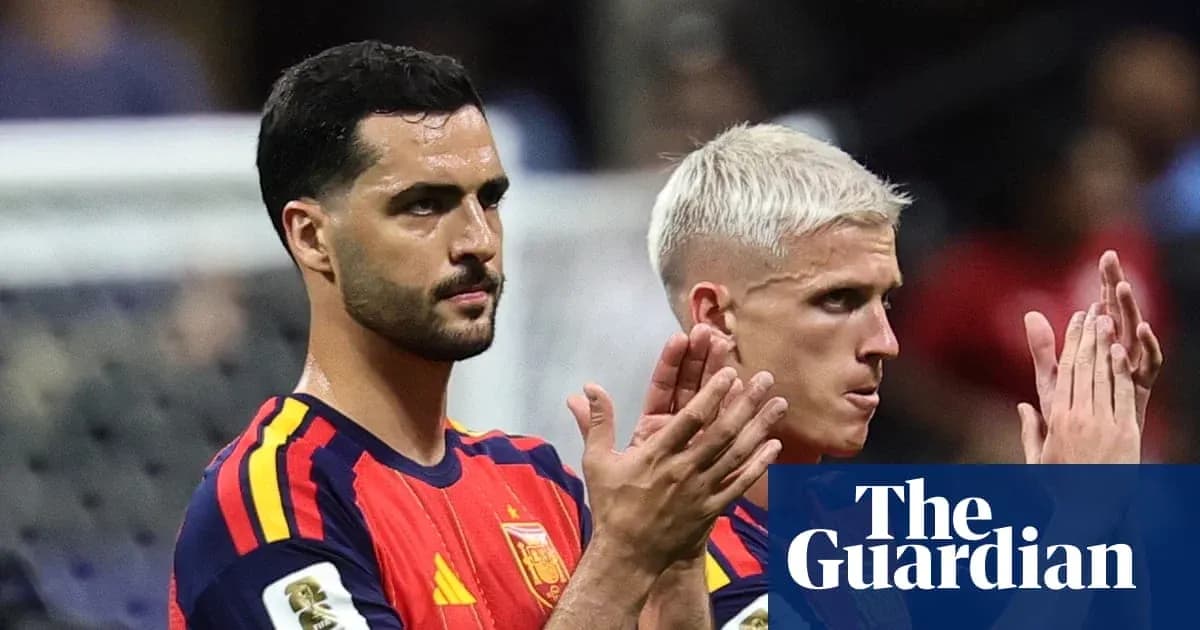
The morning after felt heavy. Not because Spain had lost, but because a 0-0 draw against Cape Verde in their World Cup opener landed like something worse. Mikel Merino even reached for the word that usually belongs to darker days.
“Mourning,” he called it. With a “u”.
“No one died, it’s not a mourning exactly, but at times defeats can feel like that,” the Arsenal midfielder said. This wasn’t technically a defeat, yet it carried the same hollow thud. The World Cup dream had not been derailed, but it had been jolted, and Spain’s players knew it as they filed back into their Tennessee training base with six long days stretching ahead before they can put anything right.
One player in the room, seven desks in front
On the pitch at 11am the next morning: almost everyone. Running, stretching, loosening the legs and, they hoped, the mind. Inside the press room: Merino, alone, facing seven rows of desks and a wall of questions.
He was the only player not out there, the one chosen to walk into the noise. It felt symbolic. A “Spanish inquisition” of sorts, he joked, and then he went to work, 30 minutes of questions handled with a calm, almost disarming clarity.
“If there’s one thing that’s not good for us, it is for there to be panic,” he said. No drama, no excuses. Just a reminder that Spain have been here before. In 2010 they lost their first game and ended up world champions. Merino remembers that summer vividly. He had just turned 14.
Like every game that doesn’t go as planned, he said, this one leaves its mark.
“Every player lives with that mourning,” he explained. “Some like to watch the game back straight away, some like to disconnect and think about other things instead. You have to swallow the disappointment. We have to recover as soon as we can. Luis [de la Fuente] always says that it’s about trying to be better tomorrow, even if you’ve won. We’re always self-critical. Personally, I am not one to send messages [to fans]; I think the best message is the next game, turning it around with a win.”
The message, though, slipped out anyway.
Family, ego and the thin line between them
Talk turned quickly to that other loaded word: “family”. It is easy to throw around in football. Harder to live when the mood turns sour.
“It is easy to talk of ‘family’ but when things don’t go well, when they are difficult, is when you truly see that ‘family’ – and I see unity, enthusiasm and a will to play well,” Merino said.
He dug into the mechanics of a squad under strain. The egos, the frustration, the sense of hierarchy that shifts the moment players leave their clubs and walk into the national team dressing room.
“It is important to have ego; as a footballer, with all the criticism from outside you need it to feel good on the pitch,” he said. “But you also need the humility to know that this belongs to everyone. Players come to the national team because they are important [at their clubs] and find a new reality where only a few can play.
“That’s what the word ‘family’ is. We have to be united, support each other in every moment. You can be annoyed, angry, but that energy has to be positive.”
The anger, he admitted, can eat away at you. That was why his use of “mourning” drew such quick attention. Had he gone too far? He paused, then doubled down with a small correction.
“Maybe I didn’t express myself well,” he said, before circling back to the same image. “It was an attempt at a metaphor, a comparison. You’re so competitive that when it doesn’t go well, sometimes you go home and don’t even want to talk to your family. That’s why I say it’s like a mourning. Everyone deals with it differently. I like to face it and watch [games back] as soon as possible but that doesn’t mean it’s the best approach for everyone.”
Too much time to think
The expanded World Cup has brought more teams, more games – and, for those who stumble early, more days to sit with the taste of it.
“What you want after a bad game is to play again straight away to get the bad taste out of your mouth,” Merino said. “The risk [of the expanded World Cup] is you have lots of time to go over it; it’s a mental challenge to deal with that, evade all that and be as free as you can mentally.”
That is harder when everything plays out in public, every misstep replayed, every touch dissected.
“That’s a reality; it’s part of the business, the reason we earn what we earn, why football is so big, so important: because you’re here to cover it, to create stories through which we explain things to fans,” he told the room, gesturing towards the journalists. “There are players who like it more, or like it less, but it’s part of the ‘circus’ and we have to accept it and live with it.”
He counts himself among those who struggle to let go of a bad result. It stays with him, sits in his stomach. Over time, though, he has learned that hiding from it only drags the feeling out.
“Everyone handles these moments their own personal way. I’m one of those that finds it hard to swallow a bad result but with time I’ve realised that it is best to [confront it] and start trying to turn it around as soon as possible. Four, five hours and you realise that this [World Cup] has just started, that there is time to fix it. Then you can focus on the group, on what helps them. Put a hand on the shoulder of whoever is hurt because they didn’t play, or missed a chance. Or know who needs space for that mourning.”
A reset from elsewhere
Spain’s mood lifted a fraction when the other result in the group came in. Saudi Arabia and Uruguay drew, a small twist that changed the maths and, in Merino’s mind, the psychology.
He called it a feeling of “starting over”.
“I like to see the positive side,” he said. “The last world champion started by losing to Saudi Arabia. In 2010 Spain lost the first game and there was lots of criticism and they turned it around; that is an example to follow from people who were idols. I often take inspiration from athletes who have lived my dreams before I did. That generation means so much for this one: we want to emulate them.”
The mourning, then, has a purpose. It hurts, but it sharpens. Spain are still standing, still in control, still with time to turn a flat opening into something far more dangerous. The question now is whether this “family” can turn shared pain into the kind of edge that defines tournaments – and, sometimes, entire generations.