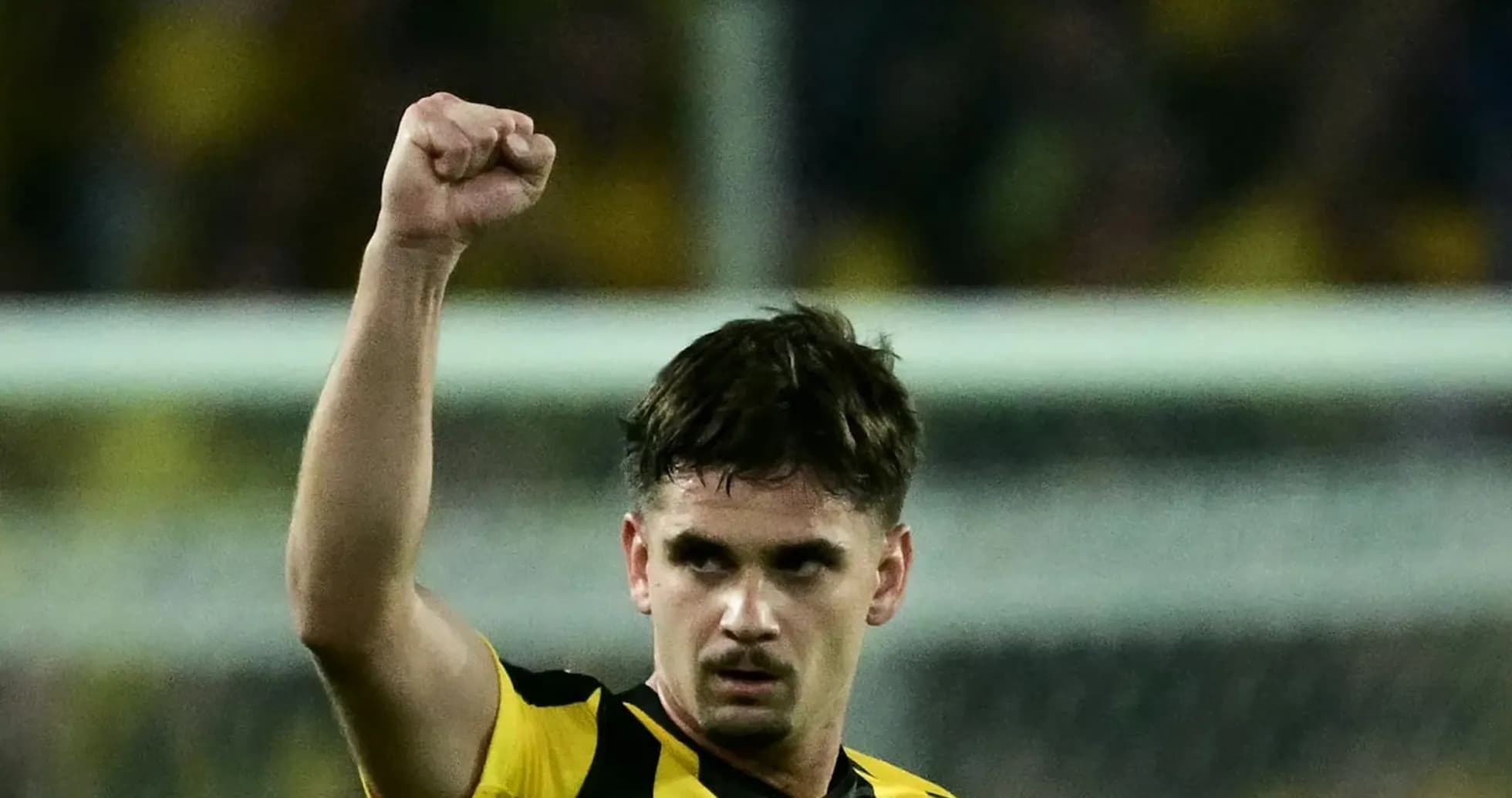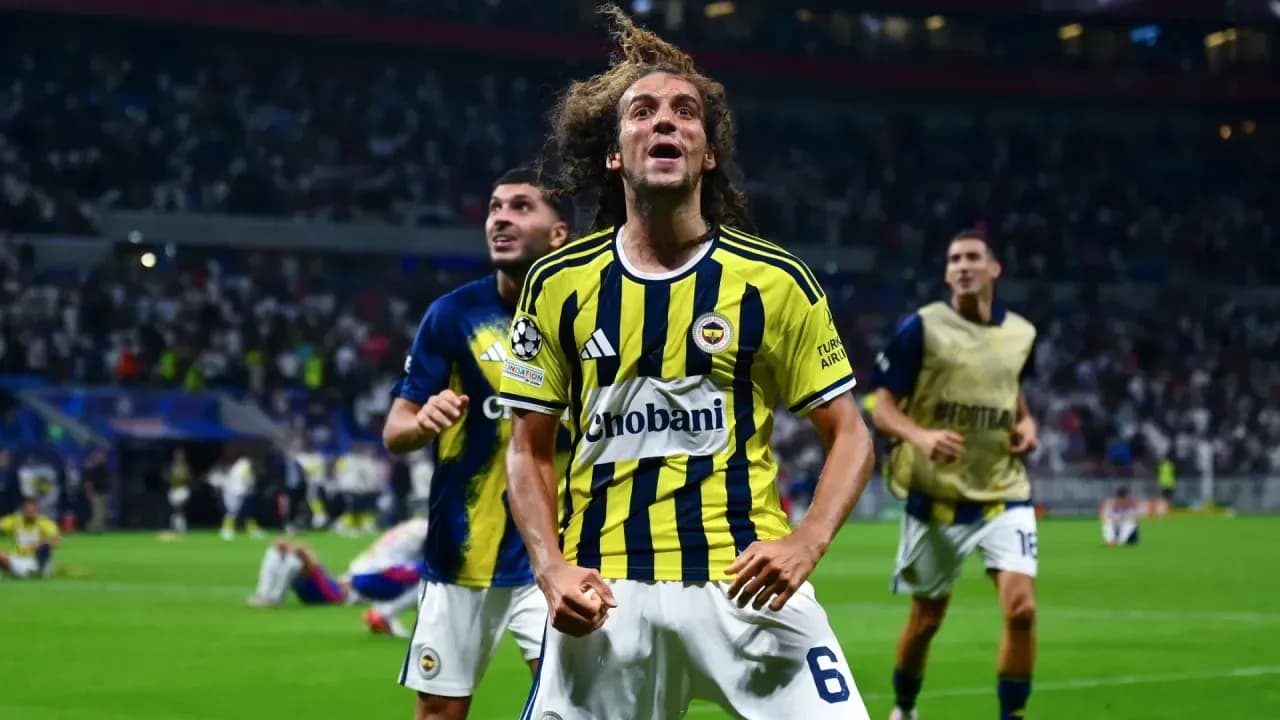
Sparta Praha's Tactical Mastery in Comeback Against Lyon
Sparta Praha’s 2-1 comeback over Lyon at Pragues Letna Hill was built on a clear structural clash: Brian Priske’s 4-2-3-1 gradually overwhelmed Paulo Fonseca’s 3-4-3, turning an early deficit and a disallowed strike into a controlled, territorially assertive second half. The numbers frame it sharply: Sparta edged possession 52%–48%, were more accurate in circulation with 442 passes and 383 accurate (87%), and converted that platform into higher-volume pressure in the box, with 8 of their 9 shots coming from inside the area. Lyon, by contrast, produced 11 attempts but were pushed into more blocked efforts (4) and a heavier reliance on set-piece and transition moments.
Out of possession, Sparta’s 4-2-3-1 double pivot of R. Macek and A. Irving was decisive. Their screen in front of the back four limited central access into Lyon’s front three of Abner Vinicius, L. Openda and C. Tolisso, forcing Fonseca’s side to build via the wing-backs A. Maitland-Niles and M. Ouedraogo. Lyon’s nominal 3-4-3 often flattened into a 5-4-1 without the ball, with the wide forwards dropping to match Sparta’s full-backs, but that deep block conceded territory and allowed Sparta to rack up 6 corners and 3 offsides – evidence of a home side consistently playing on the front foot and probing the last line.
The turning point in the game’s tactical story came after the interval. Lyon’s first-half lead, coming via M. Suchomel’s own goal, had been more about Sparta’s misfortune than systemic control; the visitors finished with only 7 fouls and 2 offsides, suggesting they were not aggressively disrupting Sparta’s rhythm. After the break, Sparta raised the tempo and compressed the pitch. With 8 shots inside the box versus Lyon’s 8, but from fewer total attempts, Sparta’s shot profile was more selective and penalty-area focused. The full-backs M. Rynes and M. Suchomel pushed higher, pinning Lyon’s wing-backs and forcing the back three into narrower, last-ditch defending, which is reflected in Lyon’s 4 blocked shots.
The home side’s attacking structure revolved around the central trio behind J. Brunes: J. Mercado, Adam Karabec and J. Alcocer. Karabec, who later received a yellow card for “Argument”, operated as the main connector between lines, occupying the half-spaces and drawing Lyon’s midfield pairing of T. Morton and M. de Carvalho into uncomfortable decisions. When Sparta equalised through M. Rynes, assisted by A. Irving, it crystallised their wide overload plan: the left-back arriving high and inside the box from deep, benefiting from the midfield’s ability to circulate and switch play under minimal pressing heat.
Lyon’s 3-4-3, on paper a possession-friendly shape, never fully imposed itself. Their 404 passes with 331 accurate (82%) indicate competence but not dominance, and the slightly lower pass completion compared to Sparta hints at more risk or more pressure on the ball. The key attacking reference, L. Openda, was often isolated against Sparta’s centre-backs A. Sevinsky and A. Sorensen, with C. Tolisso stepping high from his listed “Forward” role to link play. Yet when Lyon’s big chance arrived – Tolisso’s missed penalty at 67' – it came not from sustained positional superiority but from a discrete moment. The failure to convert that situation, immediately followed by Sparta’s second goal from J. Mercado (assisted by Rynes), underlined how fragile Lyon’s grip on the match had become once they were asked to chase.
In goal, J. Surovcik (Sparta Praha) made 4 saves, a solid return that underscores how Sparta’s defensive line, despite the own goal, largely kept Lyon’s efforts manageable and visible for their goalkeeper. At the other end, D. Greif (Lyon) was required to make only 1 save, which is tactically revealing: Sparta’s 3 shots on goal from 9 total attempts, combined with 1 blocked shot, suggest that many of their attacks ended in either near-misses, defensive interventions before the final strike, or high-quality finishes that left Greif with little chance. The disparity between Sparta’s territorial control and the relatively low number of on-target efforts points to a game plan focused on creating clear, close-range chances rather than volume shooting.
Substitutions further tilted the tactical balance. At 75', S. Eneme (IN) came on for A. Irving (OUT), and M. Fofana (IN) for M. de Carvalho (OUT), with E. Nuamah (IN) replacing M. Ouedraogo (OUT) for Lyon. Priske’s change refreshed Sparta’s midfield energy, while Fonseca’s double switch aimed to inject direct running and verticality. However, Sparta’s later moves – L. Haraslin (IN) for J. Alcocer (OUT), E. Singhateh (IN) for J. Brunes (OUT), H. Sochurek (IN) for Adam Karabec (OUT), and finally G. Kuol (IN) for J. Mercado (OUT) – layered fresh legs into all three lines, allowing the home side to maintain an aggressive block and manage the closing stages despite picking up 2 yellow cards (Karabec for “Argument”, Matěj Ryneš for “Foul”).
Statistically, the verdict aligns with the tactical impression: Sparta’s slight possession edge, superior pass accuracy, and dominance in corners reflect a side dictating the geography of the match. Lyon’s higher total shots but lower shot efficiency, combined with their reliance on a missed penalty for their biggest moment, suggests a game where structure and control belonged to Sparta, while Lyon leaned on moments and transitions. In the context of a UEFA Champions League 3rd Qualifying Round tie, Sparta’s ability to shift from early frustration – including a VAR-disallowed potential goal by Jonatan Braut Brunes at 20' – to a controlled, structurally sound comeback win indicates a mature, repeatable blueprint, whereas Lyon’s 3-4-3 will need recalibration to generate more stable central progression and to protect its back three once forced to defend higher up the pitch.