Steve McMichael's CTE Diagnosis Raises Concerns for NFL Players
On a quiet Tuesday morning, another harsh truth about football’s past landed with a thud.
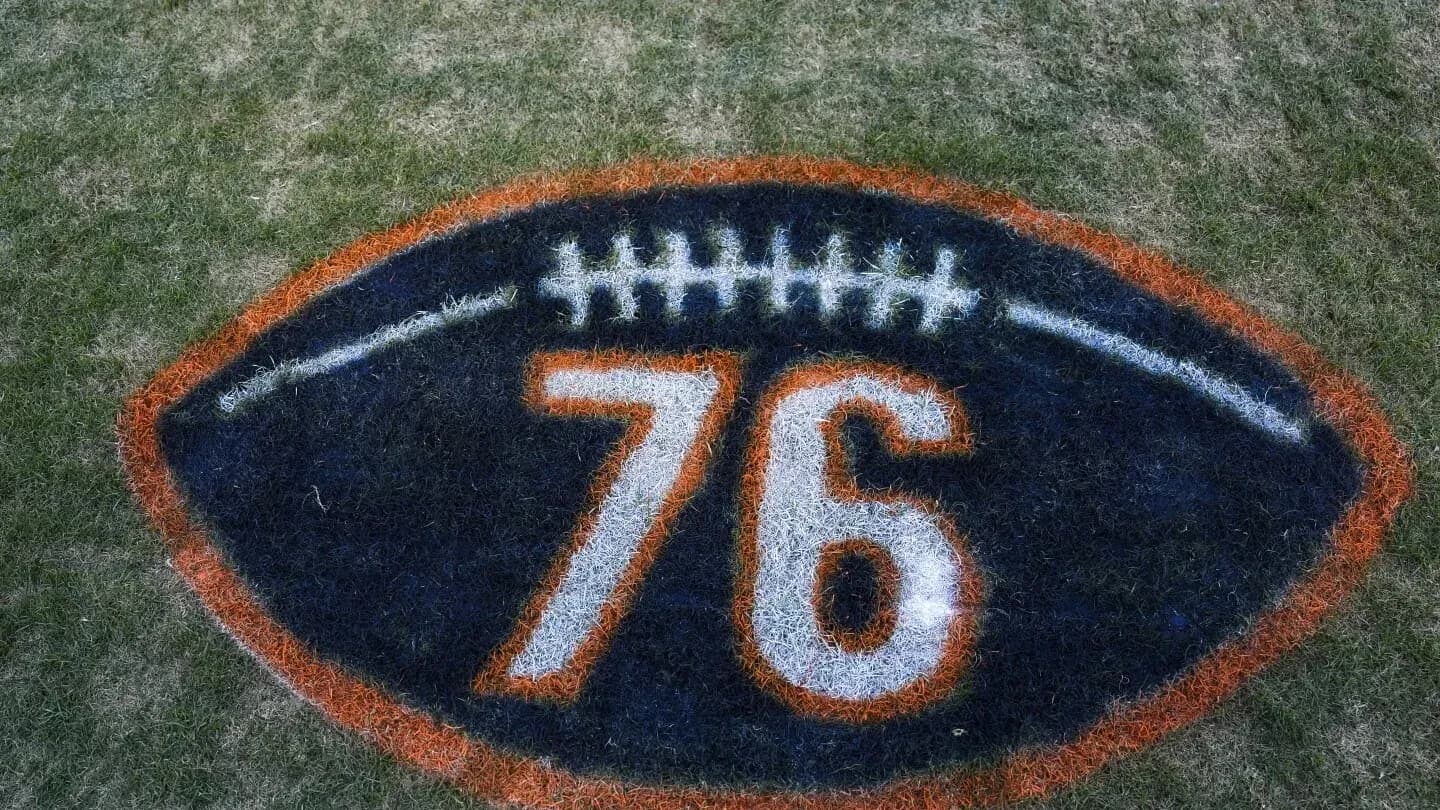
The Concussion & CTE Foundation announced that Hall of Fame defensive tackle Steve McMichael had stage 3 CTE at the time of his death. He passed away in April 2025 at 67. Stage 4 is the most severe form of the disease. McMichael was one step below it.
His wife, Misty, chose not to keep that diagnosis private. She chose to turn it into a warning.
“By sharing Steve’s diagnosis, we want to raise awareness of the clear connection between CTE and ALS,” she said in a statement. “Too many NFL players are developing ALS during life and diagnosed with CTE after death. I donated Steve’s brain to inspire new research into the link between them.”
That link is where football’s conscience now lives.
The NFL’s so‑called concussion awakening came only after Congress dragged the issue into the spotlight. Under pressure, the league finally acknowledged that repeated blows to the head carry long-term, sometimes devastating consequences. Rules shifted. Hits to the head drew flags and fines. Protocols were tightened. The league spoke the language of player safety.
But the brains kept coming in. And the diagnoses kept piling up.
Again and again, former players who donated their brains after death were found to have CTE. McMichael joins a list that has become grimly familiar, another giant of the game whose legacy now includes a disease still not fully understood.
That’s the unnerving part: doctors know CTE is real, know it is widespread among former NFL players, yet still cannot say exactly what it means for every individual who has it. Symptoms vary. Timelines differ. Outcomes range from subtle cognitive decline to profound neurological and behavioral change.
One thing, though, is becoming harder to ignore.
A 2021 study from researchers at Harvard Medical School and the Boston University CTE Center reported that NFL players are more than four times as likely to develop ALS as men in the general population. Four times. That’s not a rounding error. That’s a red flare over the sport.
And still, the questions outnumber the answers.
The NFL has pointed to its post‑2009 reforms as evidence that it is trying to protect players: limits on certain drills, stricter return‑to‑play rules, harsher penalties for dangerous hits. Those changes may have cut down on diagnosed concussions.
They do almost nothing about the blows that never get reported.
Every practice rep. Every collision off the line. Every helmet‑to‑helmet thud that doesn’t leave a player woozy but still rattles the brain. Those are the subconcussive hits that pile up silently over years, the ones many researchers believe form the true foundation of CTE.
John Madden once floated a radical idea to reduce that constant contact: scrap the three‑point stance and move linemen into a two‑point stance, lessening the head‑first collisions that define every snap. It was a glimpse of what a truly reimagined game might look like.
It never happened. Linemen still crouch, still fire out, still crash helmets on virtually every play from scrimmage.
So the sport sits in a kind of uneasy limbo. Rules have changed. The culture around concussions has shifted. Yet no one can say with confidence whether today’s players are actually safer from CTE and ALS than the men who came before them.
Is the damage less severe now? Or simply delayed?
Time will answer that, and it may not be kind. Generations of players who entered the league after 2010 are only now reaching middle age. Their health will become the next data set, the next wave of case studies, the next heartbreaking press releases.
The real turning point, though, may come from technology, not policy.
Right now, CTE can only be definitively diagnosed after death. The watershed moment for football arrives when doctors can reliably detect it in living patients. When a 28‑year‑old linebacker, still in his prime, sits in a clinic and hears a doctor say, “You have CTE.”
What happens then?
Does he line up on Sunday anyway, eyes wide open to the risk? Does he walk away from millions and a dream he’s chased since childhood? Does the league face a generation of players demanding deeper reform, or threatening not to play at all?
And what happens to the sport itself if those conversations become routine? Do we see more rule changes, more contact stripped away, some hybrid of tackle and flag football emerging to keep the product alive without destroying the people who play it?
For now, the working assumption among many researchers is chilling in its simplicity: most, if not all, NFL players from the pre‑2010 era likely carry some degree of CTE. They played in an age of full‑contact practices, brutal training camps, and a culture that mocked anyone who admitted to being “dinged.”
For those players, the damage is already written.
The open question hangs over everyone who came after. Have the last 15 years of reforms truly changed the trajectory? Or are youth players, from the moment they strap on a helmet and learn to block and tackle, still stepping onto the same path that ended for Steve McMichael with stage 3 CTE and ALS?
The league can point to its protocols. Teams can tout their medical staffs. Parents can cling to the hope that the game is safer now.
The next generation of data, and the next wave of diagnoses, will decide whether football’s risk is something players can still justify accepting—or whether the sport itself will be forced to become something fundamentally different to survive.