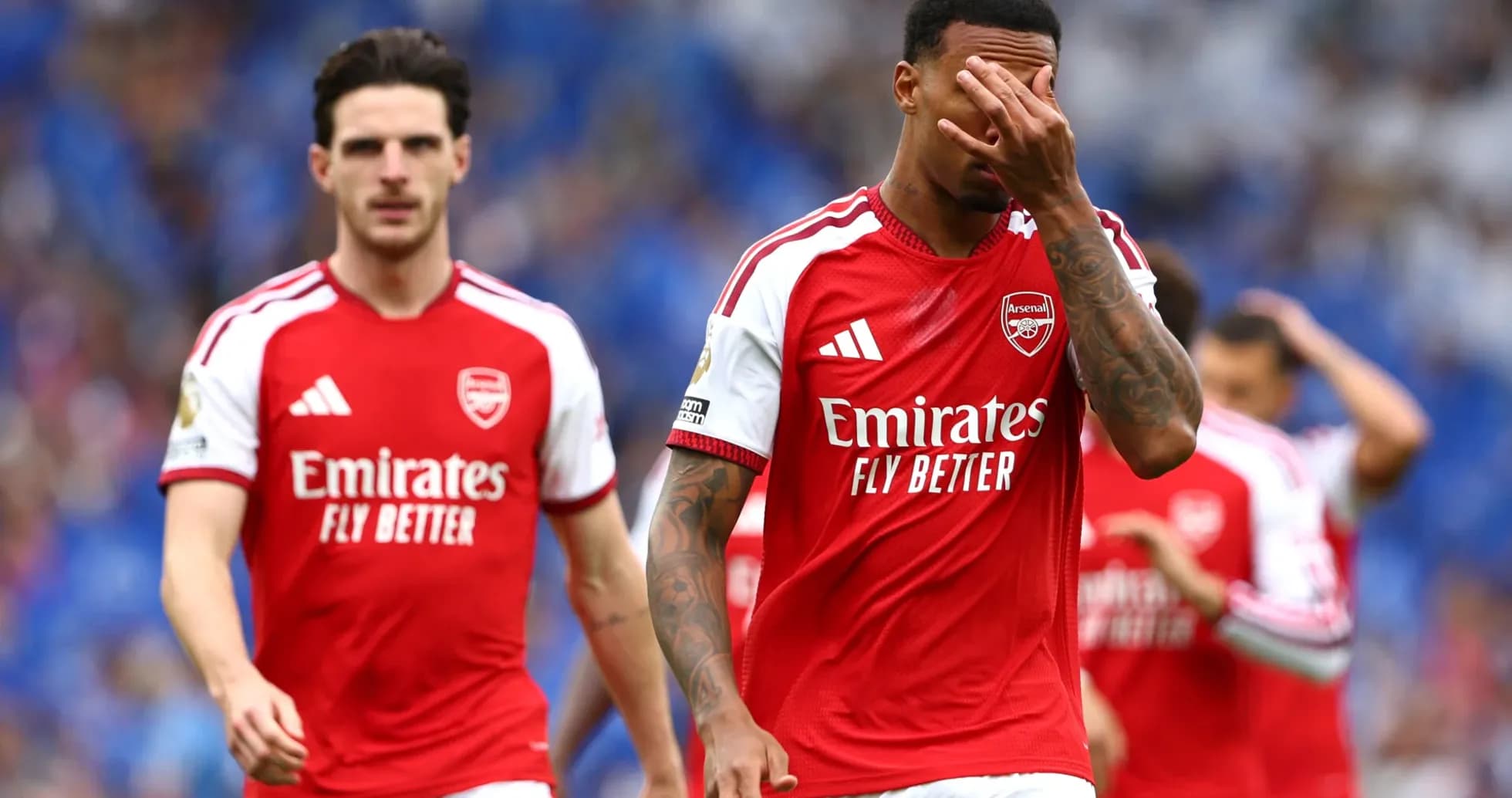
Tottenham's Fragile Season Continues with 3–2 Defeat to Aston Villa
The afternoon at Tottenham Hotspur Stadium closed with the kind of scoreline that flatters the spectacle but exposes the fault lines beneath it. Tottenham’s 3–2 home defeat to Aston Villa, in Round 5 of the Premier League season, felt less like a one-off thriller and more like a crystallisation of each side’s early‑season identity.
For Tottenham, rooted in 20th place with 2 points and a goal difference of -6 (2 scored, 8 conceded overall), this was another chapter in a campaign defined by fragility. Aston Villa, up in 16th on 4 points with a goal difference of -5 (4 scored, 9 conceded overall), arrived as a side still searching for balance but with just enough edge in transition to punish a team that cannot yet protect itself.
Both coaches mirrored each other on the whiteboard: 4-2-3-1 versus 4-2-3-1, Roberto De Zerbi against Unai Emery. But the systems carried very different emotional weights. Tottenham’s version is aspirational, a possession structure still being taught. Villa’s is pragmatic, a shell that can absorb and then counter with precision.
A glance at the season’s numbers before this game underlines the tactical story that played out. Heading into this game, Tottenham had not won in 5 league matches, with 0 victories overall, 2 draws and 3 defeats. At home they had played 3, drawn 1, lost 2, scoring 2 and conceding 5. Their attack at home was sputtering at 0.7 goals per game, while the defence leaked 1.7. Villa, by contrast, were modest but slightly more incisive on their travels: in 3 away games they had 1 win, 1 draw, 1 defeat, scoring 3 and conceding 6, for an away scoring rate of 1.0 and conceding 2.0.
In that light, a 3–2 away win feels less like an upset and more like a statistical nudge: Villa’s slightly sharper edge in front of goal away from home meeting a Tottenham side that concedes too often, in too many ways.
The absentees shaped the tone before a ball was kicked. Tottenham’s missing list read like a creative department gutted: D. Kulusevski, M. Mudryk, W. Odobert and X. Simons all sidelined by knee or ankle injuries, with Richarlison listed as inactive. De Zerbi was forced to compress his inventiveness into the quartet behind D. Solanke, relying on Sávio, Mateus Fernandes and Omar Marmoush to provide the improvisation usually shared across a deeper pool of attackers.
For Villa, the injury sheet cut straight through the spine of Emery’s ideal side: Alysson and M. Bizot out from the goalkeeping group, L. Goretzka missing in midfield, I. Maatsen and P. Torres absent from the back line, with A. Onana and B. Madjo also unavailable. That context makes Z. Suzuki’s start in goal and the improvised back four of A. Wan-Bissaka, V. Lindelöf, T. Mings and M. Ruggeri more than just a selection choice; it was a test of squad resilience.
The disciplinary profiles of both teams added another layer of tension. Tottenham’s yellow-card distribution this season has been relatively steady, but with a noticeable spike between 46–60 minutes, where 40.00% of their cautions arrive. That speaks of a side that struggles to reassert control after half-time, precisely the phase where a game like this one threatened to run away from them.
Villa, by contrast, are a team that lives on the edge of chaos late in matches. Only 9.09% of their yellows have come in the opening 15 minutes, but a combined 63.63% arrive from 76 minutes onward, including an extraordinary 45.45% in added time (91–105 minutes). Add in the fact that Joã o Gomes has already collected both a yellow and a red card in just 130 minutes of league action, and you have a midfield that walks a disciplinary tightrope. Emery’s aggression in the centre of the pitch is a feature, not a bug, but it always threatens to tilt into self-sabotage.
Within those frameworks, the starting XIs offered clear tactical signposts. For Tottenham, A. Kinský behind a back four of Pedro Porro, J. van Hecke, M. van de Ven and A. Robertson hinted at a team that wants to build from deep, with Robertson and Porro tasked with providing width and progression. The double pivot of R. Bentancur and S. Tonali was designed as the metronome and stabiliser, freeing Sávio, Mateus Fernandes and Omar Marmoush to float between the lines and feed Solanke.
Yet the season’s numbers show the flaw: heading into this game, Tottenham had failed to score in 4 of their 5 league matches overall, despite using this 4-2-3-1 shape in all 5. The structure is consistent, but the final-third execution is brittle. With so many creative players missing, the burden on Sávio to carry the ball and on Solanke to finish half-chances became immense.
Villa’s 4-2-3-1 was built for disruption. Suzuki in goal was shielded by a back four that, on paper, lacks the ball-playing elegance of Torres but offers rugged defensive instincts. In front of them, B. Kamara and Joã o Gomes formed an abrasive screen, tasked with breaking Tottenham’s rhythm and turning loose balls into counters. Ahead of that, J. McGinn, J. Manzambi and E. Buendía floated behind N. Jackson, a forward whose movement thrives on space rather than tight build-up.
McGinn’s season profile is the clearest tactical tell. With 2 assists in 5 appearances, 6 key passes and 14 fouls drawn, he is Villa’s primary conduit between midfield and attack, as well as their pressure valve under duress. He is also their most card-prone regular, with 2 yellows already, embodying the duality of Emery’s plan: the engine room is both creator and destroyer.
The “Hunter vs Shield” matchup, then, is not a single striker versus a single defender but a clash of units. Villa’s away attack, averaging 1.0 goal per game, leans heavily on quick transitions through McGinn and Buendía into Jackson’s runs. Tottenham’s home defence, conceding 1.7 per game, has struggled to protect the channels either side of the centre-backs. With Van de Ven and Van Hecke still calibrating their partnership and Robertson often high to support the left flank, those half-spaces were always likely to be Villa’s hunting ground.
In midfield, the “Engine Room” battle between Bentancur–Tonali and Kamara–Joã o Gomes framed the game’s rhythm. Bentancur and Tonali are built for control, but their task is complicated by Tottenham’s lack of vertical threats without their missing wingers. Kamara and Gomes, meanwhile, can afford to be destructive knowing that McGinn’s passing range and Buendía’s creativity offer an outlet once the ball is won. The risk, as always with Villa, is that Gomes’ aggression spills over; his early red card this season is a warning that the line between enforcer and liability is thin.
From a statistical prognosis standpoint, this 3–2 result sits uncomfortably close to the underlying trends. Tottenham’s overall scoring rate of 0.4 goals per game heading into this fixture was unsustainably low for the talent on the pitch, and a two-goal output hints at some regression toward a more normal attacking level. But conceding 3 at home is perfectly in step with a side that had already allowed 5 in 3 home matches and 8 overall.
Villa, meanwhile, continue to live in high-variance territory: 4 goals scored and 9 conceded overall before this match, an away defence that ships 2.0 per game, but an attack that can spike when transitions click. Their lack of penalties taken or missed this season removes one common swing factor; what you see is largely what you get: open-play volatility, late-game cards, and a midfield that fights every duel.
Following this result, the tactical verdict is stark. Tottenham’s 4-2-3-1 has a clear identity but is undermined by absences and a defence that cannot yet sustain the high-possession approach De Zerbi demands. Villa’s mirror system is less about aesthetics and more about survival: compress space, weaponise McGinn and Buendía, and trust Jackson’s movement.
On this evidence, the numbers and the narrative converge. Tottenham will not climb off the bottom until their defensive concessions shrink toward their modest attacking output. Villa, for all their flaws, have a more coherent pathway to mid-table: tighten the late-game discipline, keep McGinn fit, and let their away-day chaos continue to tilt just enough in their favour.