Tottenham's Internal Review: Addressing 'Spursy' Issues and Injury Crisis
Tottenham have started pulling their own house apart. Not with another sacking or a panicked clear-out, but with something far more uncomfortable: a full-scale internal review of who they are, how they work, and why a club of their size spent the final day of the season staring down at the relegation trapdoor.
Two points. That was the gap between Spurs and the Championship. Two points separating a super-club stadium from a second-tier reality.
Roberto De Zerbi arrived in time to drag them away from the edge, taking 11 points from the final six games to steady a season that had lurched from chaotic to calamitous. His late surge didn’t erase the damage, but it did buy the club time – and a mandate – to ask hard questions.
A season on the brink
Four different head coaches in 12 months. A dressing room ravaged by injuries. A sporting director whose position is now hanging by a thread.
Johan Lange, the man tasked with building a coherent football structure, is under serious scrutiny. After a disastrous year in which Spurs veered from one idea to the next, the Dane may yet be shuffled into a supporting or transitional role as the club hunt what they describe internally as a “world-class” sporting director.
The numbers are brutal. Tottenham suffered more injuries than any other Premier League club, and not just muscle strains or niggles. Serious, season-shaping problems.
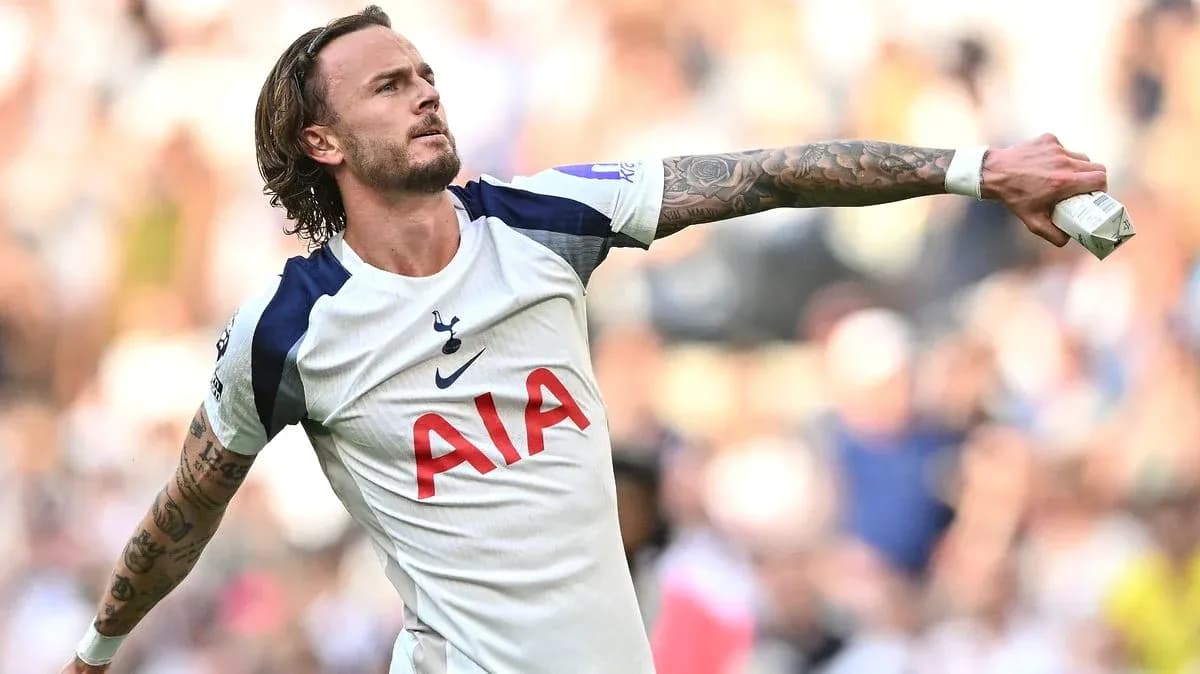
James Maddison, only recently back after a partially torn anterior cruciate ligament fully gave way last summer, did not sugar-coat it.
“Our situation with the injuries has been worse than any other club,” he told reporters after the win over Everton. “People try and say ‘Oh, but we've got this and that’, but ours is astronomical, and we need to look at why that is.”
That line – “we need to look at why that is” – has effectively become the club’s internal mission statement.
Lewindon’s audit of a broken body
The man leading that mission is Dan Lewindon, the new performance director who walked into Hotspur Way in February and found a structure creaking under the weight of its own problems.
Lewindon arrived from the City Football Group with a reputation across football, tennis and rugby for marrying science, medicine and performance. He joined Spurs the day before Thomas Frank left the club, stepping into a landscape defined by churn and short-term fixes.
Tottenham’s medical and performance departments have been through their own upheaval. After more than 20 years of stability, Geoff Scott – long-time head of medicine and sports science – left in 2024 and is now at Nottingham Forest. His departure was followed by rapid exits: director of performance services Adam Brett and head of sports science Nick Davies both lasted only a year.
Nick Stubbings came in last summer from Brentford as the men’s medical lead, joining a growing ex-Bees contingent in north London. But the wider system he walked into was already under review.
Lewindon is now at the centre of that overhaul. Spurs believe his expertise can finally cut into the root of their injury crisis, which has seen double figures of players sidelined at various points in each of the last three seasons.
Inside the club, there is a sense that he and De Zerbi have already formed a useful alliance. The two are said to speak regularly about reshaping performance and medical operations so they resemble those at the game’s elite institutions, not a team clinging on in May.
Non-executive chairman Peter Charrington has publicly backed that drive, confirming plans to “modernise our football operation, with a significant focus on raising standards across medical and performance.”
A manager who won’t gamble with bodies
De Zerbi’s impact has not just been tactical. Staff behind the scenes have been struck by how clear he is about one non-negotiable: he will not gamble with players’ health just to chase a result.
In a season when the pressure could have pushed him towards risky calls, he instead insisted on consistency and caution. Those who have sat in meetings with him say he demands as much information and feedback as possible before deciding when a player can return. The message is simple: the individual comes before the scoreboard.
That approach carried into the run-in, where he leaned heavily on one-to-one conversations and tailored video work, showing players their best moments at Spurs and previous clubs to restore belief. It was part coach, part psychologist – a role he openly sees as central to his job.
Is the pitch part of the problem?
The investigation has gone deeper than the treatment room. Quite literally, into the ground.
Spurs are already examining whether the Tottenham Hotspur Stadium’s retractable pitch – which slides under the south stand to make way for NFL and concerts – has contributed to a worrying cluster of ACL injuries. Five such injuries at the club in recent years has been deemed “too many” internally. The club has also noted that Real Madrid have faced a spike in injuries since installing a similar retractable surface.
Early independent tests on matchdays have so far shown no meaningful difference in bounce or spring between the stadium pitch and the training pitches at Hotspur Way. That has stopped any rush to judgement, but it has not ended the enquiry. More detailed, longer-term analysis is already planned to ensure nothing is being missed.
Some ACL injuries, club figures accept, are simply cruel luck. Xavi Simons and Wilson Odobert fall into that category. The handling of Simons’ injury at Molineux was reviewed, with physios cleared over their decision-making after the player initially wanted to continue. The conclusion: precautions were taken, no extra damage was done.
Even so, nobody at Spurs is treating this as a coincidence they can just shrug away.
Killing off ‘Spursy’ – with science and psychology
The review is not only about hamstrings and ligaments. It is also about the scar tissue in the mind.
Tottenham have lived for years with the ‘Spursy’ tag, a lazy shorthand for collapses under pressure and self-inflicted wounds. Lewindon has pushed strongly for a new lead psychologist to be hired, working full-time with the players and the staff around them.
The aim is not just to help them cope with the demands of elite football, but to harden them against the fatalism that can creep into a club with a history of near-misses and late stumbles.
De Zerbi’s daily work already leans into that. Individual meetings, constant reinforcement, curated clips of a player at their best – all of it is designed to rebuild confidence in a squad that has taken repeated blows, both physically and mentally.
A new model: smaller pods, bigger understanding
On the structural side, Lewindon is preparing a shift in how Spurs handle injuries and recovery. The club is moving towards a pod-based model, where four to six players are grouped with a dedicated physio and sports scientist focused solely on that small cluster.
Think of it like a teacher with fewer pupils. Staff can learn the nuances of each player’s body, position and personality, rather than spreading themselves thin across an entire squad. The hope is that this will sharpen decision-making on training loads, return-to-play timelines and long-term conditioning.
That dovetails neatly with De Zerbi’s belief that Tottenham must treat players as individuals, not just shirt numbers. Understanding their family lives, their roles on the pitch, and their psychological triggers is seen as essential if the club is to compete at the top end with his intense, high-energy style.
Trust is another theme. Some Spurs players have at times leaned more on medics from previous clubs or their national teams. That is not unusual in modern football, where many players employ their own performance staff, but it can create mixed messages.
Tottenham want to strengthen the bond between club, personal and international staff so there is one agreed plan for each player, not three competing ones. A single roadmap, signed off by everyone, is the target.
Staff changes and transfer rethink on the horizon
Once Lewindon’s review is complete, changes behind the scenes are expected. Fresh faces, new ideas, tighter links between departments. The club also accepts that recruitment must adapt.
Spurs are looking more closely at durability when signing players, aiming to build a squad robust enough to handle De Zerbi’s demands without breaking every few weeks. Availability, as the saying goes, is a talent.
There is also a frank acknowledgement that the club’s revolving door of managers has made things worse. Each new head coach has brought different training methods, different physical demands, and a different tempo. Players, desperate to impress, have often pushed themselves beyond their limits in those early weeks. The result: more breakdowns, more time in the treatment room.
No more seasons like this
Tottenham know they cannot live through another campaign like the one they have just survived. The margin for error has vanished.
Getting more players on the pitch, more often, is the most basic requirement for any resurgence under De Zerbi. The club accepts that results will not transform overnight. But they believe that, over time, Lewindon’s course correction – from the pitch surface to the psychology sessions, from recruitment to recovery pods – will cut the injury list and stiffen the club’s spine.
The question now is simple and unforgiving: after years of talking about change, can Spurs finally build a structure as resilient as the stadium that towers over north London?