Udinese vs AS Roma: Tactical Analysis of Serie A Clash
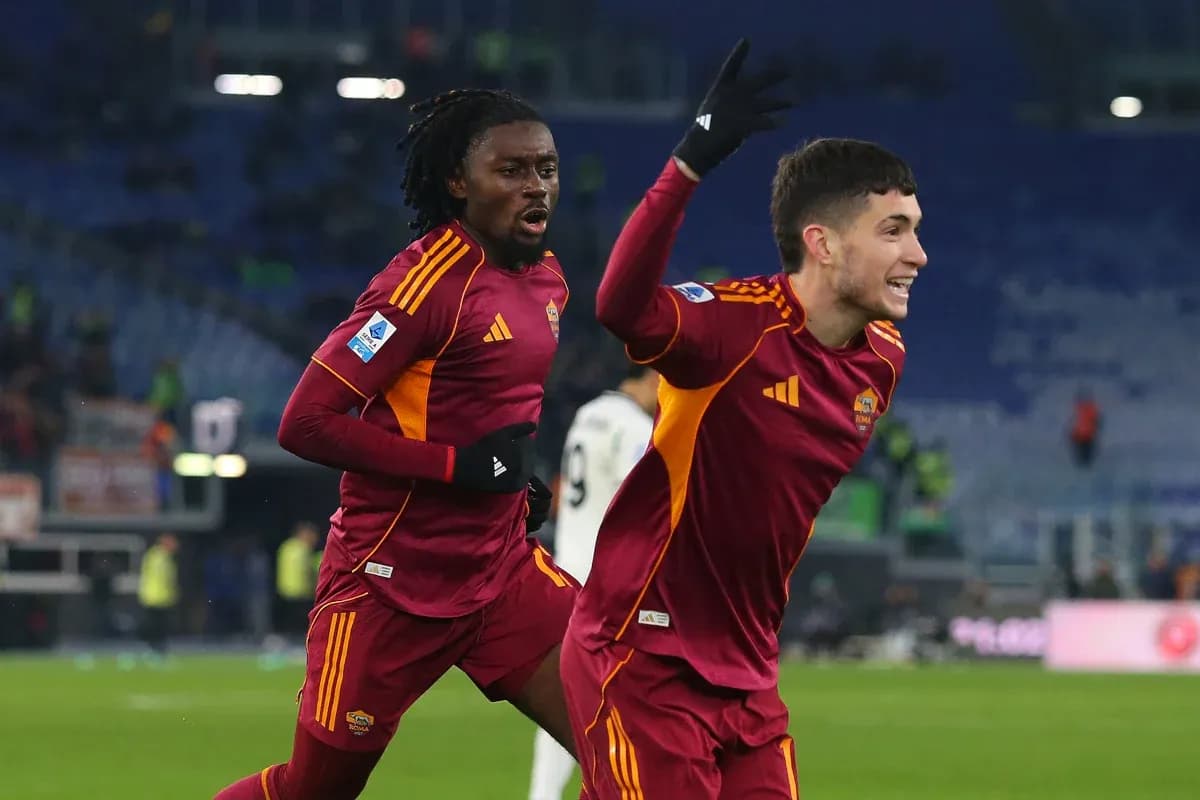
Under the floodlights of the Bluenergy Stadium, this was a meeting of opposites in Serie A’s Regular Season - 10: a struggling Udinese side rooted in 19th against an AS Roma machine travelling like a title contender. The final scoreline – Udinese 2, AS Roma 5 – told of a chaotic, open contest, but the deeper story is of one team living on the edge of collapse and another imposing its structure and talent even while rotated and depleted.
Heading into this game, Udinese had taken just 5 points from 10 matches, with a total goal difference of -12, the product of 11 goals scored and 23 conceded overall. At home they were particularly fragile: 0 wins, 1 draw and 5 defeats from 6, with only 4 goals scored and 14 conceded. The pattern was clear – a side conceding an overall average of 2.3 goals per match both home and away, and rarely keeping the door shut (just 1 clean sheet in total, and none at home).
AS Roma arrived in stark contrast. Third in the table on 24 points, unbeaten after 10 games with 7 wins and 3 draws, they carried a total goal difference of +18, built from 28 goals scored and only 10 conceded. On their travels, they had 3 wins and 2 draws from 5, scoring 14 and conceding 5, mirroring a ruthless overall attacking average of 2.8 goals per game and conceding just 1.0. This was the form of a Champions League-bound side, and they played like it, racing into a 4-0 half-time lead that effectively settled the contest.
Tactical Voids and Absences
Both coaches came out in a mirrored 3-4-2-1, but the absences shaped how those systems functioned.
Udinese were without D. Alaba (calf injury), V. Bayo (thigh), I. Gueye (ankle) and A. Zanoli (muscle). That stripped depth from both ends of the pitch: Alaba’s experience and Zanoli’s athleticism in the defensive lane, Gueye’s presence in midfield, and Bayo’s threat up front. For a team already conceding heavily at home, missing defensive leadership was particularly damaging, forcing K. Runjaic to lean on a relatively raw back line of J. Abankwah, C. Kabasele and M. Palma in front of M. Okoye.
Roma’s absences were high-profile and creative: P. Dybala (calf), L. Pellegrini (thigh), M. Kone (muscle) and goalkeeper M. Svilar (toe) all missed out. Deprived of his primary playmaker and captain, G. Gasperini turned to structure and depth. P. Gollini started in goal, shielded by a back three of D. Ghilardi, E. Ndicka and Hermoso. In midfield, M. de Roon and B. Cristante formed a combative axis, flanked by N. Molina and Wesley, while the creative burden fell on M. Soulé and Rodrigo Mora behind central forward D. Malen.
Disciplinary trends framed the risk landscape. Udinese’s season-long yellow-card profile shows a spread of cautions, with notable spikes between 16-30 minutes and 31-45 minutes (23.53% each of their yellows), evidence of a side often forced into reactive fouls as games slip away early. Roma, meanwhile, show a more compressed aggression curve: 27.78% of their yellows come in the 61-75 minute window and 22.22% between 76-90, suggesting intensity is ramped up to protect or chase results late on. They have also seen a red card in the 46-60 minute band this season, underlining how their front-foot approach can spill over just after half-time.
Key Matchups
Hunter vs Shield
At the tip of Roma’s spear, D. Malen arrived as one of Serie A’s most dangerous forwards. With 8 goals and 1 assist in 9 appearances, supported by 30 shots (15 on target), he embodies Roma’s vertical, transition-heavy threat. His duel profile – 54 contests with 29 won – and 24 dribble attempts with 15 successes show a striker who thrives when isolated against centre-backs.
He was up against an Udinese defence that had already conceded 14 times at home and whose worst home defeat of the campaign was, tellingly, also 2-5 – a sign of systemic vulnerability when stretched. The back three of Abankwah, Kabasele and Palma were tasked with holding a high-variance line against Malen’s runs and Soulé’s drifting movements. Given Udinese’s total of 23 goals conceded and lack of clean sheets at Bluenergy Stadium, this was always likely to be a mismatch, and Roma’s four-goal first half bore that out.
Engine Room
In midfield, the contest between Jesper Karlström and Roma’s central duo set the game’s tone. Karlström, ever-present with 10 starts and 866 minutes, is Udinese’s metronome and enforcer in one: 470 passes at 84% accuracy, 16 tackles, 5 blocked shots and 6 interceptions. He also carries a disciplinary edge – 4 yellow cards already and a place among the league’s top carded players.
Opposite him, M. de Roon and B. Cristante represent Roma’s control panel. De Roon’s role as a breaker and recycler allowed Wesley and Soulé to receive higher, while Cristante’s box-to-box instincts linked defence to Malen. Soulé, with 3 goals and 3 assists, 398 passes at 86% accuracy and 17 key passes, drifted into half-spaces that Karlström and L. Miller struggled to police. Once Roma established superiority between the lines, Udinese’s 3-4-2-1 began to resemble a 5-4-1 under siege, with N. Zaniolo and J. Ekkelenkamp forced deeper than ideal.
The creative battle was decisively tilted. Even without Dybala’s league-leading 4 assists, Roma had Wesley (3 assists) and Soulé (3 assists) as dual creators. Udinese relied heavily on Ekkelenkamp, whose 3 goals and 1 assist make him their primary offensive outlet. As Roma’s press and circulation pinned Udinese back, Ekkelenkamp was often receiving with his back to goal, far from the zones where he has been most effective.
Statistical Prognosis
From a statistical standpoint, this match unfolded almost exactly along expected lines. Roma’s overall attacking average of 2.8 goals per game translated into 5 on the night against a defence conceding an overall 2.3 per match – an exaggeration of existing trends rather than an anomaly. Udinese’s home scoring average of 0.7 was outperformed by their 2 goals, but those strikes felt like consolation rather than the foundation of a comeback.
Roma’s defensive solidity – just 10 goals conceded overall and 5 on their travels before this game – did wobble in the second half, as the intensity dropped with a four-goal cushion. Yet structurally, their 3-4-2-1 looked repeatable and robust: a back three comfortable defending large spaces, wing-backs providing width, and a front three built around Malen’s penalty-box instincts and Soulé’s all-round creativity.
For Udinese, the numbers are unforgiving. One win in total from 10, no home victories, and 4 matches at home without scoring underline a side that has to overperform just to stay competitive. The lack of clean sheets at Bluenergy Stadium and repeated heavy home defeats – with 5 goals conceded twice – point to a structural rather than purely individual issue.
Following this result, the tactical prognosis is clear. Roma’s trajectory towards the top of Serie A remains underpinned by elite attacking output and a flexible 3-4-2-1 that can absorb key absences. Udinese, by contrast, face a season-long battle against relegation unless they can reinforce their back line, protect Karlström more effectively in midfield, and find a way to unleash Ekkelenkamp and Zaniolo higher up the pitch without leaving themselves permanently exposed.