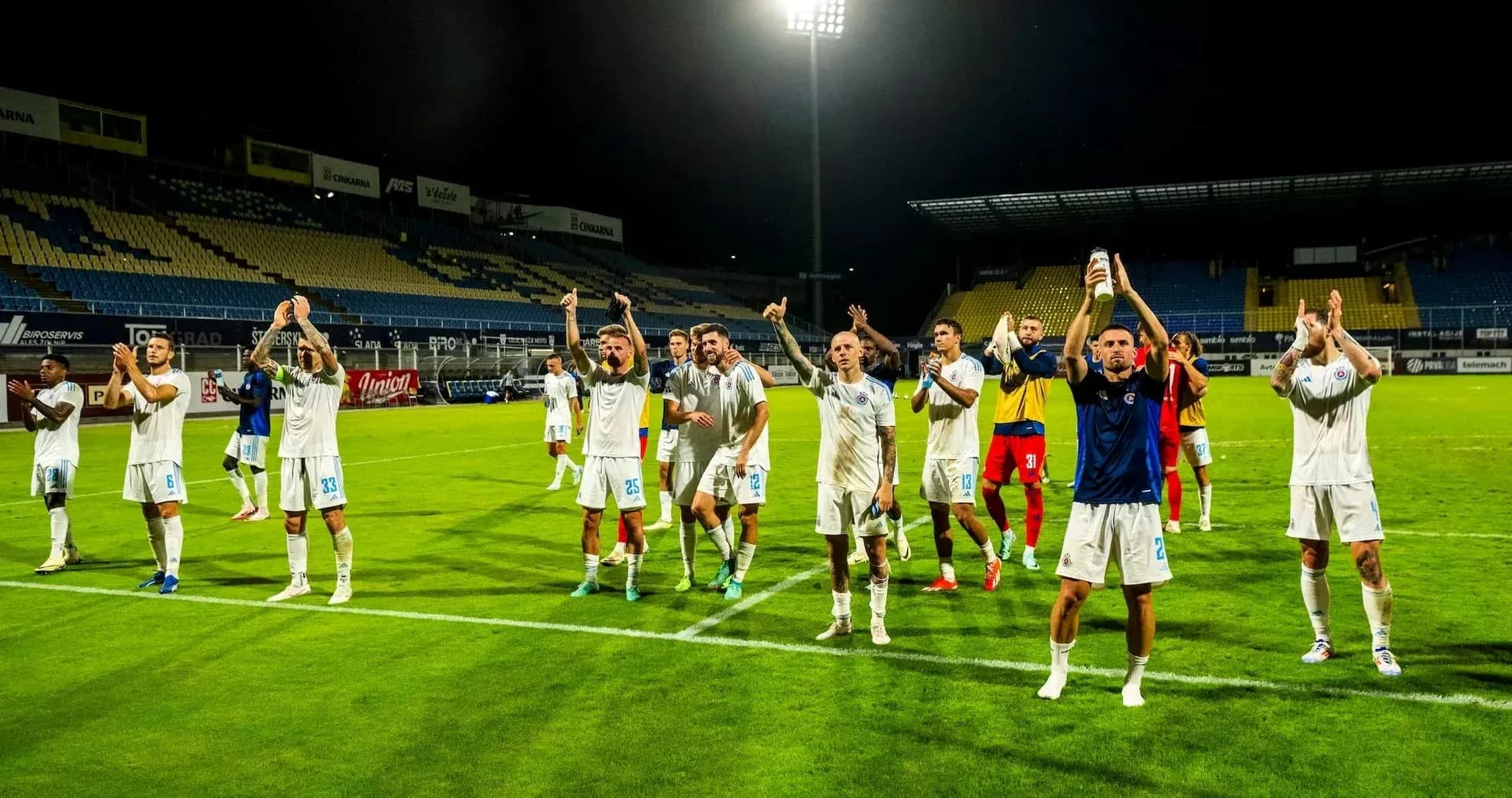
UEFA Champions League Play-Offs: Celje vs Slovan Bratislava
In the UEFA Champions League play-offs in Celje, this second leg between Celje and Slovan Bratislava carries direct qualification weight: after a 1-1 draw in Bratislava, the tie is finely balanced, with this match effectively acting as a one-off decider for a place in the main competition phase and the significant financial and prestige boost that comes with it.
Head-to-Head Tactical Summary
These sides have met three times recently in the UEFA Champions League. On 19 August 2026 in Bratislava in the play-offs, Slovan Bratislava and Celje drew 1-1, with Slovan leading 1-1 at half-time and the score unchanged by full time. In the 2nd Qualifying Round in 2024, they also played a two-legged tie: on 30 July 2024 in Bratislava, Slovan beat Celje 5-0, having already gone 2-0 up by half-time, showing clear attacking superiority and control. The first leg of that 2024 tie, on 24 July 2024 in Celje, finished 1-1, with the hosts and visitors level 1-1 at half-time and neither side able to find a winner. Overall, Slovan have one heavy win and two draws, with Celje yet to beat them but showing they can contain them at home.
Global Season Picture
- League Phase Performance: There is no current group-stage or league-table data available for either Celje or Slovan Bratislava in this Champions League campaign, so their position, goals for and against, and points in the league phase cannot be quantified from the standings.
- Season Metrics: In the league phase of this Champions League campaign, Celje have played 5 matches, winning 2, drawing 2 and losing 1, with 10 goals scored and 8 conceded. Their attack is relatively high-output at 2.0 goals per match, but they allow 1.6 per match, pointing to an open, risk-accepting style. Slovan Bratislava have also played 5 matches, with 3 wins and 2 draws, remaining unbeaten. They have scored 8 goals (1.6 per match) and conceded only 3 (0.6 per match), indicating a more controlled, defensively solid approach. Both teams have yet to fail to score in this campaign, underlining a consistent attacking presence.
- Form Trajectory: Celje’s form string of DWLWD shows a fluctuating trajectory: they are competitive and rarely outplayed but have not built sustained momentum, alternating between positive and negative results. Slovan’s WDWWD sequence indicates a stronger, upward trend: unbeaten, with two separate winning runs embedded in that sequence, suggesting growing confidence and tactical stability heading into this decisive leg.
Tactical Efficiency
Across this Champions League campaign, Celje’s numbers point to a front-foot approach: they average 2 goals scored per match but concede 1.6, and have only one clean sheet. Their use of multiple formations (4-3-3, 4-4-2, 3-4-3, 4-2-3-1) suggests tactical flexibility but also a degree of searching for the optimal balance, which can affect defensive cohesion. Their disciplinary profile, with most yellow cards clustered between minutes 31 and 75, hints at intensity and possible over-commitment in the middle phases of matches, which can leave spaces in transition. Slovan Bratislava, by contrast, combine efficiency and control: 1.6 goals scored per match with only 0.6 conceded, two clean sheets, and no defeats. Their more stable use of a 4-3-3 base, with occasional switches to 3-5-2 or 4-1-4-1, points to a clear tactical identity with minor adjustments rather than wholesale changes. Offensively, they are slightly less explosive than Celje in raw output but more clinical relative to the chances they concede, and defensively they are significantly tighter. In a play-off decider, that profile typically translates into a higher “tactical efficiency”: Slovan can afford to manage phases of the game, while Celje are more reliant on outscoring the opponent and sustaining attacking pressure without losing defensive structure.
The Verdict: Seasonal Impact
The outcome of this play-off second leg will largely define both clubs’ European trajectory in 2026. For Celje, progression would mark a step-change: turning a positive but volatile campaign into a historic qualification, with increased revenue, higher-profile fixtures, and a stronger platform to retain and attract talent. Failure to advance, especially after taking the tie home at 1-1, would underline their current ceiling: capable of competing over 90 minutes but still short of the consistency and defensive stability needed to cross the threshold into the main Champions League field. For Slovan Bratislava, an unbeaten run culminating in qualification would confirm their status as a structurally sound, upward-trending side in European terms, reinforcing their model of controlled attacking play and strong defensive organisation. Falling at this stage, despite superior recent head-to-head results and a more convincing seasonal profile, would be a clear underperformance and would likely force a reassessment of how they manage away legs in tight knock-out ties. In short, this match is less about domestic title or relegation implications and more about European status: the winner gains a substantial competitive and financial advantage for the rest of 2026, while the loser faces a reset and a probable drop into a lower-tier continental competition with reduced visibility and leverage.